Browse

Log in / Register
 Share

April 26, 2025
Automakers are loading new cars with more software and driver aids than ever before, and that shift has helped make vehicles safer in many ways. But the Insurance Institute for Highway Safety (IIHS) says the technology story is more complex than marketing departments often suggest.
New research from the Institute’s Vehicle Research Center in Virginia shows that some systems, like front crash prevention and blind-spot monitoring, deliver real, measurable safety benefits. Others, including adaptive cruise control and lane centering, have yet to prove they reduce crashes. Worse, those advanced features can pull drivers’ attention away from the road.
The clearest evidence supports automatic emergency braking and forward collision warning. According to IIHS data, front crash prevention systems cut front-to-rear collisions by about half. That is a huge gain, especially in stop-and-go traffic and at intersections, where rear-end crashes are common.
Blind-spot monitoring also earns a strong endorsement. By alerting drivers to vehicles in adjacent lanes, the system significantly reduces lane-change crashes and helps prevent sideswipes. Lane-departure warning has shown similar benefits for single-vehicle and head-on collisions, particularly on highways where unintended drifting is dangerous.
These technologies work because they enhance the driver’s awareness without replacing the need for attention. They are essentially “eyes on the road” tools, not substitutes for the person behind the wheel.
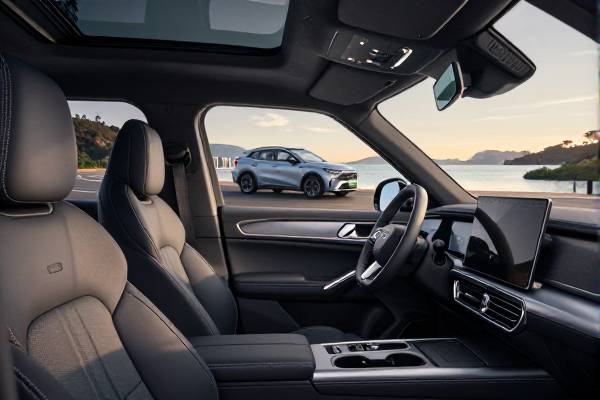
Where the evidence gets murky is with systems that take over part of the driving task. Adaptive cruise control, which automatically adjusts speed to match traffic ahead, and lane centering, which keeps the vehicle in the middle of the lane, are now common in many new cars. But the crash data does not back them up.
“When we look at real-world data, we don’t see a benefit from that type of technology,” says Jessica Jermakian, senior vice president of vehicle research at IIHS. “What we do see is that drivers are more likely to become distracted and more likely to engage in secondary tasks when these systems are active.”
That finding has important implications. If a driver believes the car is handling the driving, they may check a phone screen, reach for an object, or drift mentally from the task. The convenience of these features can create a false sense of security, and that behavior appears to cancel out any potential safety gains.
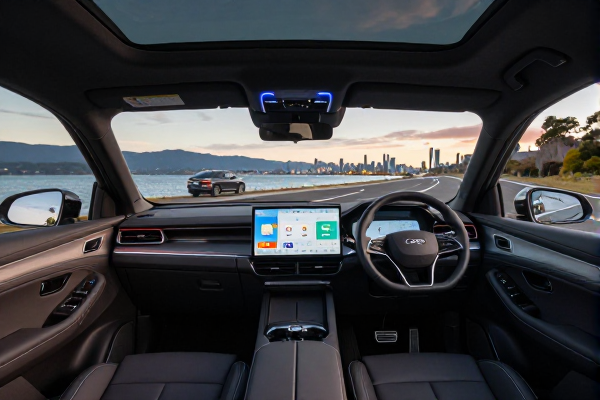
The answer, according to IIHS, is yes—but only if automakers implement them correctly. Driver monitoring systems use cameras and algorithms to track where the driver’s eyes are looking and how alert they appear. If the system detects distraction or drowsiness, it can issue alerts, and in more advanced cases, it can slow the vehicle or bring it to a stop.
These systems are becoming more common, especially in vehicles with advanced driver assistance packages. They are not just about convenience; they are a key piece of the safety puzzle because they address the root cause of many crashes: human inattention.
IIHS sees driver monitoring as a bridge between today’s partially automated cars and a future where vehicles can handle more of the journey safely. The agency also believes the technology could one day detect impaired driving, potentially by combining eye tracking, steering behavior, and cabin sensors.
Looking ahead, IIHS plans to tighten the criteria for its Top Safety Pick+ award. The new requirements will include features that can detect signs of impairment, as part of the Institute’s broader goal to cut U.S. road deaths by 2030.
This is a significant shift. Until now, crashworthiness and basic crash avoidance have dominated the ratings. Adding impairment detection means automakers will need to invest in sensors and algorithms that go beyond simple lane keeping and automatic braking.
The move comes at a time when impaired driving remains one of the biggest contributors to fatal crashes. Alcohol, marijuana, and other substances are involved in a large share of road deaths, and technology aimed at detecting impairment could help prevent many of those tragedies.
The National Highway Traffic Safety Administration (NHTSA) is also exploring this territory. A federal mandate requires all new cars sold in the United States to include impaired-driver detection technology by 2027. The deadline sounds close, but the technology is not ready for prime time.
In a February 2025 report to Congress, NHTSA acknowledged that no current in-vehicle technology can passively measure blood or breath alcohol content with the accuracy needed for real-world driving. Other sensor-based approaches, such as cameras that analyze driver behavior, were described as “not ready to be integrated into vehicles sold to the general public.”
That doesn’t mean the effort is stalled. Automakers and suppliers are working on systems that combine cabin cameras, touch sensors on steering wheels, and driving behavior analytics. Infrared sensors shine light on the skin to estimate blood alcohol content, while algorithms can detect erratic steering or slowed reaction times.
But the 2027 deadline will likely be missed unless a breakthrough emerges soon. In the meantime, IIHS is pushing the industry forward by making impairment detection a future award criterion.
One technology that could have a more immediate impact is intelligent speed assistance (ISA). These systems inform drivers of the current speed limit, usually through a small display in the gauge cluster. Some versions go further, alerting drivers when they exceed the limit, though they do not force the car to slow down.
Research shows that speeding remains one of the leading factors in fatal crashes, and simply reminding a driver of the speed limit can change behavior.
“Even that level of information can help support people in making safe speeding decisions,” says Jermakian. ISA is already appearing in about two-thirds of the 2025 model-year vehicles that IIHS has tested. That is a positive sign, but adoption across the broader fleet will take time.
The average vehicle on U.S. roads is almost 13 years old, which means any new safety feature will not penetrate the national fleet quickly. Even if every brand began equipping its 2026 models with the latest driver monitoring and impairment detection, it would take more than a decade before most vehicles on the road included those systems.
“Even if we get that new technology into vehicles today, we’re still a long way from having the majority of vehicles with that type of technology,” Jermakian says. “So that’s a long game, but there are things we can do in a much shorter time frame, like better enforcement.”
That combination of policy and technology is likely the most realistic pathway to reducing U.S. road deaths. IIHS will continue to crash-test vehicles and evaluate new systems, but the real gains will come from pairing smarter cars with smarter rules and, eventually, with drivers who are more connected to the task at hand.
For car buyers, the message is simple: pay attention to what the safety ratings actually reward. Systems that assist a focused driver, like blind-spot warnings and automatic emergency braking, are present on nearly every new car and are proven to help. Features that promise to drive for you may not deliver the safety benefit they advertise.