Browse

Log in / Register
 Share

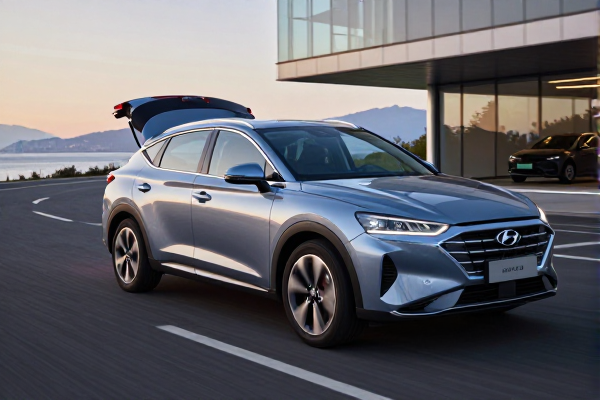
Hyundai Motor Group is set to unveil a next-generation safety technology next year that automatically prevents unintended acceleration—even if the driver accidentally floors the gas pedal at highway speeds. The system, an evolution of the existing Pedal Misoperation Safety Assist (PMSA) 2.0, currently limited to parking and low-speed maneuvers, will now incorporate real-time road classification and vehicle speed data to intervene during general driving scenarios. The first mass-production model to feature the upgraded system is expected to launch in 2025.
In an exclusive interview conducted on [today's date formatted as "Month Day, Year"], senior researchers from Hyundai Motor Company confirmed the expansion. “The function we are developing limits torque based on the road type classification when the driver unintentionally accelerates,” said Duhyeon Kim, Senior Researcher of Vehicle Drive Control Development Team 1. “For next year’s mass-production model, we are combining road condition class information with PMSA 2.0 so it works even when the vehicle is moving.”
The development of PMSA began with the Casper EV, primarily for the Japanese market where pedal misoperation regulations are strict. Following management’s directive to prioritize safety, Hyundai rapidly expanded the feature across its lineup. The most notable application to date is the latest Avante (Elantra in some markets), which introduced PMSA 2.0 last year. When the vehicle is in Drive or Reverse and an obstacle (vehicle or wall) is detected within 1.5 meters, sudden accelerator pressure triggers the system to cut power and apply brakes, bringing the car to a stop.
Hyundai engineers are now pushing beyond low-speed scenarios. By integrating ultrasonic sensors and parking cameras, the system will detect more obstacles and operate at higher speeds. The company plans to offer this safety package as a standard feature, not an optional add-on, to maximize market penetration. “We are focusing on developing these features without increasing costs, even though adding sensors and controllers could raise expenses,” noted Dongha Kim, Senior Researcher of Vehicle Drive Control Development Team 2.
The decision to equip the Avante with PMSA 2.0 was strategic. “Our main targets for pedal misoperation are elderly drivers or those with limited experience. The Avante is a popular choice among novice drivers and young professionals, so this feature will be especially helpful,” Dongha Kim explained. Duhyeon Kim added, “The Avante is a high-volume model. By incorporating safety features into a widely sold vehicle, we can raise customer awareness of safety and create social value.”
While PMSA 2.0 currently focuses on parking and low-speed situations—where the vast majority of pedal misapplication accidents occur—the upcoming version will address higher-speed scenarios. Hyundai’s research indicates that many pedal misapplication incidents happen when drivers panic during emergency situations, such as when a car suddenly stops ahead. The new system will analyze road type (highway, urban street, residential area) and vehicle speed to determine whether to intervene, reducing false positives and ensuring smooth operation.
Industry analysts view this move as a competitive differentiator. “Hyundai is effectively democratizing advanced safety technology that was previously reserved for luxury vehicles,” said Dr. Mark Stevens, an automotive safety expert at the University of Michigan. “By making it standard on a high-volume model like the Avante, they’re setting a new benchmark for the industry.” The company’s commitment to integrating these features without extra cost to consumers aligns with a broader trend of “safety first” policies across the global automotive industry.
Hyundai’s next-generation PMSA also represents a step toward fully autonomous driving systems. By combining sensor fusion with intelligent decision-making, the technology builds a foundation for more advanced driver assistance features. The company expects to unveil the complete technical specifications and deployment timeline at next year’s Consumer Electronics Show (CES) in Las Vegas.
As Hyundai accelerates its safety innovation, the expanded PMSA system is expected to reduce the risk of unintended acceleration accidents significantly. According to the National Highway Traffic Safety Administration (NHTSA), pedal misapplication accounts for approximately 16,000 crashes annually in the U.S. alone. Hyundai’s proactive approach could help mitigate these incidents, especially among older drivers and those new to driving.
With the original PMSA 1.0 detecting obstacles within 1 meter and PMSA 2.0 extending to 1.5 meters, the next version is expected to cover an even wider detection range and incorporate predictive algorithms. The company is also exploring the use of artificial intelligence to better distinguish between intentional acceleration (e.g., merging onto a highway) and unintended inputs.
The new Avante, already praised for its safety suite, will serve as the flagship model for this technology rollout. Hyundai aims to have the system available on all mainstream models within two years, further cementing its reputation for affordable safety innovation.