Browse

Log in / Register
 Share

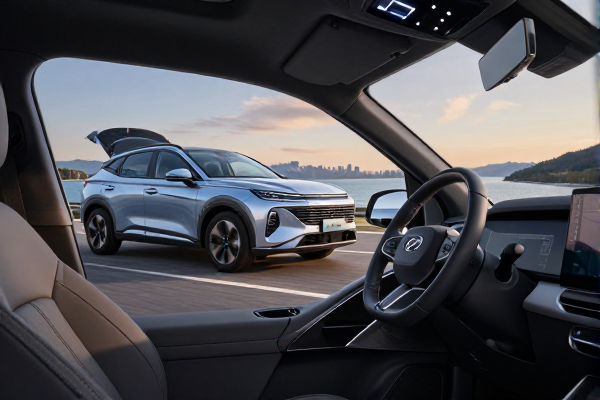
Hyundai Motor has laid out its most ambitious product and technology roadmap to date, targeting over 100 new or refreshed models globally by 2030 and doubling down on extended-range electric vehicles (EREVs) as a bridge between hybrids and full EVs. The announcement, made on July 7, 2025, follows a strong first half of 2026 where the brand delivered 2 million vehicles and posted revenue of 95,200 billion won ($68 billion), up 2.7% year-on-year.
Product blitz: 100+ models, Tucson leads, Santa Fe EREV coming
The centerpiece of Hyundai's plan is a massive product offensive. By 2030, the company will launch or refresh 58 vehicles in North America, 49 in South Korea, 41 in Europe, 26 in India, and 22 in China. Many will be all-new or enter segments Hyundai currently under-serves. The first wave includes the highly anticipated Ioniq 3 (arriving this month), the refreshed Tucson and Tucson Hybrid (Q4 2026), the first-ever Santa Fe EREV (first half 2027), and two new global B-segment SUVs.
Tucson remains Hyundai's biggest success story with over 10 million units sold globally. The 2027 Santa Fe EREV will offer a total range of 965 km, produced at Hyundai Motor Manufacturing Alabama (HMMA). Hyundai also aims to enter body-on-frame segments, including a mid-size pickup and light commercial vehicles, addressing a 29% gap in market coverage. The high-performance N brand will expand to 100,000 annual sales by 2030. [Industry analysts note that Hyundai's move into pickups directly challenges Ford and GM in the US market, where the segment accounts for 20% of total sales.]
Europe: 85% electrified lineup, 420,000 EV sales target
In Europe, Hyundai targets 85% model mix electrified by 2030, with five new SUVs and light commercial vehicles. EV sales are projected to jump from 116,000 in 2025 to over 420,000 by 2030. The Ioniq 3, launching this month, delivers 497 km range and debuts Pleos Connect, Hyundai's next-generation infotainment platform. A new EV and an EREV will follow in 2027. Hyundai aims for 500,000 total European sales by 2030, leveraging dealer collaboration and technology partnerships. [Compared to Tesla's 2024 European sales of ~400,000 units, Hyundai's target shows it intends to lead the mass-market EV transition.]
Genesis: 1 million vehicles in 10 years, EREV SUV in 2027
Genesis hit the 1-million-sales milestone faster than any other luxury brand. The all-new GV90 flagship sets new standards in luxury and technology, while the GV80 Hybrid establishes benchmarks in power and efficiency. An EREV SUV will join the lineup in early 2027. Genesis operates in 40+ markets, with a target of 350,000 annual sales by 2030 and 270+ retail outlets globally (a 50% increase). After entering Italy, France, Netherlands, Tunisia, and Morocco this year, Genesis will launch in Spain in Q4 2026.
Software-defined vehicle: data flywheel, NVIDIA ecosystem, 50,000 GPUs
Hyundai is building a "data flywheel" to enhance SDV capabilities: data collection → AI analysis → OTA updates → improved customer experience. The revamped Grandeur introduces Pleos Connect and Gleo AI, a generative AI agent. The same cycle applies to autonomous driving. Hyundai Motor Group is standardizing sensor architecture around the NVIDIA ecosystem, integrating data from Hyundai, Kia, 42dot, and Motional. By 2029, the Saemangeum AI Data Center (100 MW, 50,000+ GPUs) will come online to handle the surge in autonomous driving data. [This infrastructure investment rivals that of Tesla's Dojo supercomputer, signaling Hyundai's serious commitment to full-stack AI development.]
Autonomous driving roadmap: Level 2+ in 2028, Level 4 later
Hyundai's phased approach: By end of 2025, Atria AI (AI-powered autonomous system) will be deployed in Gwangju, South Korea, to collect data on unexpected road scenarios. In 2028, a partnership with NVIDIA will deliver Level 2+ autonomous driving on the first mass-produced SDV model. Data from Hyundai's 7 million+ annual global vehicle sales will accelerate Atria AI training, targeting Level 4 capabilities. Standardized sensor systems and AI computing platforms will be applied to most mass-produced vehicles long-term.
Battery cost reduction: 30% cheaper cells, 40% faster charging
Hyundai's in-house battery development yields cells with double the output of previous high-nickel cells and 40% faster charging. These high-performance cells will power EREVs, which use less than half the battery capacity of comparable EVs while delivering equivalent performance. EVs launching next year will use medium-nickel NCM cells, reducing battery costs by 30% while maintaining optimal performance. A cloud-based battery management system will extend battery life by 20% by 2028. [This cost reduction aligns with Hyundai's goal to achieve EV price parity with ICE vehicles, a key barrier to mass adoption highlighted by recent McKinsey reports.]
With a clear product, technology, and localization strategy, Hyundai is positioning itself to compete aggressively across the electrified, autonomous, and software-defined vehicle landscape. The coming years will test whether the execution matches the ambition.