Browse

Log in / Register
 Share

October 24, 2026 – Hyundai has published the full equipment list for the Bayon Automatic ahead of the SUV's India launch on October 26. The subcompact model pairs a 1.5-liter gasoline engine with an Intelligent Variable Transmission (IVT), introduces a new Dash Boost Mode, and adds paddle shifters plus three driving modes. Twin 12.3-inch screens anchor the cabin, while the standard safety count exceeds 35 items. The Bayon is not planned for North America, but the specification shows where Hyundai is taking its global entry-SUV lineup.
The headline addition to the automatic version is Dash Boost Mode, a function Hyundai describes as an "instant power boost" aimed at sharpening acceleration during overtaking.
The company has not explained the logic behind the technology. It may adjust throttle mapping, IVT pulley ratios, or both. Hyundai is holding back on specifics until launch, so real-world validation will depend on first drives by automotive media in India.
The automatic also receives what Hyundai calls Sporty Drive Tech, a feature that promises a more direct, sporty acceleration character. Again, the company's technical explanation is pending. Together, the two functions suggest Hyundai is using software calibration rather than hardware changes to differentiate the IVT from a conventional continuously variable unit.
Drivers can override the IVT manually using paddle shifters mounted behind the steering wheel. The layout allows quick ratio changes without either hand leaving the wheel.
A dedicated Drive Mode button on the steering wheel cycles through three settings:
Hyundai's steering-wheel-mounted mode switch is a design choice appearing across its newer models, keeping the center console clean and placing control directly under the driver's thumb.
The Bayon runs on a 1.5-liter, four-cylinder MPi gasoline engine that delivers 115 hp and 143.8 Nm of torque (approximately 106 lb-ft). A six-speed manual gearbox remains the entry option, with the IVT automatic offered as the upgrade.
This powertrain has been a workhorse for Hyundai in India. It also powers the Creta SUV, and the company says cumulative sales for the engine family have crossed 600,000 units in India since 2020. For Bayon buyers, the carry-over unit means proven reliability, low-cost maintenance and wide parts availability. For Hyundai, it helps control development cost while the cabin and safety packages carry the premium positioning.
It is a notable contrast with the European-spec Bayon, which uses a turbocharged 1.0-liter T-GDi engine. The larger naturally aspirated unit better suits India's operating conditions, fuel expectations and price sensitivity. Powertrain localization of this kind explains how global models like the Bayon get adapted market by market.
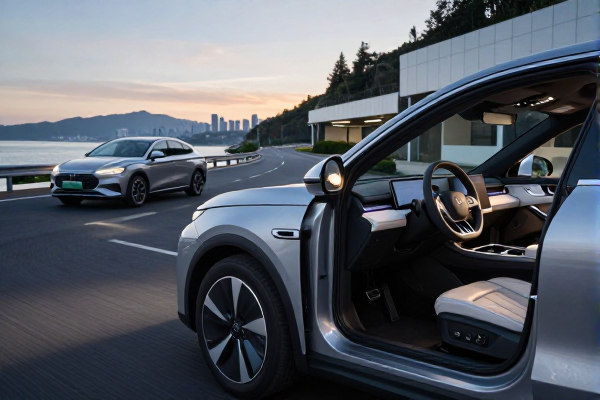
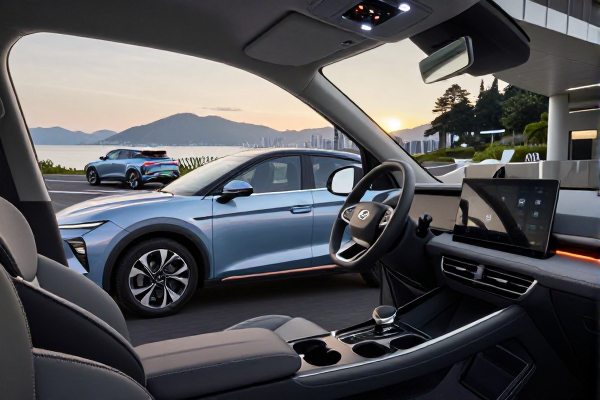
Inside, the Bayon presents a curved dashboard layout with two 12.3-inch screens—one for the instrument cluster, one for infotainment. A panoramic sunroof, an electrically adjustable driver's seat and a Bose audio system round out the upscale touches.
Hyundai is pushing the Bayon as a technology-forward entry into the small-SUV segment, a move that mirrors the success of similarly equipped compact crossovers from rival Kia in India. The cockpit styling also borrows from the design language of Hyundai's larger SUVs.
Hyundai states that every Bayon variant will come with more than 35 standard safety features, including six airbags, Electronic Stability Control (ESC), Hill-Start Assist Control (HAC) and a Tire Pressure Monitoring System (TPMS).
Higher trims are equipped with Hyundai SmartSense Level 2 Pro ADAS, a suite that claims 23 functions. Adaptive cruise control, forward collision avoidance assist and lane-keeping assist typically define this tier, but the final availability of individual features will need to be checked against the variant list at launch.
The Bayon rides on the Global K Enhanced Platform. Hyundai says the vehicle was engineered with the safety needs of the Indian market in mind; its performance in a specific crash-test program has not yet been published.
The Bayon is scheduled to go on sale in India on October 26. Hyundai is already accepting bookings for ₹11,000, roughly US$130 at current exchange rates. Final pricing, variant-wise equipment and delivery timelines have not been announced.
Pricing is the biggest remaining unknown. India's small-SUV segment is highly price-sensitive, and Hyundai's final numbers will likely determine whether the Bayon's feature-rich pitch translates into real sales momentum.
In India, the Bayon faces a packed field that includes the Maruti Suzuki Brezza, Kia Sonet and Tata Nexon—three of the country's best-selling SUVs. Each offers an automatic option, and each has been updated or facelifted recently.
The Bayon's dual-screen cockpit, paddle shifters and Level 2 Pro ADAS on upper trims give it a differentiation advantage on paper. But rivals are deeply entrenched, so showroom pricing and real-world fuel efficiency will matter just as much as the feature table.
The Bayon is not coming to the United States. Hyundai has made no move to bring its smallest SUV to American dealerships, and the India launch does not change that. Still, the model is a useful signal for anyone tracking Hyundai's technology plans.
Hyundai's American lineup currently starts with the Kona, which has moved upmarket in recent generations. The Bayon's equipment mix shows how far Hyundai is willing to push premium features at much lower price points. A curved 12.3-inch display layout, steering-wheel drive controls and Level 2 Pro ADAS on a budget-oriented small SUV suggest these technologies are becoming the baseline of Hyundai's global compact experience, not exclusive premium extras.
That direction carries a direct read-across to the US. The next-generation Kona, which shares development DNA with the platform family behind the Bayon, could easily inherit a similar cockpit concept and the same IVT calibration logic. Dash Boost Mode in particular might become familiar to American drivers if it earns a positive response in India first.
The Bayon's positioning also highlights a gap in Hyundai's US ladder. With the Venue now out of the American market, Hyundai does not sell a true entry-level SUV in the US. The company has instead leaned into larger vehicles and EVs. If that strategy creates room for a small, affordable gasoline model again, the Bayon's concept—if not the India-spec car itself—provides a ready template.
For now, the Bayon Automatic's immediate test is India, where price-conscious buyers decide winners. But the technology package inside it offers an early look at what a future Hyundai subcompact could look like for buyers anywhere, including the US.