Browse

Log in / Register
 Share

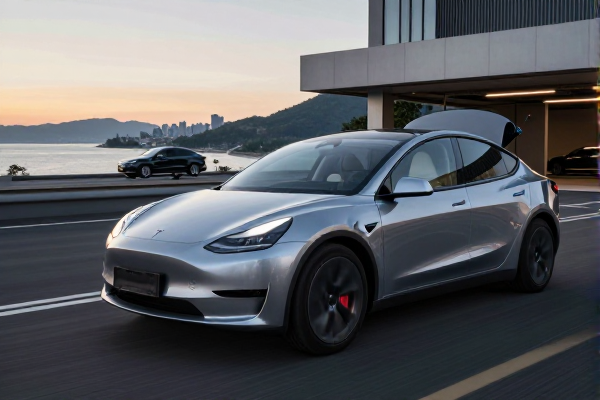
Tesla finally put to rest a years-old promise that every car built since 2019 had the hardware for full autonomy. On its Q1 2026 earnings call, the company admitted Hardware 3 (HW3) vehicles cannot safely operate without a driver – a stark reversal that leaves thousands of owners who paid thousands for Full Self-Driving (FSD) in limbo.
The admission came during the company's first-quarter earnings call today, April 22, 2026. Tesla confirmed that while HW3 cars will continue to receive FSD updates – including features from the upcoming FSD V14 Lite – the hardware lacks the necessary compute power and camera resolution to run unsupervised. This means the dream of falling asleep in a self-driving Tesla, sold to buyers since 2019, is officially off the table for that hardware generation.
The bottleneck isn't just software. HW3's computing unit and its suite of cameras simply can't handle the real-time decision-making required for Level 4 autonomy. HW4, introduced in 2023, brought higher-resolution cameras and a more powerful computer. Upgrading a HW3 car to HW4 isn't a simple computer swap – it demands new cameras, a new vehicle computer, and extensive rewiring of internal harnesses to handle the extra data throughput. Tesla even teased a new AI4+ computer with double the memory, but that chip won't reach production until mid-2027 at the earliest.
Because the retrofit is so labor-intensive – it involves partially dismantling the car – Tesla won't push the work to existing service centers. Instead, the company plans to build dedicated conversion facilities in major cities, designed specifically to strip down and rebuild older vehicles. This is a major logistical undertaking, and Tesla hasn't announced a timeline for opening those hubs.
Owners who purchased the FSD package before the announcement get two paths. They can either take the hardware upgrade for free at one of the conversion hubs, or accept a trade-in discount on a new AI4-equipped Tesla. Elon Musk framed the trade-in as "the easier path" for anyone uneasy about invasive surgery on their car. But Tesla hasn't disclosed specific pricing or trade-in values. Industry watchers estimate the upgrade could cost Tesla around $3,000 to $5,000 per car to execute, and the trade-in credit may be roughly equivalent. However, these are informed guesses – Tesla has confirmed nothing.
Here's the rub: Tesla says the free upgrade will be offered first to FSD buyers, but it hasn't committed to a date, a firm cost, or even confirmed which computer will be installed. The AI4+ that might do the job isn't due until at least mid-2027. This is a company that has repeatedly missed self-driving deadlines and has every incentive to steer owners toward new-car sales. A genuine free upgrade that arrives slowly, gets hedged with conditions, or quietly becomes the less-promoted option next to the trade-in would be entirely in character. Until a HW3 owner actually gets an AI4 car back at no charge, the promise of a free upgrade is exactly that: a promise – the same kind of promise that HW3 owners were sold on years ago.
There's a bigger motive here. Musk emphasized that upgrading HW3 fleet is critical for Tesla's long-term finances: every HW3 car brought up to AI4 spec becomes a potential robotaxi, part of the planned Cybercab network. In other words, Tesla wants to turn an aging fleet into a revenue-generating asset – the very fleet it once told owners would appreciate in value as self-driving robotaxis. For European buyers, the timing hurts especially: FSD is only now winning approvals across the EU, and even where regulators have signed off (like in the Netherlands), the hardware that can't fully use it was sold there years earlier.
Wall Street reacted cautiously. Shares fell 2% in after-hours trading as investors digested the cost implications. "This is a bill coming due for a promise that should never have been made," said auto analyst Mark Delaney of Goldman Sachs. "Tesla is now in a position where it either spends heavily to make whole FSD buyers, or faces potential regulatory action for false advertising." Several class-action lawsuits had already been filed over the FSD hardware claims; this admission could strengthen plaintiffs' arguments.
Any HW3 owner who paid for Full Self-Driving now faces three realities: a time-consuming teardown at a future conversion hub, a trade-in that costs them money, or an open-ended wait to get something they were told they already owned. Tesla has not said how long it will take to retrofit the fleet, nor how much it will ultimately cost. For now, the company is asking for patience – something it has tested for years.
This is a cautionary tale for car buyers: pay for the hardware in the car you drive today, not the software promise attached to it. Tesla's admission confirms that no amount of over-the-air updates can overcome a fundamental hardware deficit. The company that promised "all cars have the hardware needed for full self-driving" now has to eat those words – and so do its customers.