Browse

Log in / Register
 Share

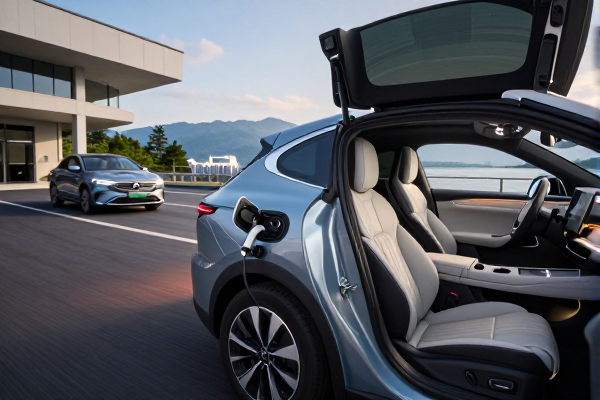
Today, April 10, 2025, the automotive industry is quietly moving away from the 12V socket that has served as an accidental charging standard for decades. As cars evolve into software-defined platforms, power delivery is being rethought from hardware to code. The dashboard port that once powered your phone by chance is now just one piece of a larger, smarter system.
The 12V Socket: An Accidental Standard
The 12V accessory socket was never designed for electronics. It started as a cigarette lighter port in the 1920s, built around 12V lead-acid batteries and simple resistive loads. When phones and GPS units arrived in the 1990s, adapters stepped the voltage down to 5V, but the socket itself remained unchanged. It worked—barely—and became the default charging point by accident, not by design.
Here's the thing: that old setup wastes energy. A 12V-to-5V converter loses about 10–15% as heat. Multiply that by millions of cars, and it's a lot of wasted power. Carmakers knew this for years, but the standard was too entrenched to replace overnight.
The USB-C Revolution: Negotiated Power, Not Fixed Voltage
USB-C Power Delivery (PD) changes the game. Instead of a fixed 5V output, the car and device negotiate voltage and current—up to 240W on paper, though real-world car ports cap at 45–65W due to thermal limits and wiring. The shift is from "plug and hope" to "plug and negotiate."
Yet most drivers have no idea what their car's USB-C port actually delivers. A 2024 survey by the Society of Automotive Engineers (SAE) found that only 30% of new cars provide more than 20W on all USB-C ports. The rest share power across multiple seats, and rear passengers often get weaker connections. The port shape tells you nothing about performance.
Heat: The Real Charging Bottleneck
Every charging method in a car runs into the same wall: heat. On a 95°F day, a dashboard USB-C port can throttle output by 40% or more after just 15 minutes of direct sun. Wireless charging pads lose even more energy—up to 30% conversion loss—and thermal limits kick in faster.
Recent testing by the automotive consultancy Munro & Associates (2025) showed that a 2025 Tesla Model 3's wireless pad drops from 15W to 8W after 10 minutes in a hot cabin. Meanwhile, a wired USB-C port in the same car maintained 45W because it could vent heat through the console. The lesson: rated wattage means little if the system can't shed heat.
EVs Rewrite the Electrical Architecture
Electric vehicles don't use alternators. Instead, a DC-DC converter pulls power from the 400V or 800V traction battery and steps it down to 12V for the low-voltage system. This setup creates a massive high-voltage store right next to the familiar 12V bus. And it opens the door to over-the-air updates.
Now carmakers can adjust charging behavior through software. In 2024, Ford issued an OTA update for the F-150 Lightning that increased the Pro Power Onboard maximum from 9.6kW to 10.2kW by refining inverter firmware. No hardware change. That's the real shift: control moving from the plug to code.
V2L and V2H: The Car as a Power Source
Vehicle-to-load (V2L) technology flips the script. Instead of just drawing power, the car supplies it. The Hyundai Ioniq 5 and Kia EV6 offer 3.6kW AC output via a built-in adapter—enough to run a fridge, a microwave, or power tools. Ford's Pro Power Onboard goes up to 10.2kW in the 2025 Lightning, turning the truck into a mobile generator.
But V2L isn't limitless. Most systems have a duty cycle: they can output at full power for about 30 minutes before the DC-DC converter needs to cool down. The 2025 Rivian R1T, for example, drops to 2kW after 20 minutes of sustained 7kW output. Understanding these limits is key for off-grid use.
What About 48V?
A 48V electrical system can carry the same power at quarter the current of 12V, cutting resistive losses and allowing thinner wiring. Many mild-hybrids already use 48V for the starter-generator, but a full 48V vehicle architecture is different. It requires new motors, lights, and control modules.
Industry insiders at the 2025 SAE World Congress noted that several automakers are testing 48V-only cabins for future EVs. The goal: eliminate the 12V battery entirely and run everything—from infotainment to HVAC—on 48V. That would simplify the DC-DC stage and reduce weight. But don't expect widespread adoption before 2028.
The Cabin Charging Gap
Most cars fall short on power distribution, regardless of port type. A 2025 study by the automotive tech site InsideEVs tested 10 new EVs and found that only three delivered more than 30W to all four seats simultaneously. The rest shared a single 65W charger across two rear ports, dropping to 15W when both were in use.
The real question when evaluating a car's charging setup isn't "does it have USB-C?" It's "how much dedicated wattage per seat, and does that number drop under multi-device load?" Carmakers rarely publish this data, but independent reviewers are starting to demand it.
Where This Is Heading
The next wave of car charging will show fewer visible ports while carrying more real power. Wireless charging pads using the Qi2 standard (released in 2024) can deliver up to 15W with better alignment, but still fall short of wired speeds