Browse

Log in / Register
 Share
Share
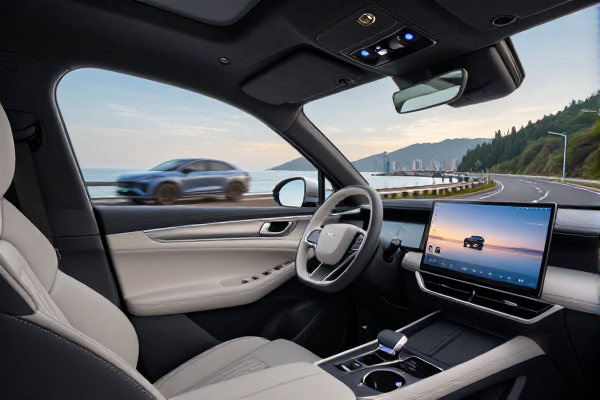
China's oldest automaker is taking its state luxury brand Down Under — and it's aiming straight at Range Rover.
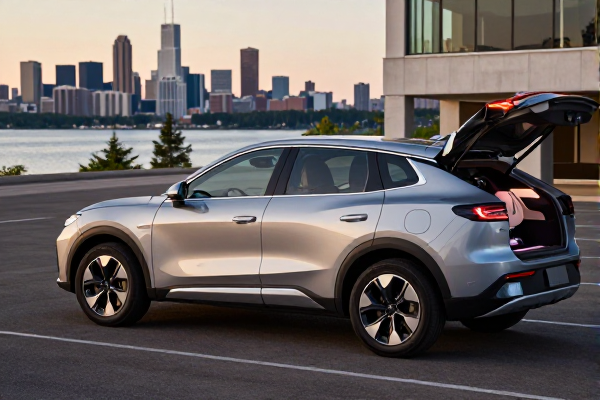
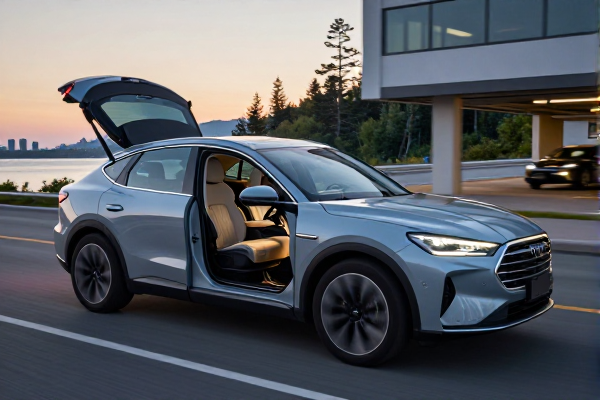
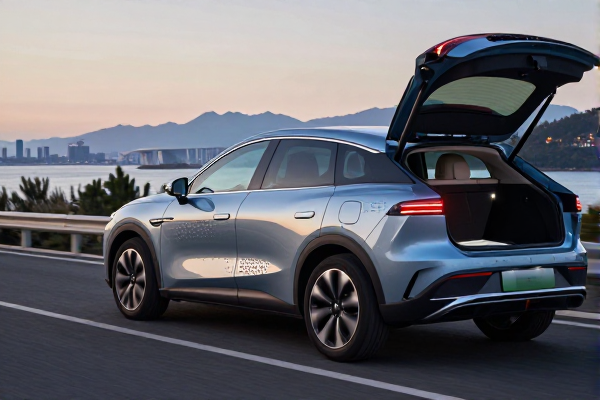
Hongqi, the badge that has built official limousines for Chinese leaders since the 1950s, confirmed on May 12, 2026 that it will enter the Australian market under the abbreviated "HQ" name late this year, leading with the three-row E-HS9 electric SUV. First customer deliveries are scheduled for mid-January 2027.
Jim Wu, HQ Australia's CEO and managing director, laid out the plan at the Everything Electric show in Sydney. He said the brand will go after buyers who currently choose Land Rover, Mercedes-Benz, BMW and Audi — and he expects to land squarely in the same premium tier as Germany's Big Three.
"We will take market share from Range Rover, that kind of level," Wu told CarExpert. "From Mercedes-Benz, we will also take some market share, but maybe not so much."
Australia might seem like an odd launching pad for a Chinese luxury nameplate, but the market is unusually open to Chinese EV brands. The country removed import duties on electric vehicles in 2022 — something the US has pointedly declined to do — and its New Vehicle Efficiency Standard, in force since January 2025, keeps pressure on carmakers to shift toward cleaner models. Chinese brands like BYD, MG and GWM have already carved out meaningful share, making Australia one of the most realistic Western testing grounds for Chinese automotive technology.
This matters well beyond Sydney and Melbourne. The 100% tariff that Washington imposed on Chinese-built EVs in 2024 still keeps Hongqi and its rivals out of American showrooms. Australia, by contrast, offers an unobstructed view of how those brands might perform in an affluent Western market if those trade barriers ever ease. Hongqi has shipped vehicles to Norway and parts of the Middle East in recent years, but this is the first market where it operates under the HQ name.
HQ will sell only battery-electric vehicles in Australia — a deliberate break from Hongqi's Chinese lineup, which includes a V8 hybrid flagship sedan. The local range opens with the E-HS9, whose Melbourne unveiling is planned for October, followed by the EHS4 SUV and a sedan.
The EHS4 is the model worth watching. It rides on the LEAP 3.5 modular architecture developed by Leapmotor — the company Wu co-founded before taking the Hongqi job — and the same platform already underpins the Leapmotor B10 sold in Australia. That means the technology has local track history, even if the badge doesn't. Stellantis, parent of Alfa Romeo, Fiat, Maserati and Peugeot, is a stakeholder in Leapmotor, which adds a transatlantic thread to the story.
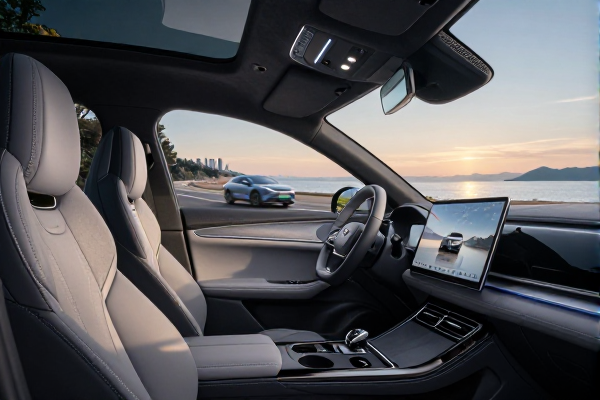
The retail plan follows conventional luxury playbook logic: 15 dealerships across Australia, five of which will be company-owned flagships in Melbourne, Sydney, Brisbane, Adelaide and Perth. Wu frames the brand's pitch around two pillars — "smart" and "tech." In practice, that means an emphasis on intuitive cabin software and a serious look at autonomous driving, a field where Wu says Australian governments will need to work with the industry rather than regulate in isolation.
HQ wants to reach 1,000 monthly sales by around June 2027, once all three models are in showrooms, and eventually hit 30,000 annual deliveries. For scale: Lexus sold 14,561 vehicles in Australia in 2025, Audi sold 16,014, and Mercedes-Benz Cars delivered 22,850. BMW was the luxury leader with 26,842 — or 27,581 if Mercedes-Benz's Vans division is counted, which nudged it narrowly ahead.
In other words, HQ is targeting a position inside the current luxury top five within a few years. That would be a striking run for a brand that, until now, has been known mainly for ferrying Chinese officials and heads of state. Whether the Australian market responds to a newcomer badge at premium price points is one of the more interesting questions in the country's EV transition.
Hongqi means "Red Flag" in Chinese, and the brand has spent nearly seven decades serving the Chinese government's most visible vehicles. It sits inside FAW Group, formerly First Auto Works, which built 3.3 million vehicles last year and is widely considered the birthplace of China's auto industry.
Wu notes that FAW's first joint venture was with Volkswagen and Audi roughly three decades ago, followed later by a partnership with Toyota. "So it learned the know-how from Volkswagen and Audi first," he said, "and then the next generation created another joint venture with Toyota. It also learned more luxury know-how from that."
That history explains how a state-owned Chinese automaker can credibly claim luxury credentials: by absorbing and adapting Western and Japanese manufacturing discipline over decades — and, more recently, by hiring the people who built some of the world's most prestigious nameplates.
The most visible hire is Giles Taylor, Hongqi's design chief — the British designer responsible for the Rolls-Royce Cullinan and the current Phantom, two of the most opulent vehicles on the market. Wu insists the results won't read as European homages.
"We hope to build [cars] that show they are Chinese," he said. "I think Chinese cars are now respected for their advanced technology."
That tension — Western talent, Chinese identity — is the story of China's luxury EV push in miniature. The question is whether buyers in Australia, and eventually elsewhere in the West, will pay premium prices for a badge that carries political baggage alongside genuine technical ambition. Hongqi's Australian launch stands to be one of the clearest tests yet, and the results will be watched far beyond its five flagship showrooms.