Browse

Log in / Register
 Share
Share

The 2026 Honda Elevate facelift has landed in India, and it's the biggest update yet for Honda's compact SUV. Three years after the original went on sale, the refreshed Elevate gains ventilated seats for both rows, a 360-degree camera, rear disc brakes, and connected LED lighting. Prices start at ₹11.8 lakh (roughly $13,500) and top out at ₹18.3 lakh ($21,000). Honda is betting that the extra equipment, plus a sharper look, will help the Elevate carve out a bigger slice of India's overcrowded mid-SUV market. As of March 2026, the facelift is rolling out across Honda's Indian dealerships.
When the Elevate debuted three years ago, Honda had high hopes. The mid-size SUV category had just become India's single largest car segment, and Honda needed a volume player to lean on. The Elevate delivered solid engineering and a comfortable ride, but never really threatened the sales leaders. Industry sales data has consistently placed it well behind the Hyundai Creta and Kia Seltos, with buyers gravitating toward richer feature sets and multiple powertrain choices.
The competitive landscape has only gotten tougher. Hyundai, Kia, Renault, Nissan, Maruti Suzuki, Toyota, Tata, Volkswagen, Skoda, and Citroen all field contenders in this space, and Mahindra is about to join the fray. Facing that kind of lineup, Honda has responded with a facelift that prioritizes practicality over spectacle.
The most talked-about addition is the ventilated seats—and not just the fronts, which are common enough these days. The Elevate now offers rear ventilation that covers both the cushion and the backrest, making it the only car in the segment to do so. In India's heat, that's a genuinely meaningful upgrade and a clear differentiator against rivals like the Kia Syros.
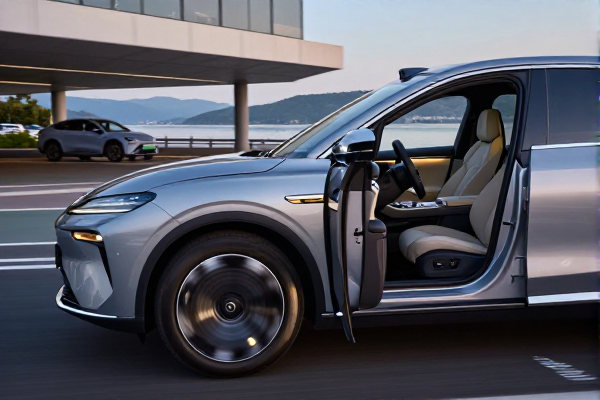
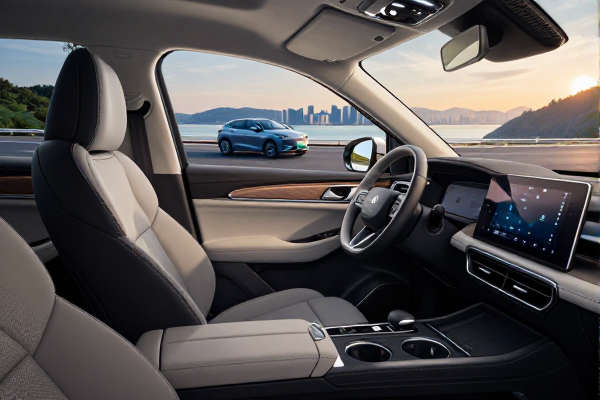
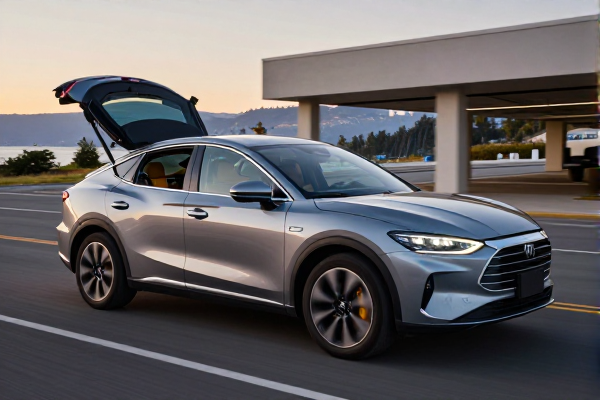
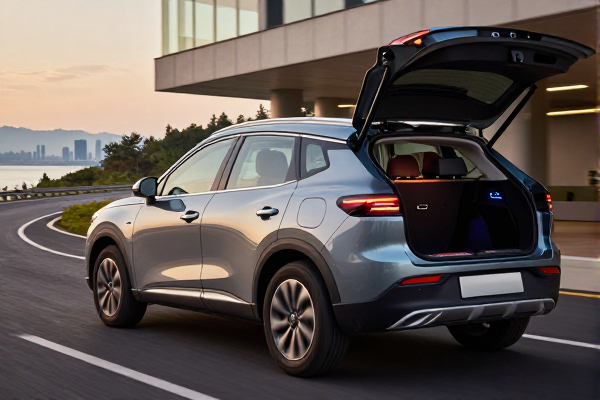
Other functional updates address long-standing equipment gaps: rear disc brakes, a 360-degree camera, front parking sensors, and adaptive cruise control with a low-speed follow function. There's also an automatic cabin air-purification system that senses air quality and cleans it without driver input. Honda added linked LED light bars front and rear, a revised grille, and chunky black cladding around the wheel arches and bumpers. Inside, the cabin gains an Ivory Black upholstery theme, extra soft-touch leatherette on the dashboard, and orange ambient lighting.
These are restrained changes compared to the dramatic restyles we've seen from Korean brands, but that suits Honda's quieter design language. The Elevate still looks handsome and properly proportioned, just not particularly flashy.
Packaging was always the Elevate's strength, and nothing has changed there. The 4.3-meter body with a 2.65-meter wheelbase continues to offer generous rear legroom and headroom. Ground clearance stays at 220mm—still the best in class. The 10.25-inch touchscreen and 7-inch TFT instrument cluster carry over as-is, as does the single-pane sunroof.
That sunroof is becoming a harder sell. Competitors now offer panoramic roofs, and buyers at this price point have come to expect them. It's not a dealbreaker, but it's a mark against the Elevate in any spec-sheet comparison, and an odd oversight for a facelift meant to close the competitiveness gap.
Honda hasn't touched the powertrain. The 1.5-liter naturally aspirated four-cylinder, borrowed from the City, still produces 119bhp and 145Nm, paired with either a six-speed manual or a CVT. In an era of turbo-heavy competitors, it feels like a throwback—but in the best sense. The engine is smooth, refined, and eager to rev, with few vibrations making their way into the cabin. Push it past 5,000rpm and the note turns genuinely pleasant rather than intrusive.
What it lacks is punch. Turbo-petrol rivals deliver a mid-range shove that this NA unit can't match, and the CVT's rubber-band effect under hard acceleration still demands patience. By naturally aspirated standards, the Elevate has adequate grunt—it just won't win any traffic-light drags.
Ride quality remains the Elevate's ace. Low-speed travel is plush, with bumps and broken pavement soaked up without fuss. At highway speeds, the body stays stable over undulations and through corners, and the steering offers enough weight and feedback to feel properly connected. Point it at a gap in traffic, and the car holds its line with a confidence that's rare in this class.
The 2026 Elevate starts at ₹11.8 lakh and reaches ₹18.3 lakh for the top CVT variant. Certain paint shades, including black, cost an extra ₹10,000. For US readers, that's roughly $13,500 to $21,000—a stark reminder of how affordable emerging-market cars can be relative to anything in an American showroom.
Price-wise, the Elevate sits comfortably alongside the Hyundai Creta (capped at ₹17.3 lakh) and undercuts the Kia Seltos (up to ₹19.8 lakh). But the problem isn't price—it's powertrain breadth. Creta and Seltos buyers can choose from naturally aspirated petrol, turbo petrol, and diesel. Several rivals are already offering hybrid options. Honda offers a single engine, with no turbo, no diesel, and no hybrid in sight.
That's a strategic blind spot for a company with more hybrid expertise than almost any competitor. Honda's announced solution is an electric SUV based on the 0 Alpha concept, which will land in India in the coming years. But that's a different price point and a different buyer. For now, the Elevate has to hold the line with one engine and one gearbox choice.
US buyers won't see the Elevate in dealerships, but the facelift still offers a revealing preview of Honda's global strategy. The space-efficient packaging, high ride height, and focus on practical comfort features echo the priorities behind Honda's American crossover lineup. The decision to upgrade convenience technology while leaving the powertrain alone suggests Honda sees mainstream buyers as more interested in reliability and everyday usability than performance numbers.
Industry analysts have observed the same pattern across Honda's international portfolio: incremental improvements in combustion models, with the big engineering bets reserved for EVs and hybrids. That approach keeps costs down and margins healthy, even if it means conceding performance leadership to rivals. In the US, where Honda is racing to electrify key models by 2030, the Elevate facelift offers a glimpse of the brand's emerging-market playbook in action.
The 2026 Elevate facelift is a sensible, measured update. It fixes real equipment gaps, adds genuinely useful features, and preserves everything that made the car appealing in the first place. It also leaves the biggest issue unresolved: the absence of a more powerful or electrified engine option. In a segment where buyers have grown used to choice, the Elevate remains a one-engine proposition—though a very comfortable, well-engineered one.
For shoppers who value ride comfort, reliability, and space above all else, the Elevate is arguably more compelling than ever. For those drawn to turbocharged performance, hybrid efficiency, or panoramic glass roofs, the Creta and Seltos remain the defaults. Honda has done enough to keep the Elevate in the conversation. Whether that's enough to win over the undecided remains to be seen.