Browse

Log in / Register
 Share

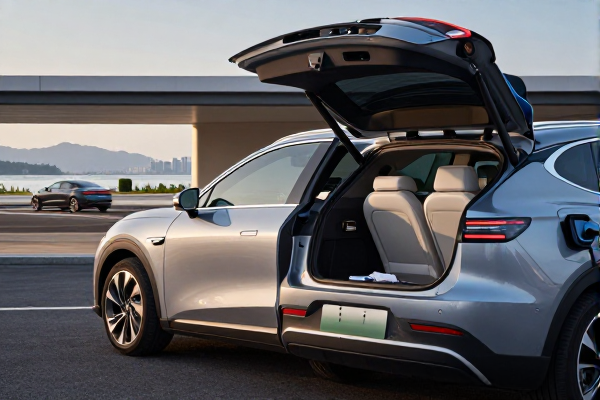
April 3, 2025 – America’s electric vehicle push is accelerating, fueled by federal tax credits, state mandates, and a growing network of public fast chargers. Yet the silent driver of the transition remains largely overlooked: the home outlet. Data from the U.S. Department of Energy shows that roughly 80% of all EV charging occurs at home, yet the vast majority of policy attention and investment dollars flow toward curbside stations and highway corridors. If the United States is to hit its target of 50% EV sales by 2030, the battle will be won not on the roadside, but inside the garage.
Home charging is the default for most EV owners. A 2024 study by the National Renewable Energy Laboratory (NREL) found that households with access to Level 1 or Level 2 chargers at home drive 70% more EV miles than those relying solely on public infrastructure. The convenience of plugging in overnight creates a habit that public charging cannot replicate. But convenience is not the same as readiness.
The typical American home was built with a 100-amp or 200-amp service panel, which can handle a 7.2 kW Level 2 charger if the existing load is low. However, many older homes—especially those built before 1990—have outdated wiring, undersized panels, or no dedicated circuits for EV charging. A recent survey by the Electrical Safety Foundation International (ESFI) estimated that 15% of U.S. homes may need a panel upgrade before they can safely support Level 2 charging. That’s roughly 18 million households, a number that will grow as EV adoption scales.
Public charging is often touted as the solution for apartment dwellers and those without garages. But the economics tell a different story. Fast-charging at a DC station can cost $0.30 to $0.60 per kWh, while home charging averages $0.12 to $0.15 per kWh. For a typical EV with a 60 kWh battery, a full charge at home costs about $8, versus $24 at a public station. Over 10,000 miles a year, that difference adds up to nearly $500 in savings.
This cost advantage is critical for lower-income households, who are often the target of equity-focused EV programs. Yet without access to off-street parking or a landlord willing to install a charger, these households remain locked out of the cheapest charging option. The Biden administration’s $7.5 billion investment in EV charging under the Bipartisan Infrastructure Law allocated only a fraction to residential and multi-unit dwelling solutions. The result: a growing “charging equity gap” that mirrors the digital divide.
As EV adoption climbs, the cumulative load of millions of home chargers could strain local distribution transformers, especially during evening peak hours when families return home and plug in. A 2023 analysis by the Electric Power Research Institute (EPRI) warned that without managed charging, a neighborhood with 30% EV penetration could see transformer overloads within five years. But the same report noted that smart charging—shifting to off-peak or using bidirectional charging—can reduce those impacts by 40% to 60%.
California’s recent mandate for all new EVs to be equipped with bidirectional charging capability by 2027 is a step in the right direction. Utilities like Pacific Gas & Electric and Dominion Energy are already piloting managed charging programs that offer customers bill credits for allowing the utility to delay charging. These programs turn home charging from a grid problem into a grid asset. The key is scaling them beyond pilots and integrating them into the standard utility rate design.
Unlike new commercial buildings, which must follow the National Electrical Code (NEC) and often include EV-capable parking spaces, existing homes have no universal readiness standard. The NEC 2023 update added requirements for EV-ready wiring in new homes, but that applies only to construction after 2023. The vast majority of the U.S. housing stock—over 120 million homes—remains unaddressed.
A few states have stepped in. California’s building code now requires all new single-family homes to have a dedicated 240V, 50A outlet for EV charging. Washington and Colorado have similar rules. But these are the exceptions. Without a national framework for retrofitting existing homes—including incentives for panel upgrades, wiring improvements, and smart charger installation—the home charging infrastructure will remain a patchwork that slows adoption.
Beyond hardware, the biggest bottleneck is people. The U.S. Bureau of Labor Statistics projects a 6% growth in electrician jobs through 2032, but that pace is insufficient to handle the surge in EV charger installations. A 2024 industry report from the Charging Interface Initiative (CharIN) found that the average wait time for a residential EV charger installation in major metro areas has increased to 12 weeks, up from 4 weeks in 2020. Certified installers are scarce, especially in rural and underserved communities.
Some utilities are addressing this by offering “turnkey” installation packages, where the utility manages the contractor and the permit process. For example, the Los Angeles Department of Water and Power (LADWP) launched a program in early 2025 that provides a free Level 2 charger and installation to income-qualified households, funded by California’s cap-and-trade revenues. The program has already cut installation wait times to under 3 weeks, demonstrating that targeted policy can overcome the installer gap.