Browse

Log in / Register
 Share


On September 15, 2026, Himax Technologies, Inc. (Nasdaq: HIMX) kicked off its participation at the SID Vehicle Displays and Interfaces Symposium in Detroit, Michigan, showcasing a broad portfolio of automotive display driver ICs and 3D sensing innovations. The event, running through September 16 at Huntington Place, draws automotive OEMs, tier‑1 suppliers, and display manufacturers eager to see how next‑generation in‑cabin interfaces are evolving.
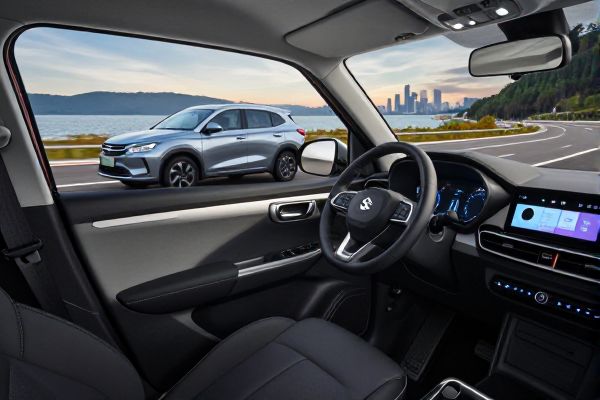
As vehicle interiors shift toward larger, curved, and pillar‑to‑pillar screens, Himax is leveraging its position as the global leader in automotive display ICs (with the highest market share across multiple technology segments, according to Omdia’s 2025 automotive display IC report). The company’s booth at #811 features live demonstrations that underscore its vertically‑integrated design approach—from TDDI with embedded high‑speed eDP to single‑chip local dimming.
Key display IC highlights include:
Automotive TDDI with high‑speed eDP interface – Combines touch, display driver, and eDP bridge functionality into a single die, eliminating external bridge ICs and SerDes for signal transmission. This reduces overall system cost by up to 15–20% in large‑format panels, while cutting power consumption and simplifying panel design for 12.3‑inch and larger displays.
Integrated local dimming TDDI – For smaller or lower‑resolution automotive displays, Himax now offers a single‑chip solution that merges local dimming directly into the TDDI. The result is higher contrast ratios and improved power efficiency without requiring a separate timing controller.
OLED touch IC and capacitive button support – New touch controllers can distinguish between a knob‑on‑display gesture and a simple capacitive button press, enabling drivers to operate physical controls without taking their eyes off the road. These solutions actively reduce driver distraction by ensuring only intended interactions register.
User‑aware touch control – Using advanced waveform/frequency detection, the IC differentiates driver and passenger touches. If a passenger’s touch zone overlaps with the driver’s display area, the system ignores accidental cross‑zone inputs—a safety feature already being evaluated by several North American OEMs for their 2028 model year vehicles.
Multi‑output Tcon for ultra‑wide displays – A groundbreaking timing controller supports up to six LVDS outputs with resolutions as high as 8K×1K, ideal for the growing trend of free‑form, ultra‑wide dashboards. It integrates local dimming, edge sharpness, HDR, and built‑in safety functions such as fail detection, CRC, and OSD, meeting ISO 26262 ASIL‑B requirements.
On the 3D sensing front, Himax is demonstrating four technologies that go well beyond basic gesture control:
Glasses‑free 3D total solution – A hardware‑based architecture converts stereo camera input into low‑latency, real‑time 3D output with virtually no crosstalk or flicker. The demonstration uses a 16‑inch notebook panel, showcasing how automakers could offer immersive 3D maps or entertainment without requiring special glasses.
SLiM™ 3D sensing module with head orientation tracking – Operating at a report rate of 180 Hz, this module pinpoints the exact direction the driver or passenger is looking. Combined with eye tracking, it enables gaze‑contingent HMI—for example, dimming a display zone that the driver is not actively watching to reduce cognitive load.
3D eye and hand tracking – Continuous spatial positioning with ultralow latency allows the system to track both the user’s visual focus and hand movements simultaneously. Himax’s proprietary algorithm can recognize mid‑air gestures like a “pinch” to select a menu item, making interactions more intuitive than touch‑only interfaces.
Micro‑ and nano‑pattern design services – Through subsidiary Himax IGI Precision Ltd, the company now offers customized diffusers, replicated optics, and electroformed components for complex 3D structures. Live demos show manufactured diffuser plates that could be used in LiDAR or structured‑light sensors.
Himax’s presence at SID Vehicle Displays comes as the automotive semiconductor market is projected to grow at a CAGR of 8.4% through 2030, with display‑related ICs among the fastest‑growing segments. By integrating multiple functions into single chips, Himax is helping automakers reduce the number of discrete components, cut bill‑of‑materials costs, and accelerate time‑to‑market.
“We’re seeing demand for displays that not only look stunning but also enhance safety and personalization,” said Jordan Wu, President and CEO of Himax Technologies. “