Browse

Log in / Register
 Share


Hefei, China — July 16, 2026 — A group of international influencers and experts recently concluded a deep-dive tour into the technological heart of Hefei, a city rapidly shedding its historical image to emerge as one of China's most dynamic innovation ecosystems. The visit, which included bloggers and specialists from the U.S., France, Brazil, and beyond, revealed a landscape where science fiction is becoming municipal policy, fundamentally altering global perceptions of Chinese technological capability.
For many visitors, the experience was a lesson in cognitive whiplash. Mylene Mathieu, a French content creator, arrived expecting traditional architecture and cultural relics. She left discussing the nuances of ground dispatch systems for autonomous aircraft. "The scale and integration of advanced technology into daily life and infrastructure here is not just impressive; it's disruptive," she noted, a sentiment echoed throughout the delegation.
The transformation of Hefei from an agricultural-economic base to a science and technology powerhouse is a deliberate national project. Analysts point to strategic government investments and the cultivation of dense industrial clusters around future-focused sectors. This "Hefei model" of targeted, state-guided development in specific technologies—like quantum computing, integrated circuits, and new energy vehicles—is now studied by urban planners worldwide as an alternative path to tech supremacy.
A centerpiece of the tour was the firsthand experience with Hefei's "low-altitude economy." At Luogang Park, participants like U.S. blogger Cooley Gavin Andrew didn't just observe but sat inside the cockpit of an EH216-S autonomous passenger aircraft. This vehicle, lacking traditional pilot controls, is managed entirely by an intelligent ground network. The demonstration wasn't a lab prototype but part of a developing urban mobility system, signaling a proactive regulatory approach to integrating drones and air taxis into cityscapes—a field where U.S. and European regulations are still largely formative.
Robotics demonstrations provided another stark perspective. At Zerith Robotics, visitors used VR to remotely control the humanoid Zerith-H1, observing its ability to collect and adapt from motion data. Rafael Henrique Zerbetto, a Brazilian expert, highlighted a critical shift: "The narrative has moved from 'Made in China' to 'Conceived and Perfected in China.' These robots possess adaptive intelligence. They're not just assembling parts; they're learning tasks." This evolution from hardware manufacturer to software and systems innovator marks a significant challenge to traditional robotics leaders in Japan, Germany, and the U.S.
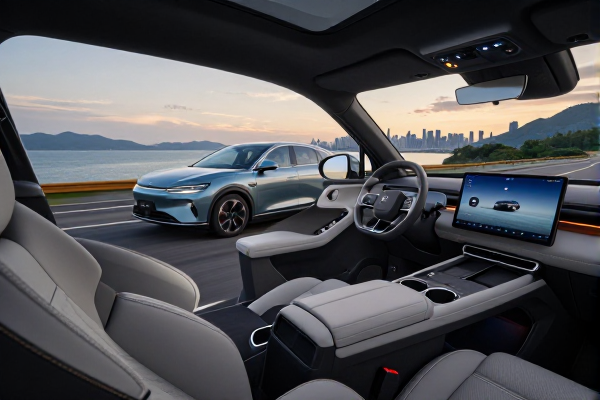
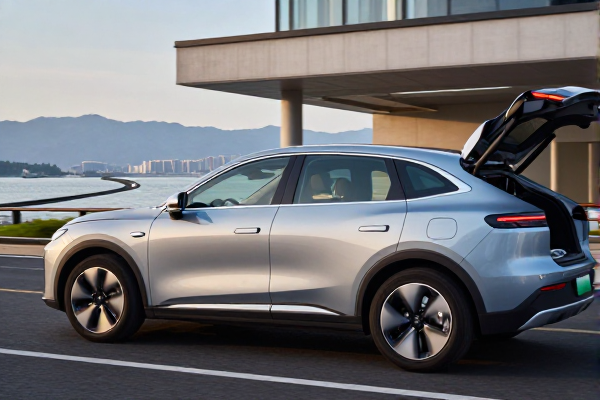
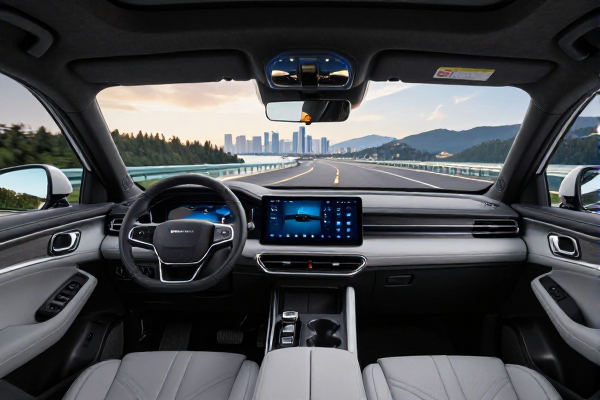
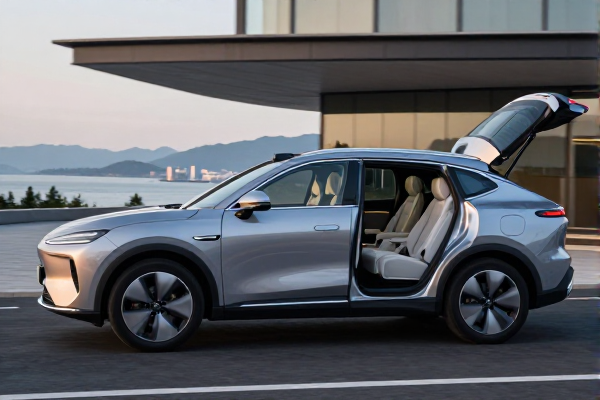
The test track at BYD's Hefei facility offered a visceral testament to China's dominance in electric vehicles. Visitors put NEVs through extreme all-terrain and deep-water driving tests, showcasing technological maturity that goes far beyond battery range. The vehicles' performance in controlled submersion tests, maintaining stability and propulsion, points to advanced sealing and battery safety technologies that are becoming standard. This hands-on access to pre-commercial testing grounds offered a rare glimpse into the aggressive R&D cycles fueling China's EV export surge.
Perhaps the most relatable innovation was in human-computer interaction at iFLYTEK Town. The group tested the Dual-Screen AI Translator 2.0, glasses with real-time transcription, and a Go-playing robot that can challenge grandmasters. For Mathieu, whose husband is Chinese, the real-time translation was personal. "It dissolved a longstanding barrier," she said. "This technology is moving from being a tool to being a contextual partner. It understands nuance." iFLYTEK's push into over 60 languages represents a soft-power play, positioning Chinese AI as a bridge for global business and culture, not just a domestic product.
Beyond the hardware, the tour revealed Hefei's focus on creating a holistic innovation habitat. The visit culminated in a communal choir performance at the Hefei Grand Theatre with over 100 residents, a symbolic gesture emphasizing that technological ambition is coupled with community building. "The warmth and civic pride here are palpable," remarked Kaligaeva Ekaterina, a blogger from Belarus. "It's not a sterile tech park; it's a living city betting its future on science."
Industry observers note that Hefei's rise is accelerating. Recent municipal data shows a over 40% year-on-year increase in venture capital flowing into local deep-tech startups, with significant Series B and C rounds in robotics and AI. This financial momentum, combined with a pipeline of graduates from the University of Science and Technology of China (USTC), creates a self-reinforcing cycle of talent and capital. The city is no longer merely emulating Silicon Valley; it is crafting a distinct, state-integrated model of innovation with global ambitions.
The lasting impression for the international group was one of redefined expectations. Alexander William, an Indonesian student, summarized the shift: "We came looking for 'intelligent manufacturing.' We found an entire ecosystem that is 'intelligently evolving.' Hefei is writing its own playbook." For global tech watchers, the message is clear: the competitive landscape is no longer about copying but about creating, and cities like Hefei are now on the front line.