Browse

Log in / Register
 Share
Share
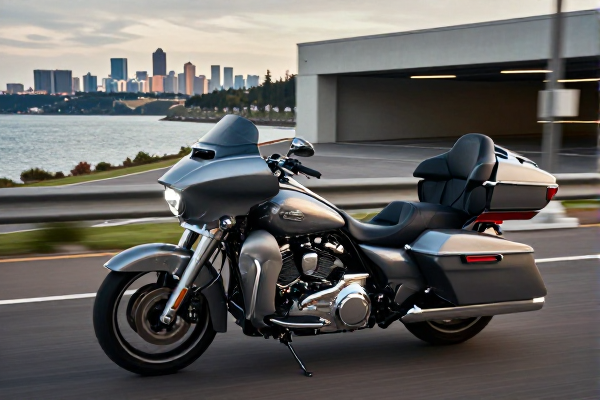
A recent attack ad from Indian Motorcycle has ignited a firestorm, accusing Harley-Davidson of launching a targeted “conquest” program the day new ownership took over. Harley says that’s false. We dig into the decades-old sales tactic at the heart of the spat. [Current Date]
The motorcycle world is rarely short of rivalry, but the latest skirmish between Indian Motorcycle and Harley-Davidson has moved from the road to the realm of public relations warfare. It began with a political-style attack ad from Indian, criticizing Harley's direction. The backlash was swift, leading Indian to defend its position by making a specific claim: that Harley-Davidson initiated a "conquest" sales program specifically aimed at stealing Indian customers on the very day Carolwood LP acquired the brand and installed Mike Kennedy as CEO.
This accusation framed Harley's move as a direct, timed assault. However, a statement from Harley-Davidson to media outlets like RideApart tells a different story. The company confirms it has a conquest incentive for Indian riders, but clarifies this program is not new, nor is it exclusive to Indian. According to Harley, similar incentives exist for customers switching from brands like BMW, Honda, and Kawasaki. The key rebuttal is that this was not a program "launched" on a specific day to target Indian's new chapter, but rather a longstanding element of its competitive sales toolkit.
What Exactly is a "Conquest" Sale? To understand the controversy, one must understand the term. A conquest sale occurs when an automaker or powersports manufacturer successfully convinces a customer to switch from a competitor's brand. This is a fundamental and ubiquitous strategy across the entire transportation industry, from luxury cars to utility vehicles and motorcycles. Incentives can take the form of special financing, cash bonuses, or exclusive trade-in offers specifically for owners of rival brands.
The practice is far from novel. An article from The New York Times in 1985 explicitly discusses "conquest sales," quoting a Ford executive who hoped new styling would "get some conquest sales from the imports." This demonstrates that the tactic has been a named and accepted part of automotive marketing for nearly four decades. In the powersports segment, a simple online search reveals conquest offers from virtually every major manufacturer, often paired with "loyalty" incentives to keep existing customers from leaving.
Historical Precedent Undermines the Accusation The claim that Harley's program was a sudden, retaliatory measure collapses under minimal scrutiny. Industry archives show that Indian Motorcycle itself was publicly promoting a Harley-Davidson conquest program as far back as 2015, according to a report from autoevolution. This historical evidence fundamentally challenges the narrative that such programs are unusual or ethically suspect when used by one competitor against another.
Furthermore, if Harley-Davidson wished to use conquest incentives as a pointed business weapon, it has had numerous opportunities in recent years—during leadership changes, boardroom disputes, or periods of negative press. The fact that it did not publicly frame its existing program as a targeted "conquest" against Indian during those times suggests the current program's scope and intent are being mischaracterized for rhetorical advantage.
A Case of Misdirection and Reputation Management? Analyzing the sequence of events leads to a compelling perspective: Indian's specific accusation about the program's launch date appears to be a damage control maneuver that backfired. The initial attack ad generated significant negative feedback from riders who saw it as divisive. By shifting focus to Harley's alleged "Day One" aggression, Indian attempted to reframe the conversation, positioning itself as the victim responding to an unfair business tactic.
However, this strategy relied on the public perceiving conquest programs as a shady or novel tactic. When exposed as a standard, industry-wide practice used by Indian itself for years, the accusation lost its potency and instead highlighted the tactical nature of the original attack. As one industry analyst noted, "This isn't a scandal; it's Sales 101. Calling out a competitor for using a common incentive is like criticizing them for advertising."
The Real Takeaway for Riders For motorcycle enthusiasts and potential buyers, this controversy sheds light on the competitive dynamics of the industry. Conquest incentives are a tool designed to benefit the consumer, offering tangible financial reasons to consider a switch. Their existence indicates a healthy, competitive market where brands actively vie for every customer.
The debate also underscores the importance of critical thinking when engaging with corporate marketing narratives. While brand loyalty is a powerful force in motorcycling, sales and marketing departments operate in a pragmatic world of incentives and conversions. The "culture war" framing in some advertisements often obscures these underlying business realities.
Ultimately, the story is less about a corporate "conquest" and more about a failed narrative conquest. Both Indian and Harley-Davidson employ these sales strategies, as do their global competitors. The incident serves as a reminder that in business, as on the road, it pays to look beyond the surface-level drama and understand the well-established rules of the game.