Browse

Log in / Register
 Share

August 5, 2024 — Chinese automotive giant GWM has disclosed comprehensive specifications for its upcoming Ora 7 electric wagon through filings with China's Ministry of Industry and Information Technology (MIIT). This regulatory step signals the vehicle's progression toward production, offering insights into its design, performance metrics, and potential market positioning globally, including in the United States.
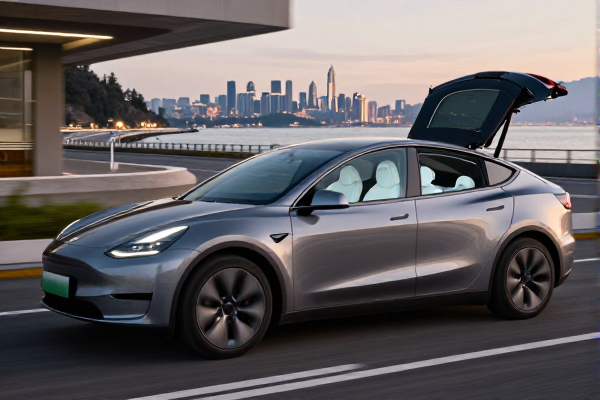
The Ora 7, internally dubbed the "Lightning Cat" in China, emerges as a mid-size, five-seater wagon with dimensions placing it in a competitive segment. At approximately 4.8 meters long, 1.8 meters wide, and 1.5 meters tall, coupled with a 2,870 mm wheelbase, it aligns closely with popular electric sedans like the BYD Seal and Kia EV4, suggesting a versatile footprint suited for urban and family use.
Powering the Ora 7 are two battery options: a 58.3 kWh and a 68.9 kWh Nickel Manganese Cobalt (NMC) pack. These choices mark a shift from the Lithium Iron Phosphate (LFP) batteries used in the current Ora 07 sedan, potentially enhancing energy density for improved range. Buyers can select between front-wheel drive (FWD) and all-wheel drive (AWD) configurations, with the former utilizing a 150 kW motor and the latter combining front and rear motors for a total output of 300 kW and 680 Nm of torque.
Range estimates vary by model, with the base FWD variant claiming up to 560 km under China's CLTC testing cycle. Opting for the larger-battery FWD version extends this to 630 km, while the dual-motor AWD model offers 535 km, balancing performance with efficiency. These figures position the Ora 7 competitively against rivals, though real-world performance in varied climates, such as North America's, remains to be validated.
Design revisions have surfaced, notably the replacement of flush door handles with traditional pull-out units in the production model. This change adheres to new Chinese regulations phasing out flush handles from 2027, reflecting GWM's adaptability to compliance standards—a factor that could influence global design strategies as the brand expands.
From a market perspective, GWM's focus remains on regions like Australia, where a spokesperson emphasized prioritizing the Ora 5 platform while acknowledging a wagon variant "on the roadmap" better suited to local demands. However, entry into the US market would necessitate competitive pricing, likely targeting the $50,000 range to challenge established models like the Tesla Model Y and Ford Mustang Mach-E.
Exclusive industry analysis reveals that GWM is strategically leveraging its electric portfolio to capture market share in Europe and Asia-Pacific, with US expansion under evaluation. Recent reports from analysts at BloombergNEF highlight GWM's growing EV exports, which surged by 35% year-over-year in 2023, indicating potential for a North American launch if regulatory and consumer reception align.
In terms of technology, the Ora 7's use of NMC batteries over LFP may appeal to markets prioritizing higher energy density and faster charging, though cost considerations could affect pricing. Compared to US favorites like the Chevrolet Blazer EV, the Ora 7's wagon form factor offers distinct practicality, potentially attracting eco-conscious families seeking alternative body styles.
Competitive benchmarking shows the Ora 7 wagon could fill a niche between compact SUVs and luxury sedans in the US. With an estimated starting price near $50,000, it would undercut many rivals while offering comparable range, though brand recognition and charging infrastructure remain hurdles GWM must address through partnerships or dealer networks.
GWM's global strategy includes scaling production to meet international demand, with facilities in Thailand and planned expansions in Europe. Success in markets like Australia, where the Ora 5 recently launched, could serve as a blueprint for US entry, focusing on localized marketing and after-sales support to build trust among American consumers.
Looking ahead, the Ora 7's debut in China, expected later this year, will be closely watched by industry observers. Its performance in safety tests, such as Euro NCAP or IIHS ratings if adapted for the US, will be critical for credibility. Meanwhile, consumer trends toward electric wagons, evidenced by models like the Audi A6 e-tron, suggest growing receptivity to this segment.
In conclusion, the GWM Ora 7 electric wagon represents a significant step in the brand's electrification journey, blending practical design with competitive specs. While US availability remains speculative, its potential to disrupt the mid-size EV market hinges on strategic pricing, regulatory compliance, and GWM's ability to navigate competitive landscapes with innovation and consumer-centric offerings.