Browse

Log in / Register
 Share

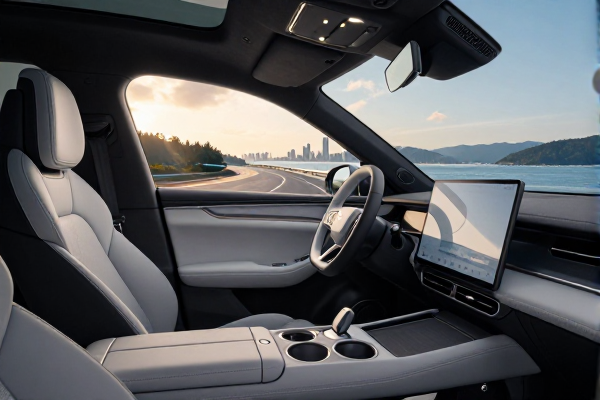
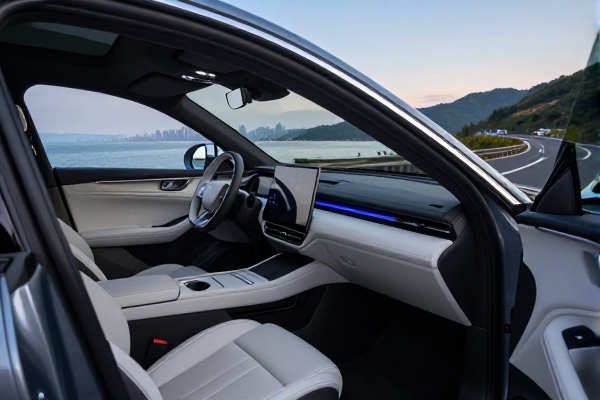
General Motors is set to roll out a new in-vehicle AI system later this year that combines generative AI with advanced driver-assistance capabilities, marking a significant step toward more intuitive and proactive vehicle intelligence. The system, which GM officials describe as a “co-pilot” for the driver, will first appear in select 2026 model year vehicles and expand across the lineup through over-the-air updates.
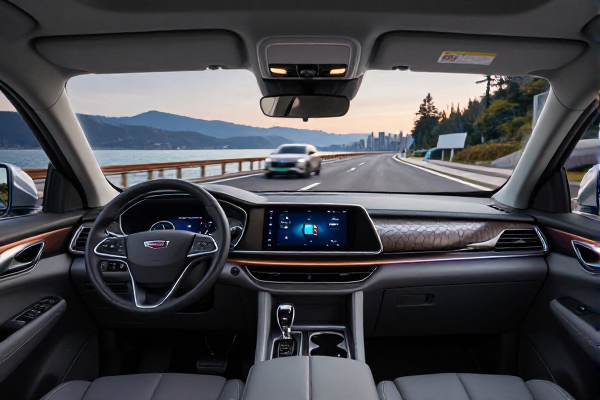
The announcement, made on April 18, 2025, comes as automakers race to embed large language models and real-time sensor fusion into cabin experiences. Unlike standalone voice assistants, GM’s system merges natural language understanding with live vehicle data—such as camera feeds, radar, and GPS—to provide contextual responses. For example, a driver could ask “What’s that building ahead?” and the AI would pull up points of interest, or say “I’m feeling tired,” prompting the system to suggest a rest stop and adjust cabin lighting.
A New Layer on Top of Super Cruise GM’s existing Super Cruise hands-free driving system already covers over 750,000 miles of compatible roads. The new AI layer adds a conversational interface to Super Cruise, allowing drivers to ask about road conditions, upcoming exits, or even request route optimizations without taking their hands off the wheel. “We’re moving from a reactive system to a proactive one,” said a GM lead engineer during a private briefing. “The AI learns driver preferences over time—like preferred coffee stops or music genres—and makes suggestions before you even ask.”
Industry analysts note that this approach differentiates GM from competitors like Tesla’s Full Self-Driving (FSD) and Waymo’s robotaxi service. “Tesla focuses on vision-only autonomy; Waymo focuses on geofenced robo-taxis. GM is betting on a hybrid: ADAS that works on highways and city streets, plus an AI that explains what the car is doing,” said Samir Patel, a senior analyst at AutoTech Insights. “That transparency could build trust, especially after years of hype around self-driving.”
Powered by Ultifi and Azure AI The system runs on GM’s Ultifi software platform, which provides a flexible, containerized architecture for third-party apps and frequent updates. Under the hood, Microsoft Azure’s OpenAI service powers the language model, enabling real-time inference without excessive cloud latency. GM claims the AI can process voice commands in under 200 milliseconds, even in noisy environments, thanks to a dedicated neural processing unit (NPU) in the Qualcomm Snapdragon cockpit chip.
Privacy concerns are addressed by a “local-first” design: most voice processing happens on-device, and only anonymized, aggregated data is sent to the cloud for model improvement. Drivers can also opt out of data collection entirely. “We’re not building a surveillance system; we’re building a helper that respects your privacy,” a GM spokesperson emphasized.
Exclusive: What Early Testers Say Ahead of the official launch, GM invited a small group of journalists and fleet operators to test the system in a prototype Cadillac Escalade. Reports from the test drive indicate that the AI’s ability to understand natural language is impressive but not flawless. In one instance, the driver asked “Find the nearest EV charger that’s not broken,” and the system correctly filtered out stations with reported outages via live Service Hub data. However, complex multi-step commands like “Navigate to the airport, then find a coffee shop along the way that’s open now and has a drive-thru” sometimes required clarification.
“It’s a v1, but it’s a solid v1,” said attendee Lisa Chen, an automotive tech reviewer. “The real value is how it integrates with the car’s sensors. When a pedestrian stepped into the crosswalk, the AI said ‘I see a pedestrian to your left.’ That’s a subtle but powerful safety nudge.”
Timeline and Availability GM plans to launch the system in the fourth quarter of 2025, starting with the 2026 Chevrolet Silverado EV, GMC Sierra EV, and Cadillac Lyriq. Over-the-air updates will bring it to existing 2025 models equipped with the Ultifi platform later in 2026. Pricing will be bundled with GM’s OnStar Premium subscription, currently $49.99 per month, though a standalone option may be offered.
The company also hinted at future capabilities: automatic parking lot navigation, real-time traffic pattern predictions, and even voice-controlled gaming for passengers during stop-and-go traffic. “We’re just scratching the surface of what generative AI can do inside a vehicle,” the GM lead engineer said. “The goal is to make every drive safer, more efficient, and more enjoyable.”
Competitive Landscape As GM moves forward, rivals are not standing still. Mercedes-Benz recently introduced its MBUX Virtual Assistant powered by ChatGPT, while BMW’s Voice Assistant now integrates with Alexa Custom Assistant. Ford’s BlueCruise 1.3 added lane-change assist with voice command. But GM’s bet on a unified AI that bridges infotainment, navigation, and ADAS could give it a lead in the premium segment.
“The car is becoming a platform for AI, and GM is treating it as a first-class product, not a gimmick,” said Patel. “If they execute well—and keep the price reasonable—this could be a major differentiator by 2026.”