Browse

Log in / Register
 Share

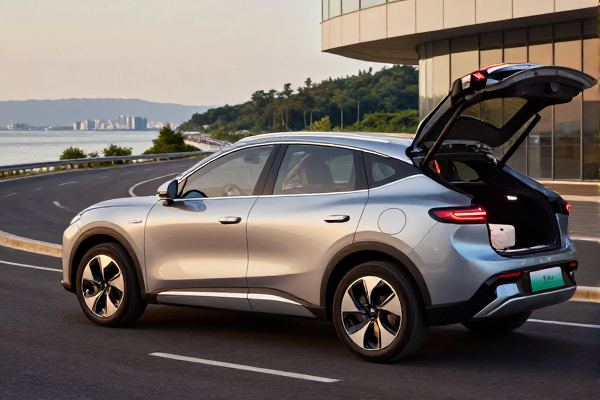
ACCRA, May 9, 2026 — A driver at Kaneshie lorry station in Accra summed up Ghana’s electric-vehicle puzzle better than any policy paper: “If it saves me fuel money, I will buy it. But if there is nowhere to charge it, what should I do?”
That tension runs through a newly published study of 800 commercial and private drivers across four Ghanaian cities. Released in Frontiers in Sustainable Energy Policy, the research explains why tax incentives and environmental awareness can shift intentions — and why the country’s missing charging network still leaves most drivers waiting.
Researchers surveyed taxi, bus, truck and other commercial vehicle operators, plus private car owners, in Accra, Tema, Kumasi and Takoradi. They did not measure tailpipe emissions. Instead, they measured beliefs, future intentions and how drivers see government support.
The work uses Albert Bandura’s Social Cognitive Theory, a framework built on a simple idea: action happens when three forces meet. The first is the person — in this case, whether a driver connects fuel costs, air quality and health. The second is the environment — taxes, import duties, petrol prices and charging stations. The third is the behavior itself: whether a driver feels able to choose an electric vehicle and save energy.
When the three align, intention becomes action. When they do not, intention stays parked at the station. That is exactly what the Ghana data shows.
Drivers who knew about tax incentives were more likely to say they intended to buy an electric vehicle and to report more sustainable energy habits. Drivers with stronger environmental awareness showed the same pattern. The most revealing finding, however, was the interaction between the two.
When awareness was high, tax incentives had a bigger effect on adoption intention. Money plus meaning worked. A driver who understands why electric transport matters and then hears about a duty waiver is more likely to say, “I can try.”
But the same awareness made drivers more realistic about what a waiver can deliver. Among highly aware drivers, tax incentives had a weaker link to the belief that energy is already sustainable or that emissions will quickly fall. They know Ghana still imports around 70% of its fuel, that transport produces roughly 45% of national carbon emissions, and that public charging remains scarce. A tax break does not erase those constraints.
There is a strong social dimension to the results. At union hubs such as GPRTU and PROTOA, drivers exchange information daily. One person reports saving money on fuel, and others listen. In theory, this is observational learning. But self-efficacy — the internal confidence that “I can make this work on my own route” — is still low. Purchase costs are high, charging points are rare, and many commercial operators cannot afford the risk.
That same three-corner logic explains why adoption has taken off elsewhere. Norway removed VAT and import tax in the 1990s, added toll-free access, opened bus lanes to electric vehicles and built chargers nationally. Today more than 80% of new cars sold there are electric. China combined subsidies with license-plate advantages in crowded cities and a massive charging rollout, making brands like BYD cost-competitive. Neighbours saw electric cars working, and learned by watching.
The US followed its own path. A federal credit of $7,500, on top of state incentives, moved many middle-class buyers once total cost of ownership reached parity. When drivers could see that electricity is cheaper than gasoline over five years, intention turned into purchase. The American example is a reminder that upfront incentives are only one piece; long-term running costs and convenience build mass adoption.
Other African countries are moving with a more practical sequence. Rwanda waived duties on electric motorcycles and partnered with Ampersand to build battery-swap stations; Kigali’s moto-taxi drivers switched first because daily fuel costs were a constant burden. Kenya’s BasiGo deployed electric buses in Nairobi on a pay-as-you-drive model that matches how operators already buy diesel. Morocco is now producing Renault electric models for export. South Africa is building local battery assembly despite power-supply challenges.
What links these examples is not wealth. It is sequencing. They started with high-use commercial vehicles — taxis, buses and motorcycles — rather than private luxury cars. That is exactly the group at the centre of the Ghana study.
For a Ghanaian commercial driver, the potential benefits are concrete. Fuel eats up a large share of daily earnings, while electricity per kilometre can cost a third to half less. Maintenance is also cheaper: no oil changes, fewer moving parts, less downtime. Health is another factor. Transport is a major source of air pollution in Accra and Kumasi, and drivers sitting in traffic all day face constant exposure to exhaust fumes. Cleaner vehicles would mean cleaner lungs.
There is also a national stability argument. Cutting fuel imports saves foreign exchange and protects the cedi when global oil prices jump. And a transition would create local jobs: charging hubs, battery servicing, and the assembly of two- and three-wheelers are work that cannot be outsourced.
The authors do not overstate their findings. The study covered 800 unionised operators in four cities, so it cannot speak for rural communities like Navrongo. It measured intentions and beliefs, not verified purchases or actual emissions. Intending to buy does not yet cut emissions. But intention is where every transition begins.
Ten years ago, few Ghanaians intended to use mobile money. Today it is everywhere because what people knew, what surrounded them, and what they could do eventually aligned. The same could happen on Ghana’s roads — if the conditions are set.
For policymakers, the timing is relevant. Ghana is still shaping the practical details of its national energy transition, including how road transport fits into emission-reduction targets. The study offers a clear path forward.
Publicise incentives in the places where drivers already gather, in Twi, Ga, Ewe and Hausa, not just in official gazettes. Link tax waivers to verified use in commercial fleets. Place visible charging and battery-swap points at lorry stations, not only at malls in Airport City. Pair every fiscal announcement with plain-language education about why it matters for the wallet and the lungs.
The driver at Kaneshie is not against electric vehicles. He is waiting for the three corners to meet. When they do, he will shift gears.