Browse

Log in / Register
 Share

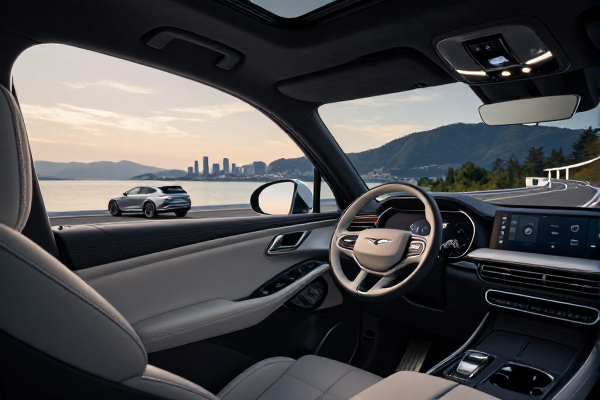
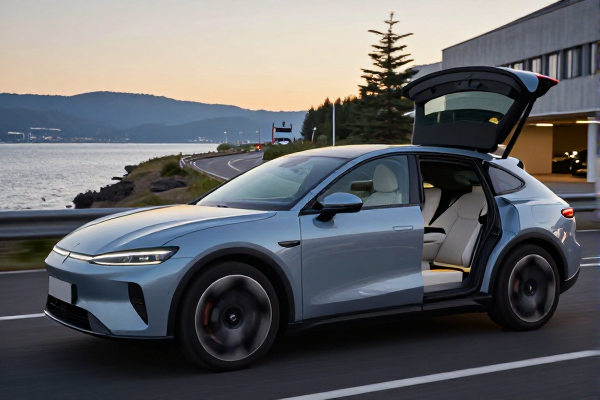
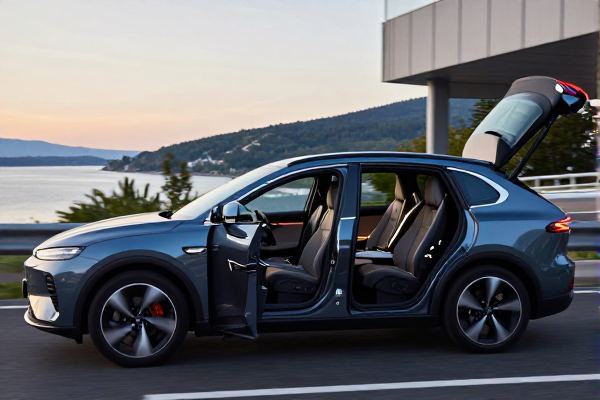
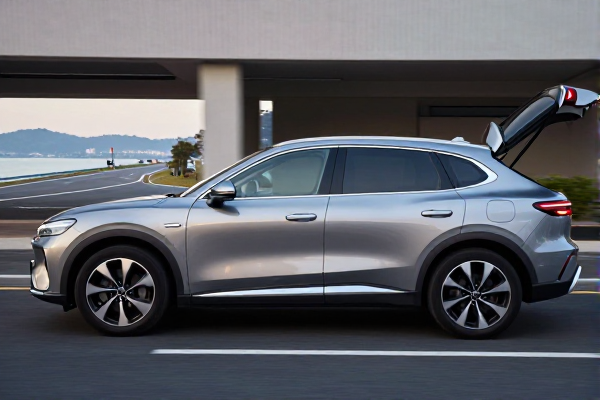
On July 16, 2025, Genesis officially unveiled the engineering details of its upcoming flagship SUV, the GV90, during a closed-door briefing at Hyundai Motor Group’s Namyang R&D Center. The company emphasized that the new model delivers a quantum leap in both passive safety and body rigidity, positioning it as a direct competitor to the Mercedes-Benz EQS SUV and BMW iX.
The GV90 is built on an extended version of Hyundai’s E-GMP (Electric Global Modular Platform), which already underpins the Kia EV9 and the Genesis GV70 Electrified. However, Genesis engineers have introduced a completely redesigned multi-load path body structure that incorporates over 75% ultra-high-strength steel (AHSS and press-hardened steel) in the passenger cell — a 30% increase over the EV9. This not only enhances torsional rigidity by 45% compared to the GV80 but also reduces battery intrusion risk in side collisions.
Ultra-high-strength steel and aluminum hybrid construction
According to Genesis’s senior platform engineer, Dr. Park Seung-hyun, the GV90 uses a hybrid construction: the lower body frame employs high-strength aluminum extrusions to save weight, while the upper body and roof rails are built with 1.8 GPa press-hardened steel. “The key innovation is the continuous load path from the front crash rails through the sill and into the rear subframe, which distributes impact forces across six separate load paths instead of the conventional four,” Dr. Park explained during the briefing. This design allows the GV90 to absorb 32% more frontal crash energy than the current GV80, while maintaining a curb weight only 5% heavier than the EV9.
AI-driven safety systems and ultra-wide airbag coverage
Beyond passive safety, the GV90 introduces a new generation of AI-based active safety systems. Genesis’s Highway Driving Pilot 3.0, licensed for Level 3 autonomy in the US and Germany, uses four LiDAR sensors (two roof-mounted, two in the lower bumper), seven radar units, and 12 cameras. The system can detect pedestrians at 300 meters and perform automatic emergency braking at speeds up to 130 km/h (81 mph) — an improvement over Tesla’s current capabilities, according to in-house testing data.
The airbag system is equally ambitious: a total of 12 airbags, including a world-first center-mounted far-side airbag that deploys between the driver and passenger to prevent head-to-head impact in oblique collisions. Additionally, the GV90 features a new “pre-crash” seatbelt tensioner that uses radar data to tighten belts 0.15 seconds before an imminent impact, reducing forward movement by 40%.
Rigidity testing: 72,000 Nm/deg torsional stiffness
Genesis claims that the GV90’s body-in-white achieves a torsional stiffness of 72,000 Nm per degree — a figure that rivals the Bentley Bentayga and exceeds the Tesla Model X by 60%. This rigidity is achieved by a combination of a reinforced battery pack structure (acting as a structural component), a two-piece cast aluminum rear subframe, and a continuous roof rail with no cutouts. During the press event, Genesis showed a visualization of the body being twisted by a 100,000 Nm force, with only 1.4 degrees of deformation.
Exclusive perspective: implications for the US luxury EV market
Industry analysts note that the GV90’s engineering focus on safety and rigidity addresses a key concern among US luxury SUV buyers: crashworthiness and durability. “Genesis is positioning itself as the safety-first alternative to the tech-first Tesla and the comfort-first Mercedes,” said John Kim, senior analyst at AutoForecast Solutions. “By leading with numbers like 72,000 Nm/deg and 12 airbags, they are directly appealing to the family-oriented buyer who values substance over flash.”
The GV90 is expected to launch in the US in early 2026 with a starting price around $80,000. It will be produced at Hyundai’s new Metaplant in Georgia, which qualifies it for the $7,500 federal EV tax credit. Genesis has confirmed that the battery pack will be supplied by LG Energy Solution and will offer a range of up to 350 miles (EPA estimated) on a 99.8 kWh battery.
Conclusion: setting a new benchmark
The Genesis GV90’s engineering reveal underscores the brand’s commitment to leading in safety and structural performance — areas where Korean automakers have traditionally lagged behind Germans. With a hybrid steel-aluminum body, AI-driven active safety, and unprecedented rigidity, the GV90 is not just a flagship; it is a statement of engineering maturity. As Genesis prepares to compete in the top tier of the luxury EV segment, the GV90’s safety-first DNA could become its strongest selling point.