Browse

Log in / Register
 Share

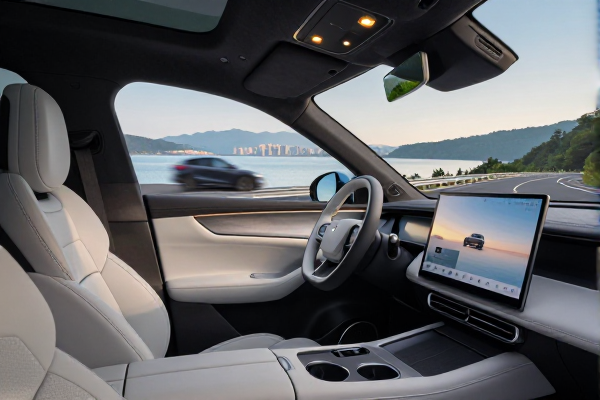
Sixty-seven percent of Gen Z drivers in Singapore say they chose an electric vehicle (EV) because of its tech features, not just lower emissions, according to a February 2025 survey commissioned by SPH Media and BYD. The poll of 1,055 petrol, hybrid, and EV owners found that 77% of respondents aged 18–29 consider EV technology reliable, and 76% say EVs are practical for daily use – the highest shares across all age groups.
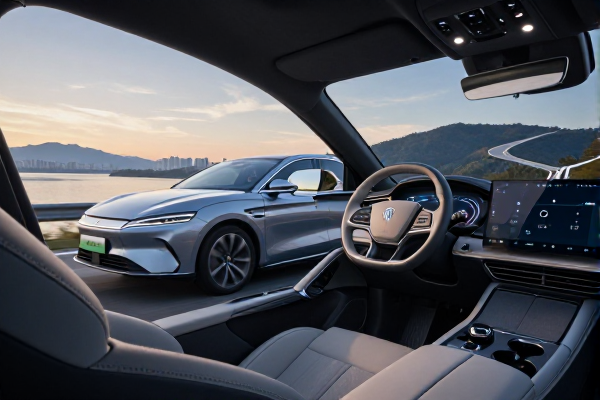
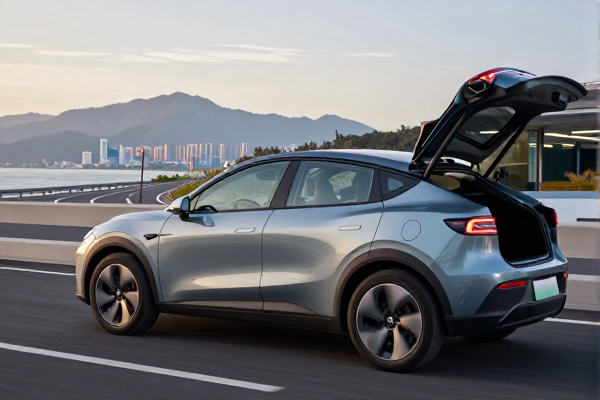
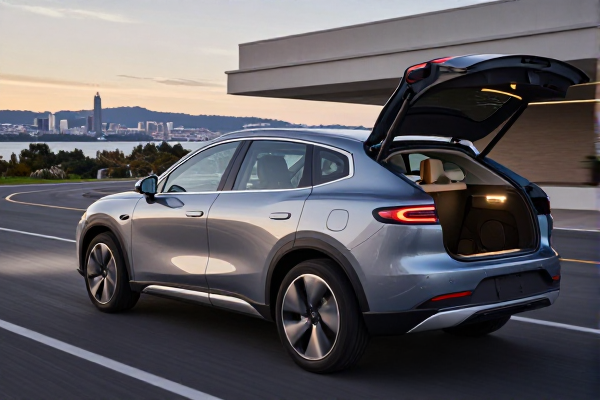
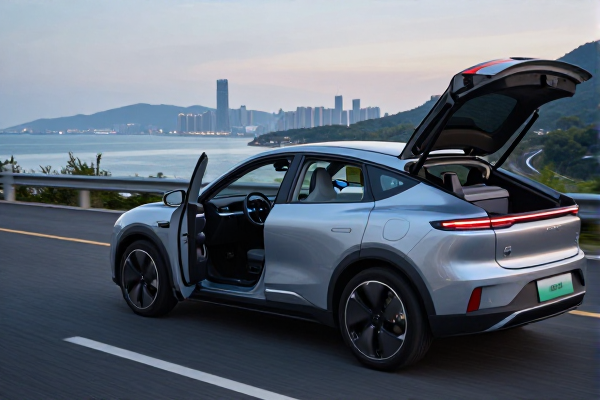
For Kennedy Yong, a 28-year-old real estate agent in Singapore, the decision to swap his second-hand petrol car for a BYD Sealion 7 came down to one feature: pre-cooling. “I no longer dread getting into a car that’s been baking in the sun,” he says. Using his phone, he can turn on the air conditioning before reaching the parking lot. “That alone sold me on the EV.”
Yong’s experience mirrors a broader generational shift. Across global markets, younger drivers are treating vehicles more like smartphones than traditional automobiles, judging them by user interface, connectivity, app functions, over‑the‑air updates, and digital keys. In the US, a 2025 J.D. Power study found that 62% of Gen Z buyers under 30 say a vehicle’s infotainment system is “very important” in their purchase decision, compared with 38% of Baby Boomers.
“Younger drivers often judge vehicles as consumer electronics,” says Julian Kho, general manager of Singapore’s Sgcarmart automotive platform. “User interface, connectivity, app functions, driver assists, over‑the‑air updates, digital keys, remote pre‑cooling – these features can outweigh traditional ‘badge value’.”
This tech‑first mindset is reshaping EV marketing. While automakers once emphasized zero‑emission benefits, they now highlight smartphone integration and convenience. Tesla’s mobile app, for instance, allows owners to pre‑heat the cabin, summon the car, and monitor charging from anywhere. Ford’s Mustang Mach‑E offers “phone‑as‑a‑key” and over‑the‑air updates for vehicle features.
The trend is particularly pronounced among Gen Z, who came of age with smartphones and app‑based services. A 2025 Pew Research Center survey reported that 71% of US adults under 30 say they would consider an EV for their next purchase, with “ease of use” and “technology features” ranked higher than “environmental concerns” as deciding factors.
In Singapore, where COE prices can exceed $100,000 for a small car, affordability remains a barrier. Yet EV registrations have climbed sharply: 62.4% of the 27,144 new cars registered in the first half of 2026 were electric, according to the Land Transport Authority. That marks the first time EVs have overtaken petrol and hybrid vehicles. BYD, which sells roughly one in four new cars in Singapore, reports that drivers under 35 make up about 10% of its customer base.
“We do see growing interest from younger consumers, particularly millennials and younger professionals, as they tend to be more open to new technology,” says James Ng, managing director of BYD Singapore.
Content creator Silvy Wang, 27, switched to an EV in 2023. “I like being able to monitor battery range and charging through the app,” she says. “It makes everything feel seamless.” She lives in a landed home with a private charger, which adds to the convenience.
But sustainability is not irrelevant. The same survey found 85% of Gen Z respondents believe EVs help reduce carbon emissions. For Wang, becoming a mother made her more conscious of the environment. “I want to choose energy‑efficient options where I can,” she says.
Nevertheless, when it comes to everyday transport choices, price and convenience consistently top the list, says Alberto Salvo, an environmental economist at the National University of Singapore. “People don’t enjoy creating pollution, but they prioritize what fits their wallet and schedule.”
The US market shows a similar pattern. A 2025 Cox Automotive study found that 55% of EV‑shoppers under 35 rank “tech features and connectivity” as more important than “range or charging speed,” while only 29% say “environmental benefits” are their top motivation.
Automakers are responding. General Motors recently announced that all future EVs will come standard with Google Built‑In, including voice‑activated navigation and app control. Hyundai’s Ioniq 6 offers a “digital key” for Samsung phones, and Rivian’s R1T pickup has a “gear guard” camera system accessible via smartphone.
For Yong, the transition to an EV has meant rethinking how he interacts with his car. “In my first week, I still carried the key fob out of habit,” he says. “Then I realized it was just extra weight in my pocket. Once I got used to using my phone, it was incredibly convenient.”
As EV technology becomes more integrated with everyday digital life, the line between vehicle and gadget continues to blur. For Gen Z drivers, the car is no longer just a way to get from point A to point B – it is another connected device in their always‑on lifestyle.