Browse

Log in / Register
 Share

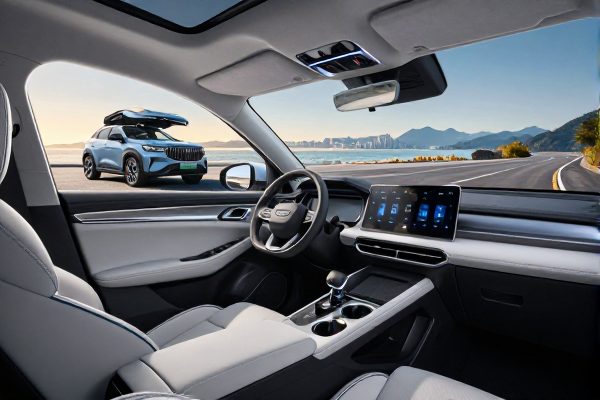
On April 17, 2025, Chinese automotive giant Geely revealed plans to begin pilot production of a solid-state battery in 2027, with a targeted range of over 621 miles (1,000 kilometers) per charge. The battery, which could eventually power vehicles from Volvo, Polestar, Lotus, and other group brands, represents a significant leap in EV battery technology.
The announcement, made via a LinkedIn post from Geely, outlines a battery with an energy density of approximately 500 watt-hours per kilogram (227 watt-hours per pound). That is roughly double the cell-level density of the company’s current Golden Brick batteries, as noted by automotive news outlet InsideEVs. This density improvement is critical for reducing battery weight while extending range, two factors that directly affect consumer adoption of electric vehicles.
Geely’s solid-state battery uses a solid electrolyte instead of the liquid or gel-based electrolytes found in conventional lithium-ion batteries. Solid-state designs are inherently safer, less prone to thermal runaway, and can store more energy in the same physical space. The technology has been widely hailed as the next frontier for EVs, but challenges in manufacturing scalability and cost have kept it from reaching mass production.
By targeting 2027 for pilots, Geely is joining a growing list of automakers racing to bring solid-state batteries to market. For comparison, Toyota has announced plans to introduce solid-state batteries in hybrid vehicles by 2027–2028, while QuantumScape, a U.S. startup backed by Volkswagen, has been testing prototype cells with automakers but has not yet set a commercial production date. Geely’s density target of 500 Wh/kg puts it ahead of many current prototype cells, which typically hover around 350–400 Wh/kg.
The potential for this battery to appear in a Volvo is particularly noteworthy. Volvo has committed to becoming an all-electric car company by 2030, and a battery capable of 621 miles of range would eliminate the “range anxiety” that many consumers cite as a barrier to EV adoption. A Volvo sedan or SUV with such range could compete directly with the longest-range EVs on the market, such as the Lucid Air (up to 516 miles EPA) and the Mercedes-Benz EQS (up to 350 miles). Furthermore, Geely’s ownership of multiple brands means the technology could be scaled across different price points and vehicle segments, from high-performance Polestar models to the upcoming Zeekr lineup.
However, range is only one part of the equation. Geely has not yet disclosed charging speed, lifecycle longevity, or the cost per kilowatt-hour of the new battery. Solid-state batteries are historically expensive to produce, and even if the 2027 pilot succeeds, it may take several more years before they are affordable enough for mainstream vehicles. Industry analysts estimate that solid-state cells will need to drop below $100 per kWh to be cost-competitive with current lithium-iron-phosphate (LFP) batteries, which are already below $60 per kWh at the pack level.
In addition to range and density, Geely emphasized that the battery is engineered for “extreme safety” and can operate in a wide temperature range. This is a subtle but important claim, because solid-state batteries have faced criticism for poor performance in cold weather and potential dendrite formation—tiny metal fibers that can short-circuit the cell. If Geely has solved these issues, it would represent a significant engineering achievement.
The 2027 pilot program will likely involve a limited number of vehicles across Geely’s brand portfolio, with the company collecting real-world data on durability, charging behavior, and thermal management. Only after these tests will the battery be considered for production in higher-volume models. Given the company’s track record with its Golden Brick batteries, which are already used in the Zeekr 001 and other models, there is reason to believe Geely can execute on its roadmap.
What does this mean for the American consumer? While Geely does not sell cars under its own name in the U.S., its subsidiary Volvo does, and Polestar also operates in the American market. If the solid-state battery proves viable, U.S. buyers of Volvo and Polestar vehicles could see models with drastically longer range within the next five to seven years. That timeline aligns with the broader industry shift toward next-generation batteries, which are expected to be the dominant technology by 2030.
The development also underscores the rising influence of Chinese automakers in battery innovation. Companies like CATL and BYD have already become global leaders in lithium-ion battery production, and now Geely is pushing into the next frontier. For U.S. automakers, this adds pressure to accelerate their own solid-state programs, which have been slower to mature.
In summary, Geely’s solid-state battery announcement is a credible milestone in the race to eliminate range anxiety. With a 2027 pilot target, double the energy density of current cells, and the backing of a global automotive group, the technology has a real path to the road. While challenges remain—especially cost and manufacturing scale—the promise of a 621-mile EV battery that could power a Volvo is enough to keep