Browse

Log in / Register
 Share


July 15, 2024 – Geely Galaxy has officially introduced the Galaxy TT, a new C-segment AI pure-electric sports sedan, marking a strategic push to expand its battery-only vehicle offerings in a rapidly evolving electric vehicle (EV) market. As the automotive industry shifts toward electrification, this launch aims to address Geely's reliance on plug-in hybrids and position the brand for growth in the competitive pure-electric segment, where demand is accelerating globally.
The EV landscape is undergoing a significant transformation, with pure-electric models gaining momentum while plug-in hybrids and extended-range vehicles see slower growth. According to recent industry analyses, pure EVs now account for over 65% of new-energy vehicle sales in key markets like China and the US, driven by advancements in battery technology, extended range, and faster charging infrastructure. This trend signals a decline for vehicles with fuel tanks, creating opportunities for dedicated electric platforms. For Geely Galaxy, a brand historically strong in hybrids like the L6 and L7 models, this shift presents both a challenge and an opportunity to recalibrate its product mix.
Geely Galaxy's current sales heavily favor plug-in hybrids, with pure-electric models like the E5 and E8 contributing minimally to overall volume. In early 2024, the Galaxy E5 sold around 8,000 units monthly, while the E8 struggled with fewer than 1,000, highlighting a gap in the C-segment pure-electric sedan category. The brand lacks a competitive contender in this space, which is dominated by rivals such as the Tesla Model 3 and Ford Mustang Mach-E. The Galaxy TT is designed to fill this void, offering a sportier alternative to the E8 with enhanced features and performance specs.
Positioned as a "sporty sister model" to the Galaxy E8, the TT shares similar C-segment dimensions but distinguishes itself with a focus on technology and design. It features an 800-volt architecture for faster charging, an active rear wing that adjusts based on speed, and a lidar sensor for advanced driver-assistance systems. Industry insiders project its price to range between $22,000 and $28,000, overlapping with the E8 but targeting a more performance-oriented audience. This move reflects Geely's strategy to leverage hardware differentiation to capture market share in the $20,000-$30,000 EV bracket.
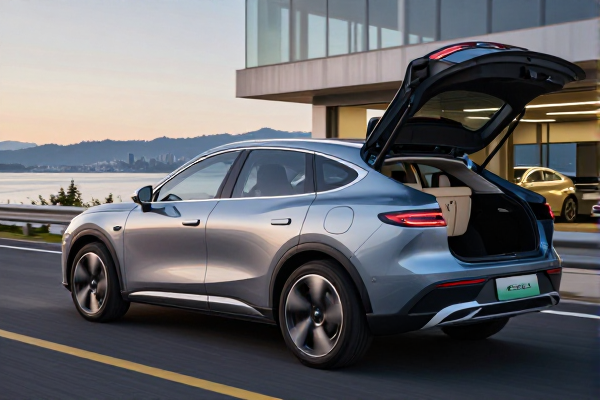
Externally, the Galaxy TT boasts a sleek, wide-bodied design with a length of 4,999 mm, width of 1,919 mm, and a 2,920 mm wheelbase, placing it in direct competition with models like the Xiaomi SU7. Its fastback coupe silhouette, semi-flush door handles, and full-width light bar contribute to an aerodynamic and modern aesthetic. The active rear wing, rare in this price segment, underscores Geely's commitment to using cutting-edge components to stand out in a crowded market.
Under the hood, the Galaxy TT offers both rear-wheel-drive and all-wheel-drive configurations. The RWD variant delivers 245 kW of power, while the AWD version combines motors for a total of 425 kW. It utilizes a front double-wishbone and rear five-link independent suspension, promising superior handling and ride comfort. Battery options include CATL cells with ranges spanning 540 km to 725 km, catering to diverse consumer needs from city commuting to long-distance travel. These specifications position the TT as a well-rounded contender, though real-world performance will hinge on software integration and user experience.
The C-segment pure-electric sedan market is far from uncharted territory, with established players like Tesla, XPENG, and ZEEKR offering stiff competition. For the Galaxy TT to succeed, Geely must go beyond hardware specs and focus on brand perception, dealership networks, and software updates. Market analysts note that EV buyers increasingly prioritize seamless digital ecosystems and reliable after-sales support, areas where Geely has room to improve based on its hybrid-centric history. A recent survey by AutoForecast Solutions indicates that 70% of US consumers consider smart features and charging infrastructure when choosing an EV, emphasizing the need for holistic product offerings.
Geely Galaxy has demonstrated prowess in the plug-in hybrid arena, but the pure-electric domain requires a different playbook. The Galaxy TT represents a critical test of the brand's ability to innovate and adapt. Early feedback from automotive critics suggests that the TT's tech-forward approach could resonate with younger, tech-savvy buyers, but its success will depend on execution and market timing. As EV adoption rates climb, Geely's investment in models like the TT could pay off if supported by aggressive marketing and strategic partnerships.
Looking ahead, the Galaxy TT's launch coincides with a broader industry push toward sustainability and smart mobility. Geely plans to leverage its global R&D resources to enhance the TT's AI capabilities, including over-the-air updates for autonomous driving features. This aligns with projections from the International Energy Agency, which forecasts that pure EVs will comprise 80% of new car sales in developed markets by 2030. For consumers, the TT offers a compelling blend of style, performance, and innovation, potentially reshaping perceptions of Geely as an EV leader.
In summary, the Galaxy TT is more than just a new model; it's a strategic gambit for Geely Galaxy to solidify its presence in the pure-electric segment. With its competitive specs and targeted pricing, it aims to challenge incumbents and drive sales growth. However, the ultimate verdict will come from the market, as buyers weigh its offerings against a backdrop of evolving expectations and intense competition. As the EV revolution accelerates, the Galaxy TT stands as a testament to Geely's ambition to lead in the electric future.