Browse

Log in / Register
 Share

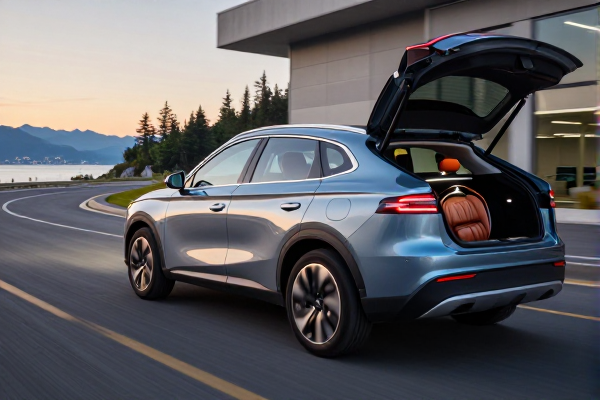
On May 7, 2026, Geely Auto Group made its Canadian intentions clear: the Chinese manufacturer has established a Canadian team and is now working through the retail-service setup that will lead to showrooms in 2027. The official announcement matters not because Geely is a complete newcomer here — Volvo, Polestar and Lotus already fly the Geely corporate flag in Canada — but because it signals that the company’s own mainstream brands are finally about to follow.
Bryan Wu, managing director of Geely Auto Canada, framed the plan as a long-term play rather than a test launch. “We are entering this market with a long-term commitment, bringing our global technology and engineering capabilities to Canadian drivers while building strong local partnerships and the support customers need to feel confident in choosing Geely,” Wu said in the release. That language matters: Canadian buyers have heard about low-priced Chinese EVs for years, and Geely now appears ready to spend real money on dealer infrastructure instead of relying on online buzz.
The numbers behind Geely’s confidence are easy to understand. The group sold more than 3.02 million vehicles in 2025, including nearly 1.69 million new-energy vehicles. Its products are now on the road in more than 100 countries. For Canada, that global scale provides both a parts pipeline and a credibility story — if Geely can support vehicles from Poland to Malaysia to Mexico, a Canadian service network should be manageable.
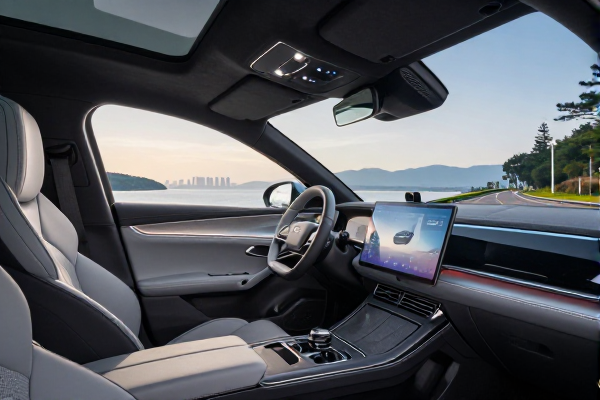
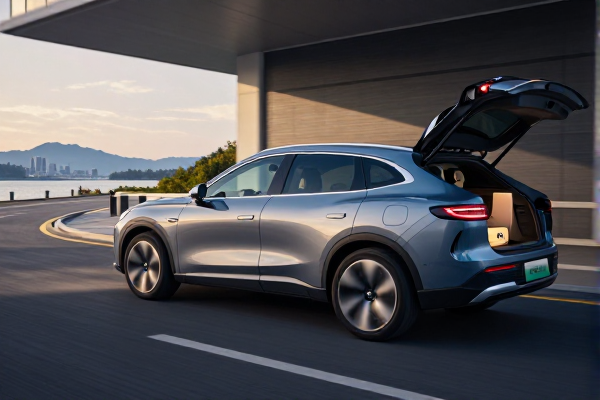
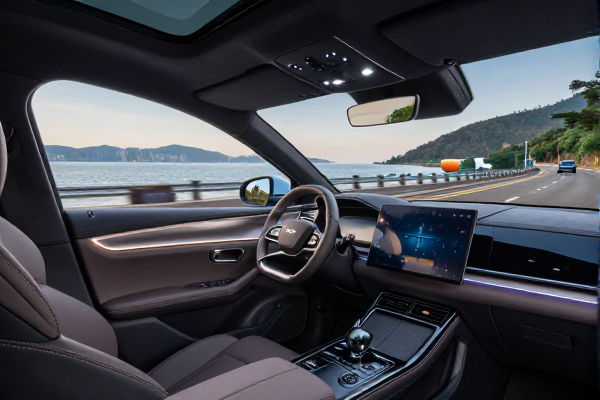
What remains unclear is exactly which of Geely’s many brands will appear first. The group’s roster includes Galaxy, Zeekr, Lynk & Co, Proton and Radar Auto, none of which are currently sold in Canada. Geely’s recent trademark filing for “Zeekr” in Canada is a strong signal that the electric performance brand will be part of the rollout. Zeekr’s positioning — richer materials, more aggressive infotainment and quicker acceleration than mainstream Geely models — would give Canadian showrooms a halo car from day one.
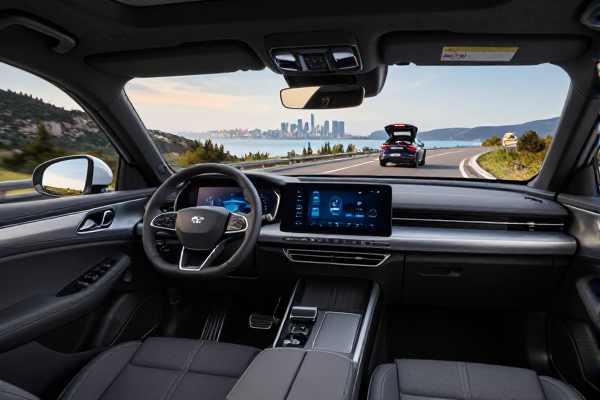
The Galaxy brand could play a very different role. During a recent visit to the Beijing auto show, we drove the 2026 Galaxy Geome EX2, a budget-friendly battery-electric hatchback that seems designed for dense urban markets. With its compact dimensions and accessible price, the EX2 is exactly the kind of car that could resonate in Montreal and Vancouver. Those cities have the charging infrastructure, the traffic patterns and the parking constraints to make a small EV genuinely practical.
Geely also has a dark horse for Canada: Radar Auto’s mid-size plug-in hybrid pickup. Pickup trucks are not a niche in this country; they are the market. A PHEV pickup with a useful electric range and a gasoline backstop would be a natural fit for buyers who need truck capability but do not want a full-size gas bill. Geely has not confirmed Radar for Canada, but the product-market match is obvious enough that it would be surprising if the model were not under serious consideration.
The broader context makes Geely’s timing interesting. BYD, Chery and Dongfeng are all reported to be preparing Canadian operations, creating an unusually crowded pipeline of Chinese brands. That wave has also drawn close attention from the federal government. Canada’s 100 per cent tariff on electric vehicles built in China remains a key consideration for any Chinese automaker shipping straight to Canadian dealers. Geely’s portfolio of hybrids and plug-in hybrids may provide some flexibility, but trade policy is a major reason the company’s manufacturing strategy for North America is being watched as closely as its model plan.
Then there is the local infrastructure. Geely has already activated a Canadian website at www.geely.ca and says it will keep consumers updated as the launch nears. What the site cannot show yet is the dealer map. Signing retail partners in a market where Chinese brands are established but still contested takes time, and the quality of those dealer relationships will determine how quickly buyers feel secure enough to purchase.
Regulatory work is the other quiet variable. Transport Canada certification, regional vehicle requirements and provincial incentives such as those in Quebec and British Columbia all affect whether a new EV brand starts with momentum or friction. Geely has an advantage in that its corporate siblings have already cleared many of those hurdles in Canada; the company’s engineers are not starting from zero.
Seen from a competitive angle, Geely’s brand architecture makes it different from BYD or Chery. Many Canadians already know a Geely-owned product by its Volvo badge; Polestar has built up a small but enthusiastic following. The challenge is translating that goodwill to the Geely nameplate itself. Service, parts availability and straightforward warranty policies will matter more than marketing slogans. Geely says it understands that, and the “long-term commitment” language from its Canada head suggests the company sees this as a 10-year project, not a quick sales spike.
For now, May 7, 2026 is the date Canada got a straight answer: Geely is coming, with a team, a website and a showroom target of 2027. The next milestones — dealer announcements, model confirmations and the inevitable pricing reveals — will determine whether this becomes one more imported-brand experiment or the start of a serious new force in the Canadian auto market.