Browse

Log in / Register
 Share

Review date: May 7, 2026
GAC is still an unfamiliar name to most American drivers, but the 2026 Aion V is a good reason to learn it. This electric SUV is already on sale in Australia and other export markets, where it undercuts the Tesla Model Y by thousands while offering a cabin that feels far more expensive than the sticker price suggests. We spent a week with the flagship Luxury trim to see whether the value story holds up in real-world driving.
| Quick Facts | 2026 GAC Aion V Luxury |
|---|---|
| Price (Australia) | AU$44,590 (~US$31,100) plus on-road costs |
| Dimensions | 181.2 in L x 72.9 in W x 66.3 in H |
| Wheelbase | 109.2 in (2,775 mm) |
| Curb weight | 1,880 kg (4,104 lb) |
| Powertrain | Single front motor, 75 kWh LFP battery |
| Output | 201 hp (150 kW) and 155 lb-ft (210 Nm) |
| 0-62 mph | 7.9 sec |
| Efficiency | 14.8 kWh/100 km (claimed) |
| DC fast charging | Up to 180 kW, 10-80% in about 24 min |
| WLTP range | 510 km (317 miles) |
Under the boxy body sits the second-generation Aion V, which debuted in China in mid-2024. It rides on GAC’s AEP 3.0 architecture, the same platform that underpins the China-market Toyota bZ3X. Depending on the region, GAC offers different battery options—ranging from a 62 kWh lithium-ion pack from CATL to a 90 kWh NMC pack. In Australia, every version uses a 75 kWh LFP battery connected to a single front-mounted electric motor.
Two Aion V trims are offered in Australia. The entry-level Premium starts at AU$42,590, about US$29,700, before fees. The Luxury model we tested costs AU$44,590, roughly US$31,100, before on-road costs.
That pricing lands in mainstream compact-car territory, yet this is a mid-size electric SUV with a genuinely premium feel. A base Tesla Model Y in Australia costs thousands more—GAC quotes a gap of about AU$13,000, or almost US$9,000. That price difference is the heart of the Aion V’s appeal.
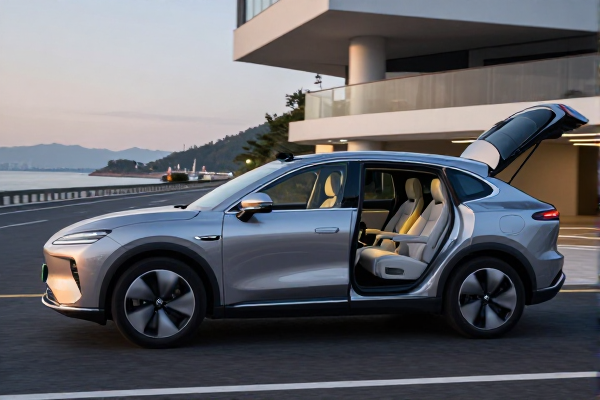
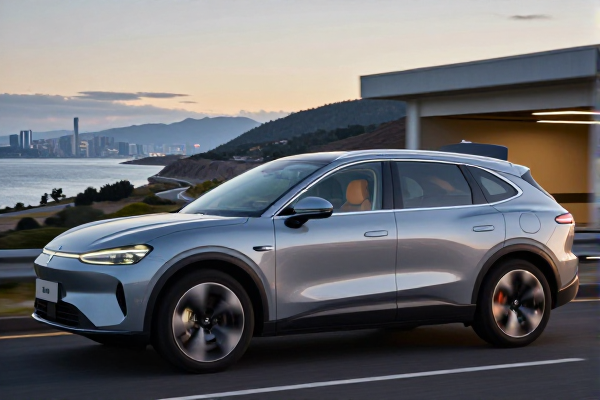
The Aion V isn’t going to win beauty contests. Its tall, blocky shape is more practical than elegant, and the stance can look awkward next to sleeker rivals. But the design is purposeful: you get a high seating position, large windows, and a spacious body that makes good use of the car’s length.
If you can accept the unusual exterior, the cabin is where the Aion V starts making a much stronger case.
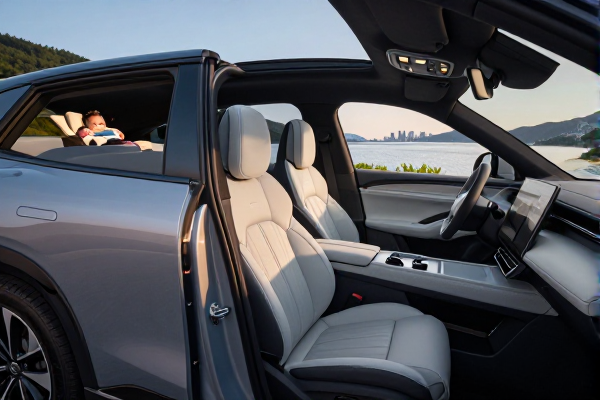
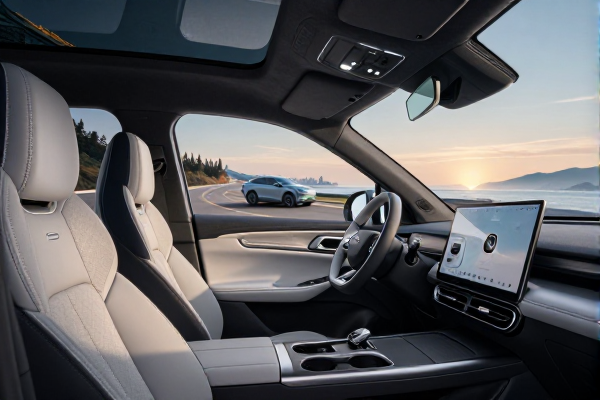
The interior is an impressive surprise. The first thing you notice is the large 14.6-inch touchscreen, which responds quickly and handles most vehicle functions, including climate controls. Usually we dislike using a screen for temperature and fan speed, but GAC keeps a shortcut bar at the bottom of the display, so the essential controls are easy to reach while driving.
Behind the steering wheel, an 8.8-inch digital cluster keeps things clean and readable. The Luxury trim adds genuine leather seats, and both front seats have massage functions that actually work well. Instead of the weak vibration many cars call massaging, these feel firm and realistic—more like a real deep-tissue press. In most vehicles, that kind of feature is reserved for six-figure price tags.
Then there’s the fridge. It replaces the usual center console area and is no gimmick. The 6.6-liter compartment kept a drink bottle properly cold through hot weather, and it can also be set to work as a freezer at as low as -15°C (5°F) or as a warmer up to 50°C (122°F). Few cars at any price offer something this useful.
Other materials also feel rich: two-tone door panels with diamond stitching, a soft-touch dashboard, and a felt-lined wireless phone charger. It all adds up to an interior that feels far removed from the Aion V’s budget-friendly price.
The Aion V’s 2,775 mm wheelbase is not huge on paper, but the second row has genuinely generous legroom and headroom. Two adults can sit comfortably behind a tall front passenger, and the panoramic glass roof includes a sliding sunshade—a welcome detail that many EVs, including Tesla, still get wrong.
Luxury trim also includes a fold-out table on the back of the front passenger seat. It’s not a feature you’ll need every day, but it adds real utility for road trips or working from the car.
The Aion V doesn’t pretend to be a sports car. With 201 hp and 155 lb-ft of torque, it’s brisk enough for daily driving, hitting 0-62 mph in around 7.9 seconds. The front-mounted motor delivers power smoothly, and torque steer is mostly kept in check, though there’s a hint of it if you pin the throttle in Sport mode.
One odd quirk: the only drive mode with one-pedal driving is Power Save. Sport and Comfort do not offer the same regen behavior, and there are no paddle shifters to adjust regeneration on the fly. That’s frustrating for EV enthusiasts, though it isn’t a deal-breaker.
The steering is well weighted, if short on road feedback. You won’t always feel exactly what the front tires are doing, but that’s in keeping with the car’s relaxed character. Ride quality, however, deserves real praise. The suspension is firm enough to control body movement but stays quiet and composed over potholes and speed bumps. GAC clearly tuned this crossover for comfort, and it works.
GAC’s claimed WLTP range is 510 km, or about 317 miles. Over roughly 300 km of mixed driving, the trip computer showed 14.8 kWh/100 km—right in line with the claim. For most buyers, that should mean more than 450 km of real-world range is achievable.
Charging is also a strong point. The Aion V supports DC fast charging at up to 180 kW, enough to take the battery from 10 to 80 percent in about 24 minutes. That beats direct rivals such as the Geely EX5, which is capped at 100 kW, and the Hyundai Elexio, which maxes out at 150 kW. A Tesla Model Y can charge faster, but it also costs considerably more.
The biggest letdown is the driver-monitoring system. It is overly sensitive, warming up after just a quick glance at a side mirror or the center display. On a long drive, the constant warnings become more annoying than helpful. This is a recurring problem in several Chinese EVs we’ve tested, and it shows that the software still needs finer calibration.
The Aion V is not available in the United States, and GAC has not confirmed any plans to bring it here. With the current U.S. tariff framework applying a 100% levy on Chinese-built EVs, an American launch at this price seems unlikely in the near term. So think of this review not as a shopping guide, but as a glimpse of what is already arriving in other markets.
That glimpse matters. A few years ago, a budget EV from China might have impressed on price alone and disappointed on execution. The Aion V is the opposite: the affordability is backed by strong engineering, a genuinely upscale cabin, and solid driving manners. It also helps explain why GAC and other Chinese automakers are such a serious competitive threat in markets that are still open to them.
The 2026 GAC Aion V Luxury is one of the strongest EV value propositions currently on sale. The styling is odd, brand recognition is close to zero in the United States, and the safety systems need refinement. But for around US$31,000, it delivers a premium interior, a working fridge, strong efficiency, and plenty of family-friendly space.
If you live in a market where the Aion V is sold, this is an easy recommendation. If it ever reaches American showrooms, the mainstream EV establishment should be even easier to convince.