Browse

Log in / Register
 Share

Updated: May 16, 2025
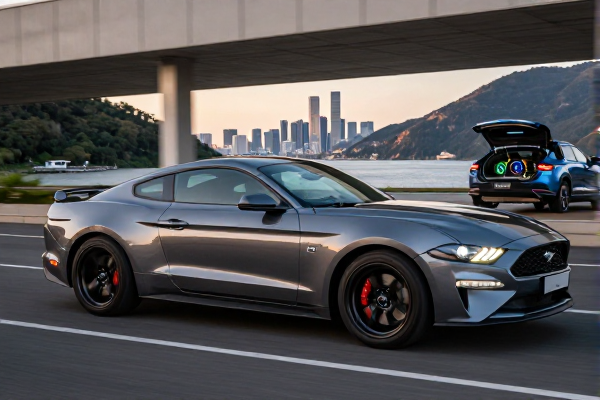
The Ford Mustang EcoBoost has long been the "starter Mustang" — the one that throws fuel economy into the same sentence as muscle-car style. But is it actually good? And more importantly, is it reliable? After spending time with the current generation and digging into owner reports, technician forums, and recall data, here's an honest look at what the turbo four-cylinder pony car does well — and where it cuts corners.
Under the hood sits a 2.3-liter EcoBoost four-cylinder engine. In the current S650 generation (2024 and newer), it produces 315 horsepower and 350 lb-ft of torque. That's actually more torque than the 5.0-liter V8 produced a decade ago, which tells you how far forced induction has come. Rear-wheel drive is standard, and you can spec it with either a six-speed manual or a 10-speed automatic.
This isn't a de-badged economy car with a pony badge. It's a purpose-built sports coupe that shares its platform with the V8 GT. The suspension, brakes, and chassis are largely the same. The only real differences are the engine, the exhaust note, and a few cosmetic details.
Let's address the big question: does it feel like a Mustang? In short, yes — but with a different personality. The EcoBoost is lighter over the front axle than the GT, which makes it more eager to turn in. On a winding back road, the turbo four actually feels more balanced than its big brother. You don't get the same rear-end squat under hard acceleration, but you also don't get the nose-heavy understeer that plagues the V8 car when pushed hard.
The turbo lag is noticeable if you're used to a naturally aspirated engine. Peak boost arrives around 2,500 rpm, and there's a flat spot just before that where the engine feels sleepy. Once the turbo spools, the power comes on with a shove that catches you off guard if you're not ready. It's not the linear surge of a V8 — it's more peaky, more turbo-four in character.
The exhaust note is the biggest compromise. The stock system sounds raspy and gets thrashy near redline. Ford offers an active exhaust as an option, but even that doesn't fully fix the sound. If the V8 rumble is a dealbreaker for you, that's a valid reason to skip the EcoBoost.
The EPA rates the EcoBoost at 22 mpg city, 33 mpg highway with the automatic, and 21/29 with the manual. In real-world driving, owners report 26–30 mpg on the highway, which is genuinely impressive for a 315-horsepower coupe. City driving drops closer to 19–21 mpg, especially if you exercise the turbo often.
Compare that to the GT, which struggles to break 25 mpg on the highway and typically returns 15–17 mpg in town. Over a year of daily driving, the EcoBoost can save you roughly $600–$800 in fuel costs at current national averages. That's a meaningful difference for anyone using the car as a commuter.
This is the section that probably brought you here. Is the EcoBoost engine reliable? The short answer is: it's decent, but it's not a Toyota 2.5-liter. It's a turbocharged direct-injection engine that demands disciplined maintenance.
The 2.3L EcoBoost has been in production since 2015, and Ford has worked through several issues. Early examples had problems with carbon buildup on intake valves — a common drawback of direct injection. Ford later revised the engine with a dual-fuel injection system (both direct and port injection) in certain applications, but the Mustang's 2.3L retained direct-injection-only until the 2024 refresh, which added port injectors. That change significantly improves the carbon buildup issue.
The most serious reliability concern involves coolant intrusion. Ford has issued multiple service bulletins for EcoBoost engines in other models (notably the 1.5L and some 2.3L units) where the cylinder head developed cracks near the coolant passages. In the Mustang's 2.3L, this issue was far less common, but documented cases do exist, mostly on heavily modified cars with aggressive tunes. If you're buying used, check for any signs of coolant loss or a sweet smell from the exhaust, which can indicate head gasket or cylinder head problems.
Other common owner complaints include:
Overall, a well-maintained, stock EcoBoost should be good for 150,000+ miles. The Achilles' heel is owners who tune the engine aggressively without upgrading the supporting systems.
For 2025, Ford kept the S650-generation Mustang largely carryover, but there are a few notable points. The EcoBoost remains a strong seller because it's the only way to get a modern Mustang without paying the V8 premium. The base price currently sits just over $32,000, with a well-equipped Premium trim around $37,000. That undercuts the GT by a solid $10,000 before options.
One piece of good news for 2025: Ford is expanding the availability of the EcoBoost with the Handling Package on more trims. This adds stiffer springs, a larger rear sway bar, and wider tires. For enthusiasts who want a genuine corner-carver without the V8's weight and fuel bill, this is the version to get.
There's also a growing aftermarket. Companies like Ford Performance, Mishimoto, and Cobb Tuning offer bolt-on parts that push the EcoBoost past 400 horsepower reliably. The block is surprisingly stout — it shares architecture with the Focus RS and the old RS500 rally cars.
The EcoBoost Mustang's closest rivals are the Toyota GR Supra, the Nissan Z, and the (sadly discontinued) Chevrolet Camaro. Here's the quick breakdown:
The Mustang wins on practicality: it has a usable back seat (for children or groceries), a large trunk, and a huge parts and service network across the U.S. That matters for anyone using the car daily.
This is the part many reviews gloss over. The EcoBoost isn't the right choice for everyone, and it's okay to admit that. You should buy it if:
You should probably pass if:
The Ford Mustang EcoBoost is a genuinely good car. It's not a V8, and pretending otherwise does a disservice to both engines. What it is: a well-rounded, rear-drive sports coupe that delivers 90% of the modern muscle-car experience for about 75% of the cost and 60% of the fuel consumption. Reliability is respectable when maintained properly, and the 2024–2025 revisions address the biggest historical complaints.
The best advice? If you're cross-shopping, find a CPO 2024 or 2025 model with the Handling Package and the 10-speed automatic. It's the sweet spot. And if the rumble matters more than your fuel budget, the GT will always be waiting with open arms.
Either way, the Mustang EcoBoost has earned its place — not as a compromise, but as a legitimately smart daily