Browse

Log in / Register
 Share


October 20, 2024 – In a striking departure from typical corporate rhetoric, Ford CEO Jim Farley has openly acknowledged that entrenched biases within the company’s internal combustion engine (ICE) division crippled the development of a competitive electric vehicle platform. This admission, made during a 2026 interview, underscores the profound cultural and operational hurdles legacy automakers face as they pivot toward electrification, with Ford’s journey serving as a cautionary tale in an industry rapidly reshaped by new entrants.
During a discussion with T. Rowe Price earlier this year, Farley pointed to a deep-seated resistance within Ford’s ICE teams toward the Model E electric division, which effectively prevented collaborative support for a viable EV architecture. He described this internal dynamic not as overt sabotage but as a systemic issue where profitable legacy processes subtly stifle innovation, making it nearly impossible to engineer battery-first vehicles from a fresh perspective. This revelation shifts the blame from external market forces to internal organizational flaws, highlighting how corporate inertia can undermine strategic shifts even with top-level commitment.
The challenges Ford encounters in the EV space extend far beyond the widely cited battery cost concerns. To achieve true competitiveness, factors such as wiring complexity, software integration, aerodynamic design, parts count reduction, and platform layout efficiencies are critical determinants of success. While Ford retains strong brand loyalty in segments like trucks, rivals like Tesla and BYD have built substantial process advantages through vertically integrated systems and agile engineering approaches, forcing Ford into a catch-up mode that demands more than incremental adjustments.
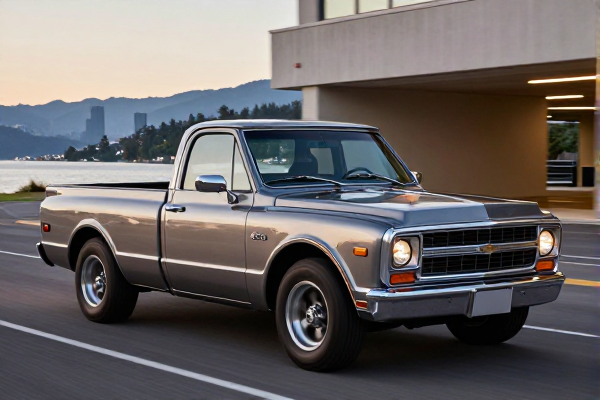
Take the F-150 Lightning as a case study: launched in 2021 with considerable fanfare, it promised to bring electric torque to America’s best-selling vehicle lineup at an accessible starting price. Initial enthusiasm, however, gave way to practical realities—high retail costs, limited towing range, and charging inconveniences with trailers eroded its market appeal. By late 2025, Ford recorded a $19.5 billion charge tied to its EV retreat, canceled several electric programs, and shifted the Lightning toward an extended-range hybrid future. The truck’s shortcomings stemmed not from poor design but from Ford’s attempt to adapt an old business model to a new technology paradigm, where batteries impose unforgiving economic and engineering constraints.
To diagnose these issues, Farley recruited Doug Field from Tesla and Apple in 2021, a move now seen as a critical intervention. Field’s assessment of Ford’s manufacturing and IT infrastructure was blunt: the company lagged approximately 25 years behind in tools, CAD systems, and parts-release processes. Legacy automakers often find their product development pulled backward by established practices—from supplier contracts and assembly logic to warranty models and internal politics—resulting in EVs that bear futuristic badges but are built on compromised foundations. Field’s insights exposed a gap not just in technology but in organizational mindset, where historical success becomes a liability in a disruptive era.
In response, Ford established a skunkworks team in California, ostensibly to tap into Silicon Valley talent but more fundamentally to quarantine innovation from Detroit’s “antibodies.” This separation allowed engineers to start with a blank slate, free from ICE prejudices and vetoes rooted in tradition. Farley emphasized that such isolation was necessary to create an environment where old habits couldn’t unconsciously block progress, reflecting a broader corporate truth: large companies possess immune systems that protect existing profit engines, even when those engines threaten long-term survival in a changing market.
Farley has cited customer preferences as a factor in Ford’s EV struggles, noting that expensive electric trucks face tough sell in a market where gas and hybrid options remain practical. However, this perspective risks obscuring Ford’s own role in shaping those preferences through pricing strategies and product positioning. The Lightning, while functional and well-received in some aspects, failed to make a compelling financial case to mainstream buyers, underscoring how automakers must lead rather than follow in educating consumers about EV value propositions.
Adding an exclusive lens to this analysis, recent industry reports indicate that Ford is accelerating its EV investments with plans for a new dedicated platform by 2027, aiming to overcome past missteps. According to a 2024 McKinsey & Company study, successful electrification requires not only technological upgrades but also organizational overhauls to dismantle legacy silos—a challenge echoed in similar transitions at General Motors and Stellantis. Moreover, Ford’s tear-down analyses of competitors like Tesla and Chinese EVs revealed that rivals engineer entire vehicles around batteries as cost centers, optimizing aerodynamics, wiring, and integration to reduce battery burden, a approach Ford is now urgently adopting.
The broader automotive landscape is witnessing a seismic shift, where agility and integration trump scale and tradition. Tesla’s software-centric model and BYD’s cost-efficient manufacturing have set new benchmarks, pushing legacy players to rethink everything from supplier relationships to assembly line logic. For Ford, Farley’s candid admission marks a pivotal step toward transparency and reform, but the real test lies in executing cultural change that empowers EV teams without internal resistance. As battery costs decline and charging infrastructure expands, the window for catching up remains open, yet it demands relentless focus on innovation unshackled from historical biases.
Ultimately, Ford’s experience serves as a microcosm of the industry’s transformation pains. The path forward involves not just launching new electric models but fostering an internal ecosystem where ICE and EV divisions collaborate rather than compete, leveraging Ford’s truck heritage while embracing disruptive engineering principles. With Farley’s leadership now spotlighting these internal barriers, stakeholders can hope for a more cohesive strategy that aligns with the accelerating global transition to electric mobility.