Browse

Log in / Register
 Share

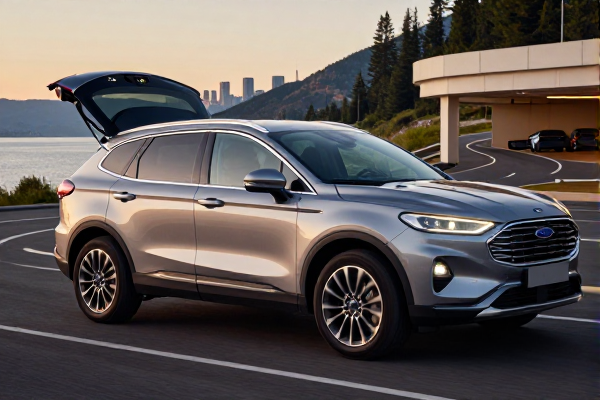
July 17, 2025 – Ford’s upcoming entry-level crossover SUV, priced at roughly $25,000, will be the brand’s most affordable vehicle upon its 2029 launch. But contrary to expectations, it won’t be an electric vehicle. Dealers who attended a private preview in Las Vegas last week confirmed the model will ride on a hybrid and gasoline-only platform, not Ford’s new Universal EV (UEV) architecture.
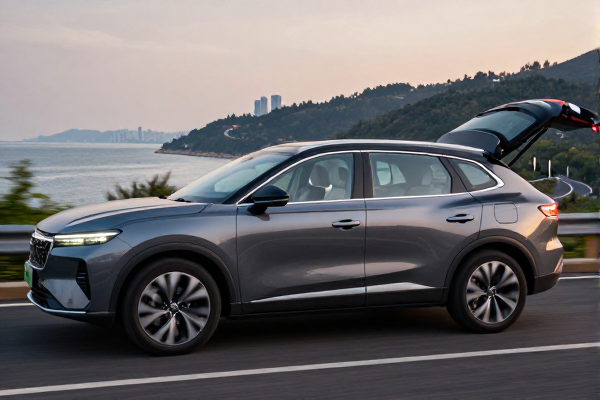
According to an Automotive News report, dealers who saw early mock-ups described the crossover as “boxy and wide,” with one attendee comparing it to the first-generation Ford Escape. The vehicle is expected to slot below the Maverick pickup in price, making it Ford’s lowest-cost offering. Production is slated to begin in 2029 at Ford’s Hermosillo Assembly Plant in Mexico.
Sam Fiorani, vice president of global vehicle forecasting at AutoForecast Solutions, told The Detroit Free Press that the new model is likely to replace the Ford Escape, which has seen declining sales in recent years. “Ford is positioning this as a volume play, but deliberately keeping it off the UEV platform suggests they see hybrid as the safe, profitable middle ground for now,” Fiorani said.
The decision to skip the UEV platform—which Ford has touted as flexible enough to support vehicles from B-car size to commercial vans—has puzzled some industry observers. Ford executives at the Las Vegas meeting assured dealers that the company remains committed to hybrids going forward, but did not rule out a future electric version.
One possible explanation: cost. Building a $25,000 EV on a dedicated platform would require significant battery price reductions, which may not be achievable by 2029. Meanwhile, hybrid powertrains allow Ford to leverage existing internal combustion and electrification investments without the sticker shock of a full EV.
While the crossover stays hybrid, Ford’s all-electric Fathom pickup will open pre-orders in early 2027 starting at $28,350. The company said the Fathom will compete “in the heart of the affordable EV market,” targeting the same buyers who might consider a Chevy Equinox EV or Tesla Model Y. Deliveries are expected later in 2027.
In the first half of 2025, four of the top five best-selling EVs in the U.S. were relatively affordable SUVs: the Chevy Equinox EV, Toyota bZ4X, Hyundai IONIQ 5, and Tesla Model Y. (The Tesla Model 3 ranked second.) Ford’s Mustang Mach-E came in seventh, with sales plummeting 46% year-over-year to just 11,632 units.
“The Mach-E is aging, and its price point is above $40,000 for most trims,” said Jessica Caldwell, executive director of insights at Edmunds. “Ford needs a younger, cheaper electric crossover to compete with the Equinox EV and the upcoming Chevy Bolt revival. A $25,000 hybrid isn’t going to capture that customer.”
Some analysts see Ford’s hybrid-only strategy as a pragmatic bridge. “Ford is hedging its bets,” said Fiorani. “The UEV platform is still new, and they want to prove it on the Fathom before rolling it out to a high-volume crossover. A hybrid version can be developed faster and cheaper, and it still delivers fuel savings.”
However, critics argue that by 2029, the U.S. EV market may be far more mature. California and several other states plan to phase out new gas car sales by 2035, and hybrids could be seen as a stopgap rather than a forward-looking move. “If Ford waits until 2029 to launch a $25,000 crossover and doesn’t offer an EV, they risk being late to the party,” Caldwell added.
Ford has not confirmed whether the UEV platform will eventually underpin a future electric crossover. Given the flexible architecture, it’s technically possible. But for now, the company’s messaging is clear: hybrids are the immediate priority for entry-level buyers, while full EVs will be reserved for higher-margin models like the Fathom and the next-generation Mustang Mach-E (expected around 2028).
Should Ford replace the Mach-E with an all-electric version of this $25,000 crossover? It seems like a natural move. Until then, the hybrid crossover will carry the banner for affordable Ford SUVs, even as the industry accelerates toward electrification.
What do you think? Is Ford making the right call by keeping this crossover hybrid-only, or should they go all-electric? Share your thoughts below.