Browse

Log in / Register
 Share


April 28, 2025 – A recent demonstration of ultra-fast charging technology in China is reigniting the debate over electric vehicle (EV) adoption, with proponents arguing that critics are constantly moving the goalposts. The test, conducted by a consortium of Chinese battery makers and automakers, achieved a 0–80% charge in under five minutes using a new lithium-ion chemistry—a speed that rivals the time it takes to fill a gas tank.
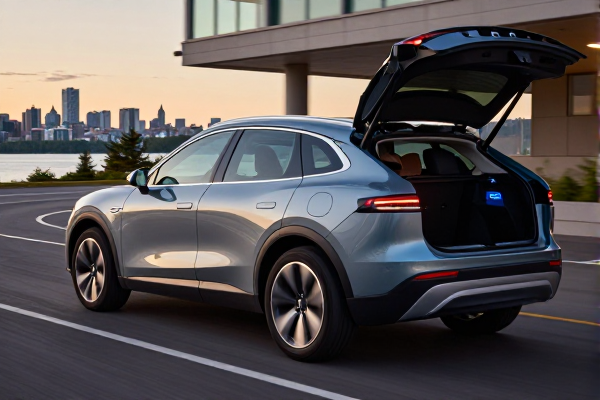
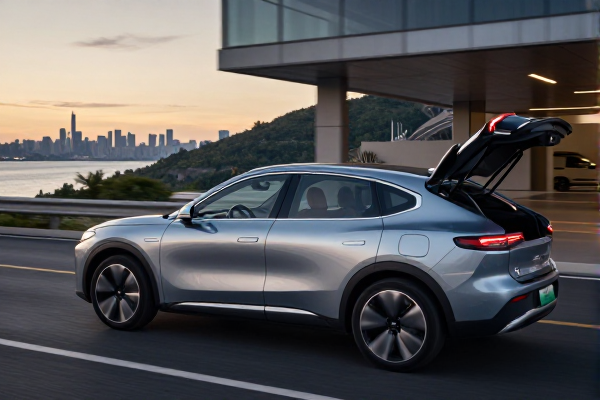
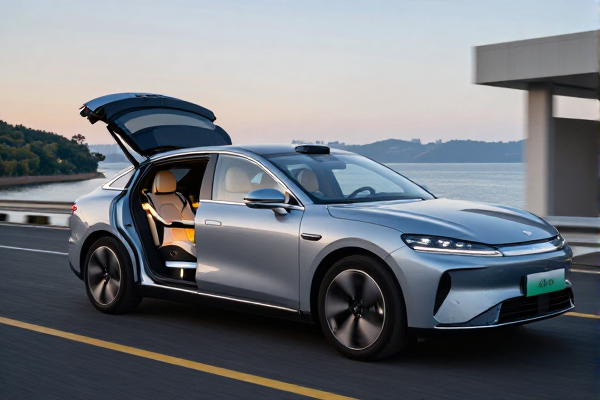
The trial, held at a public charging station in Shenzhen, used a modified passenger vehicle equipped with a 150 kWh battery pack. The flash-charging system delivered peak power of 900 kW, far exceeding the current fastest commercial chargers (350 kW) in the U.S. and Europe. The car’s battery temperature remained stable within safe limits, thanks to advanced cooling and electrolyte formulations.
"For years, critics said EVs were too slow to charge. Now that we’re approaching gas-refueling speed, the same voices are shifting to infrastructure, range anxiety, or grid capacity," said Dr. Li Wei, a battery researcher at Tsinghua University who observed the test. "The technology is outpacing the criticism, but the debate keeps evolving."
The event has sparked fresh discussion on social media and among industry analysts. Some U.S. EV skeptics pointed out that ultra-fast charging requires specialized stations and may degrade battery lifespan faster. Others argue that the real bottleneck is not the battery itself but the availability of high-power chargers on highways.
The U.S. lags behind China in deploying ultra-fast charging infrastructure. While Tesla’s Supercharger V4 can deliver up to 500 kW, most American drivers still rely on 150–250 kW chargers. The Chinese test demonstrates that battery chemistry can support 900 kW without overheating, raising the question: Can U.S. utilities and charging networks keep pace?
"China’s flash-charging breakthrough is a wake-up call," said Mark Stevens, an energy policy analyst at the Brookings Institution. "The U.S. has invested heavily in EV adoption, but if battery technology races ahead of grid readiness, we risk a mismatch. The goalposts are moving, but not just for critics—for policymakers and infrastructure planners too."
The test used a novel nickel-cobalt-manganese (NCM) cathode with a silicon-dominant anode, enabling higher current acceptance. The battery pack retains 90% of its capacity after 1,000 flash-charge cycles, according to the manufacturer. This addresses longevity concerns often raised by detractors.
However, critics note that the test was conducted in a controlled environment with a dedicated power source. Real-world charging speeds depend on station availability, grid capacity, and battery management systems. "You can’t just drop a 900 kW charger into a suburban parking lot without upgrading the transformer," said Jennifer Hart, a charging infrastructure consultant based in California.
The debate highlights a recurring pattern: each time EV technology addresses a previous limitation, opponents raise new concerns. Earlier, the focus was on range (now exceeding 400 miles in many models); then on charging speed (now approaching five minutes); next, critics may shift to battery recycling or raw material sourcing.
Several Chinese automakers, including BYD and NIO, have announced plans to deploy 600 kW+ chargers along major highways by 2026. In the U.S., the Biden administration’s National Electric Vehicle Infrastructure (NEVI) program targets 500,000 public chargers by 2030, but most will be 150–350 kW.
The flash-charging test suggests that the technology gap between China and the U.S. may widen unless American companies accelerate R&D. "The goalposts are moving, but they’re moving forward," said Dr. Li. "The real question is whether the U.S. will run to catch up or stay stuck in the last debate."
As the EV industry matures, the shifting goalposts may be a sign of progress—not a game rigged against electric cars. The challenge now is to ensure that innovation and infrastructure evolve together, rather than leaving one side behind.