Browse

Log in / Register
 Share

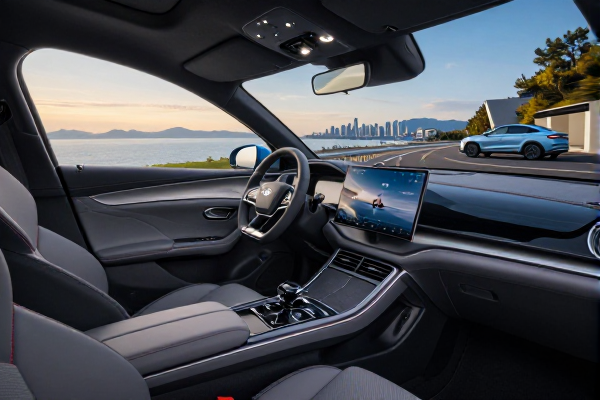
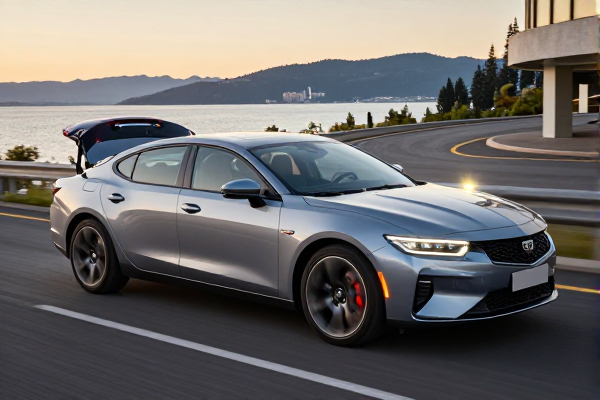
July 15, 2024 — Chinese automotive giant BYD continues its aggressive product rollout with the formal unveiling of the Qin Max, a new and significantly upgraded sedan that expands the popular Qin family. Positioned as a more premium offering above the recently launched Qin L, the Qin Max introduces flash-charging capability and a substantial claimed driving range, signaling BYD's focus on addressing key consumer concerns in the competitive electric vehicle market.
The most compelling technical specification announced is the sedan's official CLTC range figure of up to 391 miles on a single charge for its pure electric (EV) variant. This range, while based on the China Light-Duty Vehicle Test Cycle, positions the Qin Max favorably against many rivals in the midsize sedan segment, offering a number that alleviates common range anxiety. Perhaps more critically for daily usability, BYD is emphasizing "flash charging" technology, implying significantly reduced DC fast-charging times compared to previous generations, though exact recharge rates are awaiting confirmation.
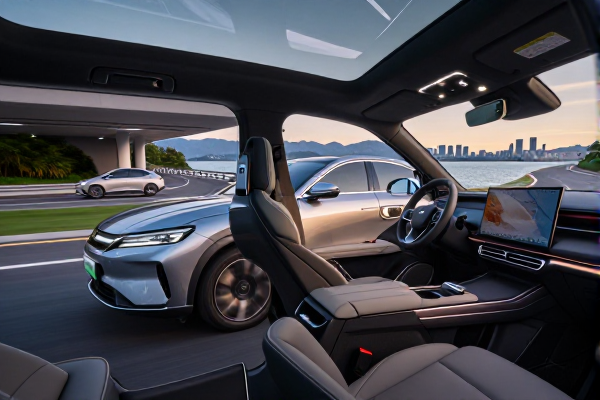
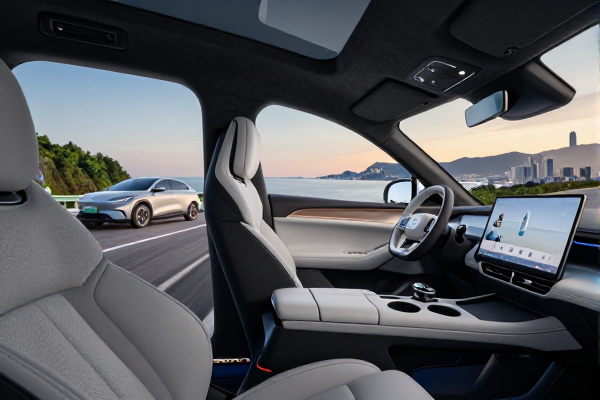
Unlike a simple refresh, the Qin Max represents a strategic expansion of the Qin range into a more substantial vehicle class. Its design and dimensions are confirmed to be larger than those of the Qin L, suggesting a focus on enhanced interior space, comfort, and potentially a more upmarket aesthetic and material quality. This move allows BYD to cater to customers seeking a roomier family sedan without immediately stepping into the more expensive Han or Seal model ranges.
In a strategic nod to varied market readiness and infrastructure, BYD will offer the Qin Max with multiple powertrain options. Alongside the flagship long-range EV version, the company confirms a plug-in hybrid electric (PHEV) variant will be available. This dual-track approach is a hallmark of BYD's strategy, allowing it to capture buyers in regions with developing charging networks who still desire significant electric-only driving capability for daily commutes via the PHEV model.
The introduction of the Qin Max is not happening in a vacuum. Industry analysts view it as a direct counter to the deepening competition in the global EV sedan market, particularly from domestic Chinese rivals like Xpeng and Geely, as well as international stalwarts like Tesla. By packing a long range and fast charging into a (presumably) well-priced package, BYD aims to solidify its value-for-money reputation while moving the technology needle forward.
Beyond the headline specs, the success of the Qin Max will hinge on its real-world performance, pricing, and feature set. Key details still under wraps include the exact battery capacity, horsepower figures, interior technology suites, and most importantly, its planned launch markets outside of China. BYD's growing ambitions in Europe, Southeast Asia, and other regions mean the Qin Max could become a global model, but its specific timeline for the U.S. market remains uncertain.
From an exclusive perspective informed by supply chain data, the "flash-charging" capability is likely enabled by BYD's continued advancements in its proprietary Blade Battery architecture. Recent industry reports suggest incremental improvements in the battery's ability to accept higher peak charging currents without compromising the celebrated safety and longevity of the cell-to-pack design. This evolution is key to making the 391-mile range figure practical for long-distance travel.
The launch reinforces BYD's methodology of creating layered, overlapping model lines to dominate specific price segments. With the Qin, Qin L, Qin Max, and the more performance-oriented Seal, the company is creating a dense matrix of options to meet nearly every sedan buyer's need. This strategy puts immense pressure on competitors who often have fewer, more spaced-out models in their catalogs, challenging them to match BYD's speed of innovation and market coverage.