Browse

Log in / Register
 Share

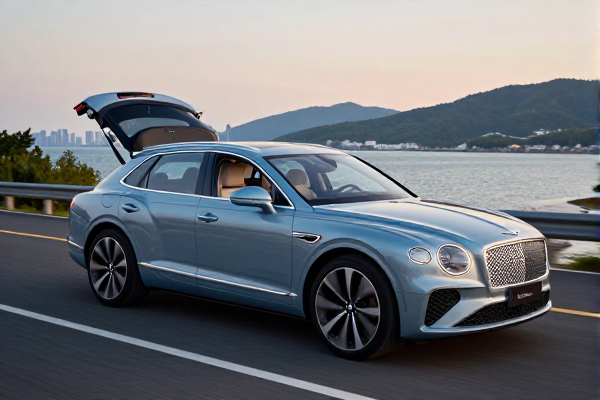
June 3, 2026 — The first Bentley Torcal EV, Bentley's upcoming all-electric SUV, has been spotted on public roads in Austria dressed in a deep black finish. The sighting, which surfaced online today, shows a near-production vehicle without heavy camouflage, giving car enthusiasts a clear preview of the British luxury brand's electric future.
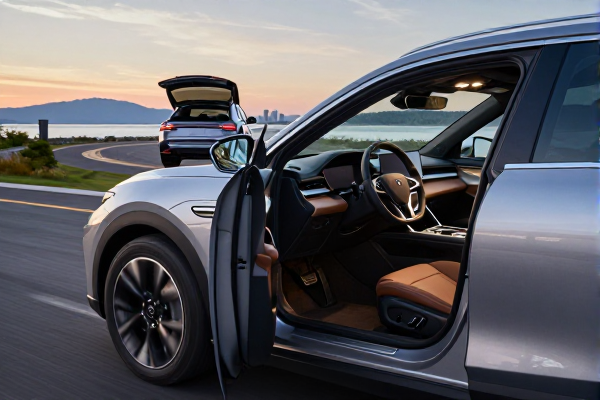
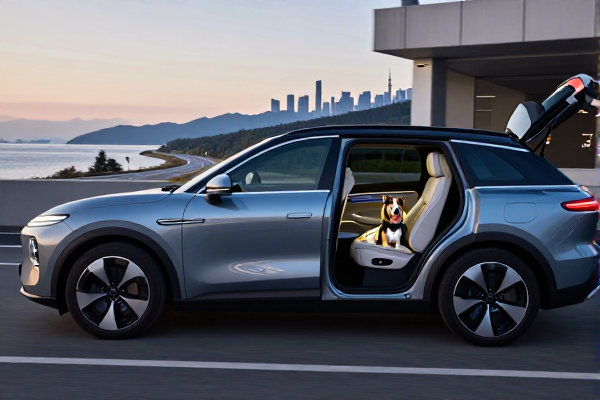
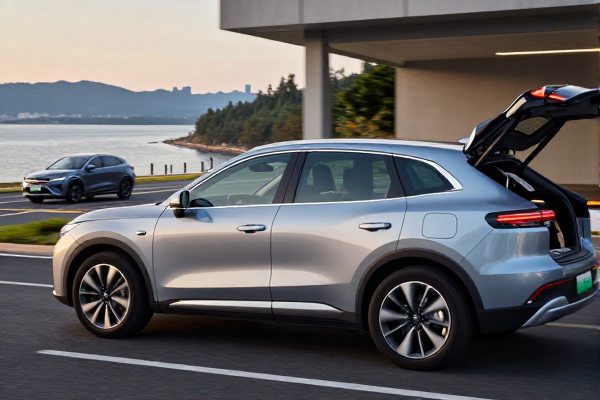
The images captured in Austria show the Torcal EV parked and briefly on the move, its black bodywork flattening the silhouette and making panel gaps harder to read. Some exterior details are easier to spot: slim LED units front and rear, a closed grille panel, flush door handles and a set of large aerodynamic wheels. There is no exhaust outlet, a clear sign that Bentley's electric transition has moved from concept to real metal.
The car's overall stance reads more athletic than the Bentayga. It appears lower and more sculpted, with a long wheelbase and short overhangs that suggest an EV-specific platform rather than a converted combustion layout. Whether that platform is shared with other Volkswagen Group brands is widely expected to be confirmed when Bentley officially reveals the car.
Design will be central to the Torcal EV. Bentley has spent the past several years studying how to keep its signature proportions while reducing drag. The Austrian sighting suggests the production version retains a long, powerful cabin and a wide front face, even as the grille is closed and lights are reduced to thin graphic elements.
Black paint makes it difficult to appreciate the sculpting along the sides, especially around the rear fenders, but swooping creases and a muscular rear haunch appear to be present. A subtle roof spoiler and a rear diffuser hint at the car's aero work. In many EV prototypes, black or matte grey hides radar and camera housings, so this unit could still be fitted with pre-production sensors.
Austria makes sense as a test location. The country's Alpine passes offer demanding elevation changes and temperature shifts, perfect for validating battery cooling, brake recovery and traction systems in an electric drive layout. While this was not a winter test in deep snow, the conditions are still useful for real-world calibration.
Bentley has been clear about its commitment to become a fully electric carmaker by 2030. That strategy, known internally as Beyond100, means every new Bentley sold in that year is meant to be battery-electric. The Torcal EV is the first move in that plan.
The company has moved more carefully than some rivals. Rather than rushing a niche electric model, Bentley chose to focus its first BEV on the SUV segment, where its customers have clearly shown a preference for the Bentayga. The Torcal EV becomes, in effect, the modern electric sibling to that model, though Bentley has not said whether it will directly replace it.
The brand's factory in Crewe, England, has been retooled for electric production. Investments in body assembly, paint shops and battery packing lines have been underway for several years. Seeing a Torcal EV testing on the continent means the industrial side is close to completing its task as well.
Although Bentley has not confirmed the technical base, most industry reporting expects the Torcal EV to sit on the Volkswagen Group's Premium Platform Electric, known as PPE. That same architecture underpins the Porsche Macan Electric and Audi Q6 e-tron, and it is designed specifically for high-volume luxury EVs.
The platform supports 800-volt electric architecture. In practice, that means fast charging at up to 270 kilowatts is possible, with charging times from 10% to 80% in around 25 minutes under ideal conditions. The Austrian test car's charging port was not visible in the photographs, but a PPE-based layout would place it on the right rear fender like other PPE models.
Power levels are expected to sit well above the existing Bentayga V8. Dual-motor all-wheel drive should be standard, with outputs climbing to somewhere between 650 and 850 horsepower depending on specification. That range is in line with Bentley's history of delivering effortless straight-line performance and would give the Torcal EV a serious claim against rivals such as the Mercedes-Maybach EQS SUV and the incoming electric Porsche Cayenne.
Battery capacity is another area of speculation. A 100 kilowatt-hour pack would be reasonable, but Bentley could opt for a larger unit to guarantee the range its owners expect. Market rumors put the preliminary WLTP range at around 600 km, which translates to roughly 370 miles under European testing. US EPA numbers would come in lower, but still respectable for an ultra-luxury SUV.
The date of this sighting matters. Traditionally, prototypes seen wearing almost no camouflage are sign-off test vehicles, used for final software validation and customer evaluation drives. In Bentley's case, the Torcal EV spotted in Austria is likely one of the last development cars before production tooling hands over.
Bentley has not yet announced the official debut date. Given the state of the prototype, a full reveal in late 2026 is increasingly plausible. That timing also lines up with powertrain programs at Porsche and Audi, giving the group a practical window to harmonize supply chains, battery sourcing and software rollouts across all three brands.
Deliveries are another matter. Even after the reveal, Bentley will need time to build the first customer cars in Crewe. It would not be unusual for European deliveries to start in the first half of 2027, with North American allocations following shortly after.
The ultra-luxury EV segment is still young. Rolls-Royce launched the Spectre as a two-door coupe; Ferrari has entered with the Purosangue, though not as a pure EV; Lamborghini has a plug-in hybrid powertrain in the Revuelto but no full electric SUV yet. Bentley is therefore moving into a space where it can set the standard for an electrified ultra-luxury high-riding vehicle.
Black is also a strategically sensible launch-window color for a brand like Bentley. Black is the dominant exterior color in the luxury SUV segment, and the images of this Torcal EV in black will be shared across enthusiast forums and social media well before the official reveal. That gives Bentley a soft opening for its design message at no cost.
Pricing is expected to follow Bentley's existing hierarchy. That places the Torcal EV above the Bentayga range when compared in comparable trim, although some expect the electric model to be positioned as a separate flagship rather than a direct successor. A base price in the region of $200,000 would not surprise industry watchers, with options capable of pushing the final figure much higher.
The first Bentley Torcal EV to be seen in Austria gives the public its clearest look yet at the brand's electric era. In black, with minimal camouflage, it reads as a production-ready luxury SUV rather than a show car. It shows that Bentley is serious about replacing internal combustion power while keeping the design language that defines its models.
For now, potential buyers need to wait for Bentley's official confirmation of the full technical specification. Until then, the Austrian sighting gives the community something solid to discuss: a real Torcal EV, on real roads, wearing black as if it already owns the future.