Browse

Log in / Register
 Share
Share

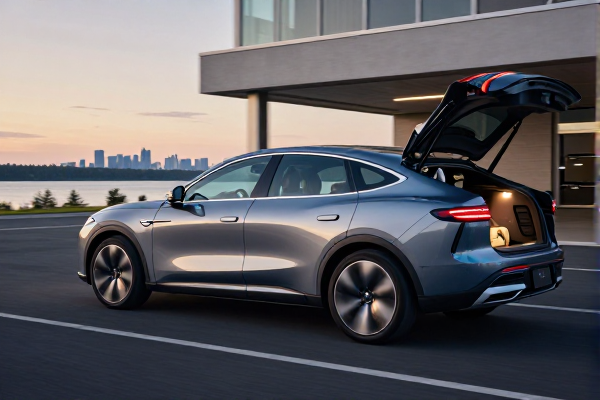
For Ferrari's most devoted clients, the impending arrival of the brand's first all-electric vehicle represents a pivotal moment that transcends automotive preference—it's a strategic decision impacting their entire future collection. Industry analysts and sources close to Maranello suggest that a client's engagement with this foundational EV will be a key metric in the algorithm determining who gets first access to the next generation of limited-edition, combustion-powered icons. The message is clear: embracing Ferrari's electric future may be the price of entry for its gasoline-powered past.
The allocation system for Ferrari's most exclusive models has long operated as a nuanced ecosystem of loyalty, historical spending, and perceived brand advocacy. Securing a build slot for a limited-series car like an SF90 Stradale or a Daytona SP3 is rarely a simple transaction. It is a reward, carefully meted out by Ferrari's internal client relations teams who track a collector's entire portfolio and engagement with the brand. The introduction of a wholly new, and potentially polarizing, product line like an EV creates a fresh and critical data point within this system.
"Ferrari views the launch of its first EV not just as a product release, but as a litmus test for client commitment to the brand's long-term vision," explains a consultant familiar with luxury automotive manufacturing strategies. "A 'no' to the electric car is interpreted not merely as a disinterest in EVs, but as a potential lack of alignment with Ferrari's future direction. In a world where exclusivity is managed, that signal carries significant weight." This perspective reframes the purchase from an isolated choice about propulsion to a statement of faith in Ferrari's corporate trajectory.
Recent shifts in the collector car market underscore the strategic wisdom behind this approach. While values for modern, limited-run Ferraris have remained robust, there is increasing scrutiny on a model's place in the brand's historical narrative. The first production EV will invariably become a landmark chapter. From a long-term investment standpoint, owning serial number one of a new era could prove as historically significant as owning key early examples from Ferrari's storied past. Astute collectors are thus evaluating the "Luce" (the rumored project name) not solely as a driver's car, but as a pivotal artifact.
Beyond sentiment and strategy lies the practical matter of homologation and regulatory compliance. Major markets, including the European Union and California, have set aggressive targets for zero-emission vehicle sales. For Ferrari to continue selling high-performance, limited-volume internal combustion engines globally, it must balance its fleet emissions. Each EV sold effectively creates regulatory "credits" that help offset the carbon output of future V12 and V8 models. By supporting the EV initiative, top clients are directly enabling the continued production of the very cars they cherish most.
This creates a fascinating paradox for the traditionalist collector. The visceral thrill of a high-revving, naturally aspirated engine may be what ignites their passion, but ensuring the future availability of such machines may now require championing their electric antithesis. It positions the first Ferrari EV as a symbiotic offering: a bridge that must be crossed to preserve access to the hallowed ground on the other side. The choice is no longer binary but interconnected.
For those on the fence, the decision may come down to Ferrari's execution. Leaked design and performance benchmarks suggest the company is aiming to deliver an EV experience that is unmistakably Ferrari—prioritizing emotive engagement, dramatic styling, and a bespoke feel over raw, silent acceleration. If successful, it could mollify purists by proving that the essence of the brand is not tied solely to exhaust notes, but to a holistic intensity of experience. The commercial success of the Purosangue SUV, once heretical, now oversubscribed, demonstrates the brand's ability to enter new segments on its own terms.
In conclusion, the calculus for securing a future limited-edition Ferrari hypercar is evolving. The decision to acquire or pass on Maranello's first electric offering is poised to become a defining factor in a collector's relationship with the factory. While the roar of a V12 may always be the heart's desire, the quiet support of an EV may soon be the key that unlocks the garage door to it. In the high-stakes world of Ferrari collecting, looking forward has become the most reliable way to secure a piece of the past.
Analysis based on market trends and industry sourcing. Updated May 22, 2024.