
Browse

Log in / Register
 Share
Share
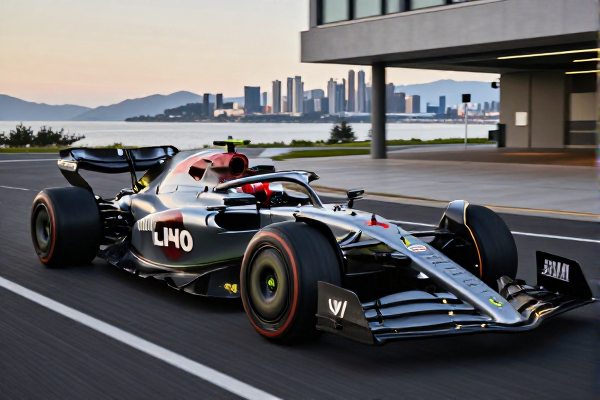
Ferrari’s Pursuit of Consistency: The Unseen Technical Battle in Barcelona
May 24, 2024 — While the Formula 1 world’s eyes were drawn to the visible new bodywork on Ferrari’s SF-24 during the Spanish Grand Prix weekend, the Scuderia’s most critical work was happening out of sight. Beyond the revised sidepods and floor edges lay a targeted engineering effort to conquer a persistent adversary: temperature sensitivity. This behind-the-scenes push to refine the car’s thermal operating window represents a pivotal step in Ferrari’s campaign to deliver a consistently competitive package for Charles Leclerc and, looking ahead, for future teammate Lewis Hamilton.
The challenge of temperature management is a fundamental one in modern F1. A car’s aerodynamic performance, tire degradation, and power unit efficiency are all exquisitely sensitive to operating temperatures. The SF-24 has shown flashes of brilliance but has also been notoriously fickle, its performance fluctuating with track and ambient conditions. The Circuit de Barcelona-Catalunya, with its mix of high-speed corners and demanding tire wear characteristics, served as the perfect proving ground for Ferrari’s latest countermeasures.
Decoding the ‘Under the Skin’ Philosophy
Publicly, the team highlighted aerodynamic gains from its new components. However, senior technical sources within Maranello suggest a significant portion of the development bandwidth was allocated to systems that manage and reject heat. This includes refinements to the car’s complex cooling architecture, the energy management of the hybrid Power Unit, and the aerodynamic interaction with brake and component cooling ducts. The goal was not merely to add downforce, but to ensure that downforce works consistently across a wider range of thermal conditions.
“The correlation between our simulation tools and the track has been strong,” a senior Ferrari engineer was quoted as explaining in a recent technical briefing. “The Barcelona package was about applying that learning to a known weakness. If we can stabilize the car’s core temperatures—for the brakes, the electronics, the PU—we stabilize its aerodynamic platform. That gives the drivers the confidence to push every lap, not just when the car is in its one-perfect window.” This approach shifts the development focus from peak performance to operational robustness.
The Driver Impact: From Lap-Time Variance to Predictable Performance
For Charles Leclerc, who secured a podium finish in Spain, these hidden upgrades translate directly to drivability. A car that is less susceptible to temperature swings allows a driver to build a rhythm, manage tires more effectively, and execute race strategy with greater precision. Leclerc’s post-race comments often allude to the car’s “feeling,” and a stable thermal state is a huge contributor to a predictable and positive feel through the steering wheel.
The implications for Lewis Hamilton, set to join the team in 2025, are equally profound. Hamilton’s driving style and legendary race-craft thrive on a stable and responsive car. Ferrari’s current push to “de-sensitize” the SF-24’s platform is effectively laying the groundwork for the seven-time champion’s arrival. By solving these core thermodynamic challenges now, the team aims to provide Hamilton with a machine that behaves predictably from Friday practice to Sunday’s checkered flag, maximizing his ability to extract performance.
The Broader Technical Arms Race
Ferrari’s focus on this area underscores a key battleground in F1’s current regulatory era. With aerodynamic development increasingly constrained by the cost cap and wind tunnel time limits, teams are turning their attention to optimization areas that offer significant performance without massive external spend. Mastering the thermal dynamics of the entire car package—from how bodywork channels airflow over hot components to how software manages battery discharge and recovery—is becoming a major differentiator.
This technical path requires immense simulation capability and track data validation. Ferrari’s willingness to dedicate a major upgrade cycle, like the one in Barcelona, partially to this unseen work signals a mature, long-term development strategy. It is an acknowledgment that winning championships requires excellence not just in generating lap time, but in controlling the variables that can erase it.
Looking Ahead: The Silverstone and Beyond Litmus Test
The true efficacy of these changes will be tested in the coming races, particularly at circuits with contrasting demands. The high-speed, flowing nature of Silverstone will present a different thermal challenge compared to the stop-start nature of the Hungaroring. If the SF-24 can perform consistently well across both, it will be a strong validation of the Barcelona upgrade’s underlying philosophy.
For Ferrari fans, this represents a nuanced but crucial evolution. The pursuit of raw speed remains, but it is now coupled with a sophisticated hunt for consistency. By addressing the hidden gremlins of temperature management, the Scuderia is not just upgrading a car; it is refining an entire operational philosophy to build a championship-contending machine for its current and future star drivers.


