Browse

Log in / Register
 Share

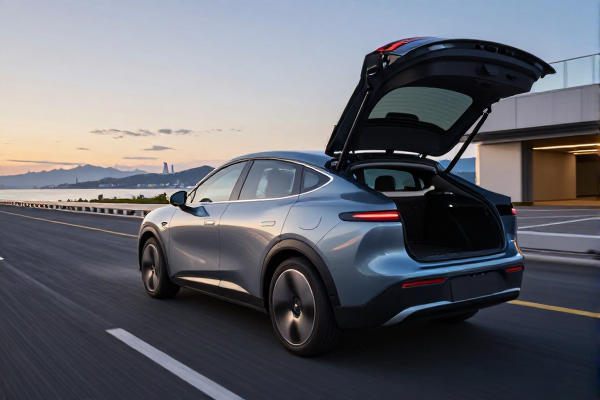
CEBU CITY — Lite Shipping Corp. now allows electric vehicles aboard its passenger-cargo vessels, pairing the restored service with a formal set of fire-safety rules. The Cebu-based ferry operator announced the policy on Sept. 30, weeks after the MV June Aster disaster off Palawan killed 77 people and set off a sweeping industry ban on EV carriage. The move backs the Philippines' Electric Vehicle Industry Development Act and comes while investigators still weigh whether a lithium-ion battery started the June Aster blaze. (Rewritten Oct. 3, 2024.)
Lite Shipping is not treating EVs like ordinary cars. Under the new policy, every electric or hybrid vehicle must be stowed in a well-ventilated part of the ship and stay switched off for the entire crossing. Drivers and passengers are barred from sitting inside their vehicles during transit — a common restriction on U.S. ferry systems, where vehicle decks are cleared for the voyage.
The carrier also requires dedicated firefighting equipment rated for electrical and lithium-ion battery fires on every vessel. That matters because a battery in thermal runaway cannot be smothered like a normal engine fire; it feeds on its own heat until cells are cooled, which is why maritime response guidance now calls for sustained water application in large volumes. Lite Shipping added that operators may impose stricter protocols depending on the route and the ship.
The Philippines is an archipelago of more than 7,000 islands, and domestic ferries remain the only practical transport link for many coastal communities. EV adoption is still in its early stages there, but the EVIDA law signed in 2022 set the country on a path toward wider electrification — which means more EVs will inevitably arrive at ferry terminals.
The June Aster was bound from Manila to Coron, Palawan, when fire erupted on its cargo deck on Sept. 9. On board were one EV, five motorcycles, a forklift, a pickup truck and assorted freight. Survivors reported hearing an explosion from the cargo area moments before the flames spread. The official death toll reached 77.
The single EV on the manifest made it a suspect almost immediately. Several Philippine shipping firms rushed out advisories banning electric and hybrid vehicles across all routes, citing the risk of fire, explosion and battery-related hazards at sea.
The Maritime Industry Authority, or Marina, stepped in with a Sept. 18 clarification: the June Aster investigation was still open, and no final finding had linked the EV to the incident. Marina also said it was backing the Department of Energy's push for science-based safety standards on EV carriage, in coordination with the Bureau of Fire Protection and the Philippine Coast Guard. Lite Shipping's advisory is the clearest sign so far that at least one major operator is ready to move before those standards are finalized.
The Philippine debate is playing out on a global stage, and American operators have been watching closely. In February 2022, the car carrier Felicity Ace caught fire roughly 90 nautical miles off the Azores while carrying about 4,000 vehicles, including a large share of VW Group electric cars. It burned for nearly two weeks and sank under tow; the cause was never conclusively confirmed, but attention centered on the high-voltage batteries in its cargo.
In July 2023, the car carrier Fremantle Highway caught fire off the Netherlands with about 3,800 vehicles, including electric models. One crew member died, and the ship was towed to a port after days of burning. Both cases, alongside the June Aster, have pushed regulators around the world to treat vehicle-deck fires as a distinct class of maritime emergency.
The U.S. Coast Guard has issued safety alerts on lithium-ion battery fires, stressing that responders need heavy water supplies and full protective gear because of hazardous gas byproducts. The National Transportation Safety Board studied high-voltage vehicle fires and found that while EVs catch fire at lower rates than gasoline vehicles per mile traveled, they pose disproportionate challenges for responders. The International Maritime Organization, for its part, classifies aged or damaged lithium-ion batteries as dangerous goods under the IMDG Code, and ferry systems in several U.S. states now publish passenger guidance on vehicle-deck EV rules.
Lite Shipping's rules offer a practical template for American ferry systems deciding how to handle a growing number of EV customers:
Washington State Ferries, one of the largest U.S. ferry systems, already carries EVs and has revised its fire-response plans accordingly — a sign that the precautions Lite Shipping is adopting align with mainstream U.S. practice.
Lite Shipping also pushed back on what it calls a misconception: that carriers worldwide refuse EVs. "Shipping operators worldwide continue to carry such vehicles while adopting procedures to address potential risks associated with lithium-ion battery systems," the company said in its Sept. 30 statement, disputing claims that other countries broadly ban EVs aboard ships.
For Filipino passengers, the practical result is straightforward. An EV owner heading to Coron or another island destination will no longer be waved away from the pier. They will, however, be directed to a ventilated deck, told to switch off the ignition, and asked to join the other passengers in the lounge for the duration of the voyage.