Browse

Log in / Register
 Share

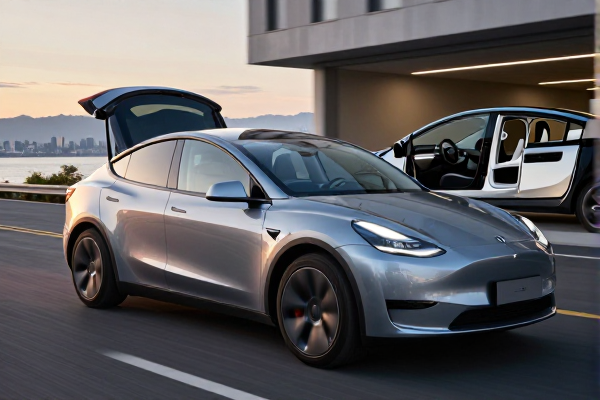
April 15, 2025 – For the first time in automotive history, the average price of a new electric vehicle (EV) has dipped below that of a hybrid across global markets. According to a comprehensive analysis by Mobility Global, a car industry analytics firm, the average transaction price of an EV now sits at $52,373, a 9% drop compared to 2020 levels. Meanwhile, hybrids have climbed to $55,204, making them the more expensive option for the first time.
This reversal isn’t just a statistical blip—it’s a signal of a deeper shift in the auto industry. Mobility Global’s report, which tracked pricing data from major markets including the U.S., Europe, China, and Japan, found that the cost gap between EVs and hybrids has narrowed steadily over the past two years before crossing the threshold this quarter.
“The typical narrative has been that EVs are a premium purchase, but that’s no longer the case globally,” said Dr. Lena Hart, chief analyst at Mobility Global. “The combination of cheaper battery production and the influx of affordable Chinese EVs has fundamentally changed the pricing equation.”
The primary driver behind the EV price decline is the falling cost of lithium-ion batteries. According to BloombergNEF, battery pack prices dropped by 14% in 2024 and are expected to fall another 10% in 2025, driven by overcapacity in Chinese manufacturing and advances in battery chemistry. Lithium prices, which had spiked in 2022, have since stabilized, reducing the single most expensive component in an EV.
At the same time, hybrid vehicles have become more complex. Many automakers are now offering advanced plug-in hybrids with larger batteries and more sophisticated powertrains, pushing up their sticker prices. Additionally, supply chain constraints for certain hybrid components—like electric motors and power electronics—have kept costs high.
“Hybrids used to be the affordable middle ground, but now they’re caught between falling EV prices and rising production costs,” said Kevin Lee, an automotive supply chain analyst at LMC Automotive. “The average price of a hybrid has actually increased in real terms, while EVs have become more accessible.”
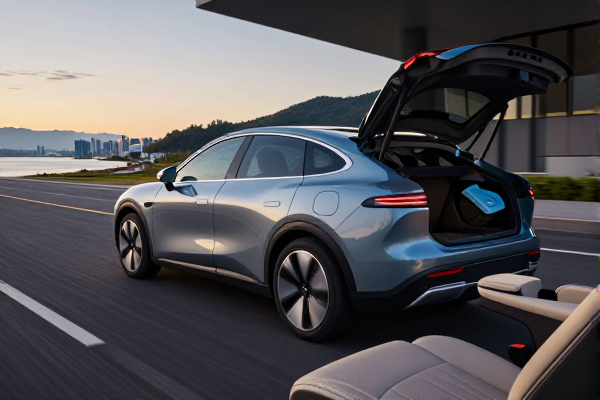
China’s aggressive expansion in the EV market has been a game-changer. Brands like BYD, NIO, and XPeng have flooded global markets with models priced as low as $15,000–$20,000 in China, and even after export tariffs and logistics, they remain competitive. In Europe, Chinese EVs now account for about 15% of new EV registrations, and their presence is growing in Southeast Asia and Latin America.
In the U.S., however, the picture is more nuanced. The average EV transaction price in the U.S. remains higher—around $55,000 as of Q1 2025, according to Kelley Blue Book—due to higher margins on domestic models and the 25% tariff on Chinese-made cars. Still, the global average is pulled down by volume in lower-cost regions.
“The U.S. is a bit of an outlier, but even here, EV prices are trending downward,” noted Mark Stevens, a senior analyst at Edmunds. “Tesla’s repeated price cuts, combined with incentives from legacy automakers, have brought the entry-level cost below $40,000 for some models.”
For buyers, the implication is clear: the total cost of ownership for an EV is now more competitive than ever. While upfront prices are still higher than some gas-powered cars, the gap is narrowing. With federal tax credits of up to $7,500 in the U.S. and similar incentives in Europe, the effective price of an EV can be thousands of dollars below a comparable hybrid.
Moreover, operating costs continue to favor EVs. Electricity is cheaper than gasoline or diesel on a per-mile basis, and maintenance is simpler due to fewer moving parts. A 2024 study by the U.S. Department of Energy found that EV owners save an average of $800–$1,000 per year on fuel and maintenance compared to hybrid owners.
Mobility Global expects the price gap to widen further in the coming years as battery costs continue to fall and more automakers launch dedicated EV platforms. The report predicts that by 2027, the average EV price could drop below $45,000, while hybrids may stabilize around $50,000