Browse

Log in / Register
 Share

Updated: April 25, 2026
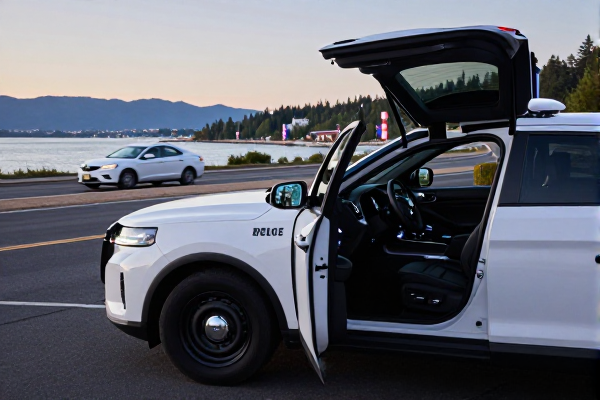
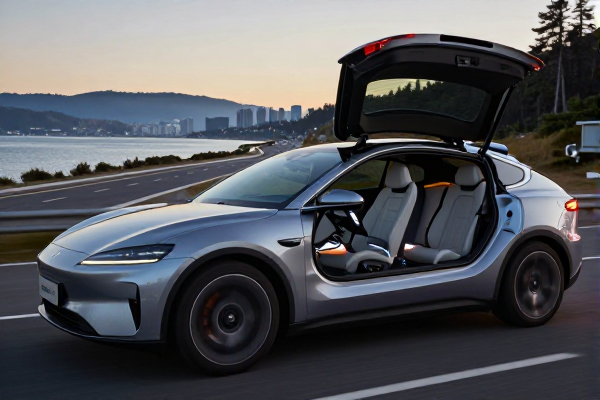
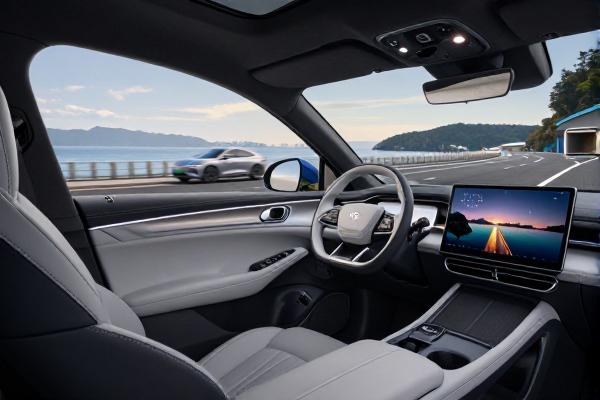
A Green Party representative from Carrick-on-Shannon has called on the Irish Government to maintain investment in the electric vehicle market after new local figures showed EV registrations more than doubled in a year.
Leslie O’Hora said the growth is welcome proof that drivers are ready to go electric, but he warned that momentum could be lost without continued policy support. He urged the Government to treat the increase as a reason to scale up investment, not step back.
“Electric is the way forward,” O’Hora said. “It will not happen on its own.”
The appeal arrives as fuel prices continue to squeeze household budgets. Petrol and diesel costs have stayed high in recent years, and that pressure has made the running-cost advantages of EVs harder to ignore.
The latest registration data for the local area show that the number of electric cars on local roads has more than doubled year-on-year. The jump points to a shift in consumer behaviour that extends well beyond urban centres.
The Carrick-on-Shannon area, like much of rural Ireland, depends heavily on private cars. With public transport options limited, the day-to-day practicalities of driving matter even more. A growing number of local motorists are clearly deciding that an EV can handle those needs at a lower cost.
O’Hora argues that government investment has played a central role in that decision. Purchase grants, tax reductions and new charge points have helped lower the barriers to EV adoption, he said.
He also said the figures should be read as a sign that demand is no longer a niche phenomenon.
“Every charge point and every incentive pushes us closer to making electric the default choice,” he said.
Despite the increase in registrations, infrastructure challenges remain. Home charging works well for those with driveways, but a large share of rural households and town residents rely on on-street parking. Without convenient public charging, many potential EV buyers will stay on the sidelines.
O’Hora said the Government must invest in roadside charging networks with the same urgency it applies to grants and tax breaks. He pointed out that a visible, reliable charger is often the deciding factor for people who are otherwise open to switching.
“People want to know they will be able to charge, not just at home but along the roads they travel,” he said.
The local infrastructure gap is not unique to Carrick-on-Shannon. Across rural Ireland, charging stations remain far thinner on the ground than they are in cities. That imbalance matters because rural drivers tend to cover longer distances and depend on a seamless charging network.
Rising fuel costs have sharpened the economic case for electric vehicles. Even with electricity price fluctuations, charging an EV at home is generally cheaper than buying petrol or diesel for the equivalent distance.
That running-cost advantage has become central to the sales conversation. Dealerships report that customers are increasingly bringning up fuel savings when comparing EVs with combustion-engine cars. For taxi drivers, couriers and others who cover high annual mileage, the difference can be substantial.
O’Hora said the Government should connect this economic argument to its climate policy.
“People are looking at their fuel bills and asking if there is a better way,” he said. “The Government should answer with continued investment, not with a slowdown.”
The electric car market still depends on public support to overcome the gap between upfront costs and long-term savings. EVs typically cost more to buy than their petrol or diesel equivalents, and holding down that price gap is essential to keep the transition accessible.
Tax policy matters here too. In Ireland, a combination of VRT relief, reduced motor tax and lower benefit-in-kind rates for company EVs has made electric cars more affordable for both households and businesses. These tools do not just reduce costs; they also send a clear signal that the shift is a national priority.
The same dynamic is visible internationally. The International Energy Agency has repeatedly stressed the importance of predictable public incentives and infrastructure investment in sustaining EV growth. Governments that trim support too quickly can see demand stall, and campaigners say Ireland should learn from those examples.
For US readers, the Irish experience offers a useful comparison. The United States uses federal tax credits and state-level incentive programmes to shape EV demand, much as Ireland uses grants and tax relief. In both places, the policy lesson is the same: consumers respond to certainty. A stable, well-communicated programme does more for adoption than a stop-start approach to funding.
O’Hora said the Government should use the next Budget to deepen its commitment. He called for continued investment in the electric car market, with a particular focus on expanding public charging and maintaining purchase incentives.
He also warned against reading too much into the registration figures. Growth is positive, he said, but the market is still young and vulnerable to policy shifts. Without a clear long-term vision, the current rate of progress could slow quickly.
“One strong year is not the finish line. It is the reason to keep the foot on the pedal,” he said.
His message to the Government is simple: stay invested, keep the supports in place, and build the infrastructure at a pace that matches demand.
The local registration data offers a snapshot of a market in transition. The increase from one year to the next suggests that electric vehicles are becoming a normal choice in areas beyond Dublin and other large cities. But the transition will only remain on track if public policy keeps pace.
With fuel prices still high and consumer interest growing, the case for continued EV investment has rarely been stronger. O’Hora’s appeal is part of a wider conversation about how government spending can accelerate decarbonisation without leaving rural communities behind.
For local EV owners, the next Budget will signal whether the Government intends to build on the momentum or allow it to fade. O’Hora hopes the lesson from the latest registration figures is clear: electric is the way forward, and the investment should continue.