Browse

Log in / Register
 Share


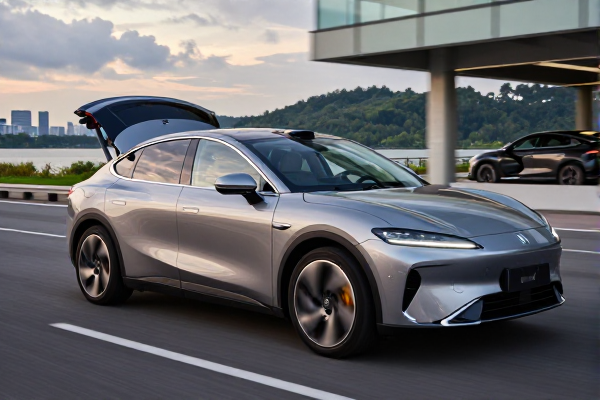
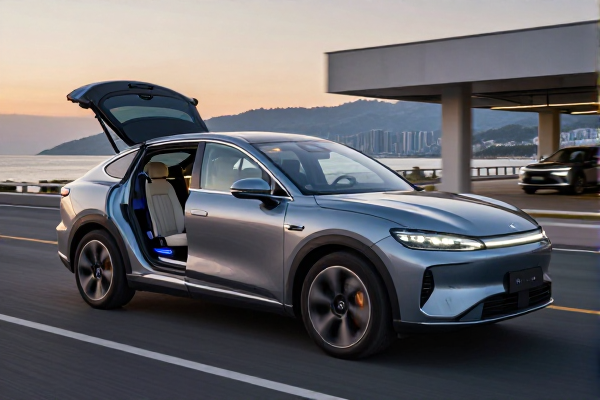
March 28, 2025 – A battery defect controversy involving electric vehicles from GAC Aion has thrust Chinese supplier CALB, the world’s fourth-largest EV battery maker, into the headlines. While China commands a staggering 72% of global EV battery production, this incident underscores a less comfortable reality: a single quality flaw can ripple across the entire supply chain.
The issue first came to light when several GAC Aion owners reported sudden power loss and battery swelling. Internal documents reviewed by industry sources indicate that CALB’s lithium iron phosphate (LFP) cells in certain 2024 model-year vehicles may have a defect in the electrode coating process. GAC has not issued a formal recall, but quietly began replacing batteries for affected vehicles in select dealerships last month, according to a service technician who spoke on condition of anonymity.
CALB, officially known as China Aviation Lithium Battery Co., quickly denied any systemic problem. In a statement released Tuesday, the company said its internal quality checks showed no anomalies and that the “isolated incidents” were likely due to external factors. However, the lack of a transparent recall has drawn criticism from consumer advocates and safety regulators in the U.S. and Europe, who worry about the opacity of China’s rapidly expanding battery industry.
The incident is particularly significant because CALB supplies batteries not only to GAC but also to automakers such as XPeng, Geely, and several European bus manufacturers. If the defect proves to be widespread, it could disrupt production plans for multiple electric models. Analysts at BloombergNEF estimate that a recall covering even 50,000 vehicles could cost CALB upwards of $300 million, including replacement and liability costs.
“This is a classic case of the hidden cost of rapid scale-up,” said Dr. Lin Wei, a battery supply chain expert at the University of Michigan. “China built the world’s largest battery ecosystem in less than a decade, but quality control across every step of the value chain is not always consistent. When one factory has a problem, the entire industry feels it.”
The timing could not be worse for Chinese battery makers. The U.S. Inflation Reduction Act already incentivizes a shift away from Chinese-sourced components, and the European Union is considering stricter battery regulations. In a separate development, the U.S. Department of Energy announced last week it will fund independent testing of imported LFP batteries for public transit fleets, a move seen as directly targeting Chinese suppliers.
Meanwhile, GAC Aion has seen a dip in sales in February, with 48,000 units delivered, down 12% from the previous month, though the company attributes the decline to seasonal factors. Industry insiders speculate that the battery controversy may affect consumer confidence, especially in overseas markets where GAC is trying to expand.
The incident also reignites debate about the reliability of LFP batteries, which are cheaper and safer than nickel-manganese-cobalt (NMC) cells but can suffer from lower energy density and manufacturing inconsistencies. CALB was one of the first to mass-produce “blade” type LFP cells, a design championed by BYD. But the defect in GAC Aion cars involves a different assembly method, according to one engineer who inspected the failed units.
For the global EV market, the takeaway is clear: as China’s battery dominance grows, its quality issues become global problems. Foreign automakers that rely on Chinese batteries for their own EVs must now re-examine their supply chain due diligence. Some, like Tesla, have already diversified with partnerships in Japan and South Korea. Others are scrambling.
“The next five years will be about resilience, not just volume,” said Michael Tinsley, a partner at the consulting firm McKinsey. “The GAC Aion case is a wake-up call. It’s not enough to have the cheapest cells; you need traceability, third-party validation, and a culture of recall transparency.”
In its latest investor call, CALB executives said they are working with GAC to conduct a “comprehensive field investigation” and promised to release a detailed report within 30 days. The company also announced a new quality audit program for all its production lines, including those in its new factory in Hungary, which is expected to begin production later this year.
The European factory, a key part of CALB’s strategy to circumvent trade barriers, may face additional scrutiny if the defect issue is not resolved swiftly. EU regulators have already visited the site and requested independent sampling of cells.
As the story unfolds, the global auto industry is watching closely. One defect in one model may be small, but when it comes from a supplier that powers nearly one in 10 electric vehicles worldwide, it travels far—and fast.