Browse

Log in / Register
 Share

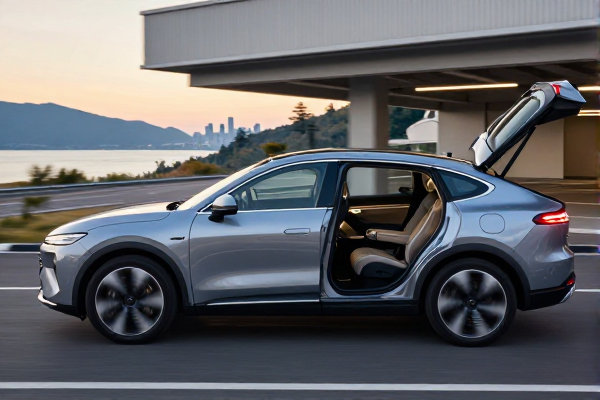
The European Union's financial support for electric vehicle adoption in Slovenia is reaching a critical juncture. A public call for purchase incentives, known as SUB-EV26, is on the verge of closing as the allocated funds – including nearly €44 million from the EU's Recovery and Resilience Facility (RRF) – are almost fully committed.
The program, now managed by Slovenia's Ministry of Infrastructure and Energy following a government reorganization, has drawn significant interest from both private individuals and businesses. The current call has a total budget of €25.6 million for private buyers and €8 million for businesses and self-employed applicants. According to the ministry, all Climate Fund resources designated for EV incentives under Measure 2.2 (Zero-emission vehicles and charging infrastructure) have been fully allocated.
No additional funding will be added to the current call due to limited remaining resources. The application window will close automatically once the total value of submitted applications reaches the available budget. This means that prospective EV buyers who haven't yet applied may miss out on the subsidies.
The EU's RRF contribution, which ran from 2024 to 2026, provided a total of €43.9 million for EV purchase incentives. This represented a significant share of public support for e-mobility in Slovenia. However, with the RRF scheme now concluded, future incentives will rely solely on national funding sources, which are considerably more constrained. The shift underscores the need for careful planning and efficient use of public funds.
Looking ahead, the government of Slovenia is expected to consider a new Climate Fund Expenditure Programme in autumn 2026. Until then, no new public calls for EV incentives are guaranteed. The ministry has stated that it cannot yet provide details on conditions, available budget, or the timeline for future calls. Should a new call be published, it is expected that the current practice will continue, allowing electric vehicles purchased before the call's publication to remain eligible, provided they meet all requirements.
For prospective EV buyers, the uncertainty is a significant factor. The ministry encourages interested applicants to regularly monitor the Borzen website for updates on mobility support schemes.
Expert Perspective: Comparing Slovenia's EV Incentives to U.S. Policies
While the U.S. federal EV tax credit (up to $7,500 for qualifying vehicles) remains a key driver for American consumers, Slovenia's approach reflects a smaller-scale, EU-funded model that is now facing a funding cliff. The U.S. market benefits from a more stable, long-term federal incentive structure, though state-level additional rebates vary widely. In contrast, Slovenia's reliance on EU Recovery funds, which are time-limited, creates a stop-start dynamic that may hinder the consistent growth of EV adoption. The situation also highlights the broader challenge faced by smaller EU member states: after the RRF concludes, they must pivot to domestic budgets, which are often stretched thin.
What This Means for the EV Market
The near-exhaustion of Slovenia's EV incentive fund could slow the country's transition to zero-emission vehicles. Without a new national program, the cost of EVs may become prohibitive for many buyers, especially when compared to cheaper internal combustion engine alternatives. The government's decision to wait until autumn 2026 to consider a new program could create a gap of several months with no purchase support. This is a critical period for automakers and dealers, who may see a drop in EV sales.
Timeline of Key Events
Conclusion
The end of EU-funded EV incentives in Slovenia marks a pivotal moment for the country's e-mobility ambitions. While the EU's RRF provided a substantial boost, future progress will depend on national political will and fiscal capacity. For now, the message to consumers is clear: if you want the subsidy, apply now before the window closes. After that, the road ahead for EV incentives in Slovenia remains uncertain.