Browse

Log in / Register
 Share


May 4, 2026 — New official data released in Canberra show Australia is increasingly breaking the old link between economic growth and energy consumption. In the 2024-25 financial year, the nation’s energy productivity improved by 1.9%, even as total energy use declined by 0.5%. The figures, drawn from the latest Australian Energy Statistics, point to a structural shift in how the country generates, delivers, and consumes power.
Australia now generates roughly $462.6 million in GDP for every petajoule of energy it uses. That measure of energy productivity stands 25.5% higher than a decade ago, according to the government’s annual energy data series. In practical terms, the economy is expanding without requiring proportionally more fuel, electricity, or gas to support it.
Total energy use has now fallen 4.9% below its 2019 peak, while the economy continued to grow 1.4% over the same 12-month period. The result underscores a decoupling trend that energy economists have been watching for years: output can rise at the same time that absolute energy consumption falls.
A key driver is the changing electricity mix. Over the calendar year 2025, renewables supplied 42% of electricity on Australia’s main grids. Wind generation jumped 20.9% and solar generation rose 12.7%, helping push cleaner power into the system without compromising reliability. Utility-scale wind farms and large solar installations contributed most of the growth, but rooftop solar has also played a major role.
Australia’s solar output has grown nearly tenfold over the past decade. That includes household panels as well as commercial and grid-scale projects. The combination of falling technology costs and supportive state and federal policies has made solar one of the fastest-growing electricity sources in the country.
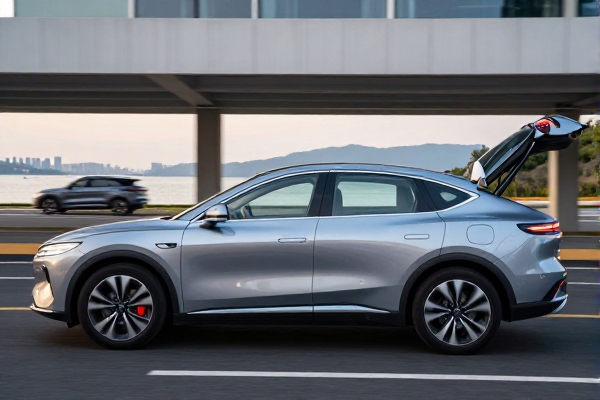
Household behaviour is changing too. Residential electricity use rose 6.2% in 2024-25, while residential gas use fell 2.3%. The pattern reflects a broader electrification trend: homes are increasingly switching from gas appliances to electric alternatives, and from petrol cars to electric vehicles. Electricity used by electric vehicles more than doubled over the same period, according to the data.
This shift is not just about cleaner power generation. It also points to a more efficient use of the energy system as a whole. Smart meters, demand-responsive appliances, and home batteries are beginning to allow households and businesses to shift consumption away from peak periods, reducing the need for expensive network upgrades.
The federal government is trying to accelerate these gains. The Australian Energy Market Operator (AEMO) is working with the government on the first Demand-side Statement of Opportunities, a forward-looking assessment of how households, businesses, and industry can use smart technology, more efficient appliances, electrification, and solar-plus-battery systems to cut costs and improve system-wide efficiency.
The aim is to identify practical actions that could reduce energy bills for consumers while making better use of existing infrastructure. Demand-side measures are often cheaper than building new generation or transmission, and they can also help absorb more renewable electricity during periods of high output.
This demand-side work complements two major federal programs: the Capacity Investment Scheme, which supports new renewable generation and storage capacity, and the Cheaper Home Batteries Program, which helps households install battery storage. Together, these initiatives are designed to smooth the integration of variable wind and solar power into the grid.
For US readers, the Australian experience offers a useful data point. Australia is a major exporter of liquefied natural gas and coal, yet it is also demonstrating that a resource-intensive economy can improve energy productivity while expanding renewables. The policy mix — including renewable targets, storage incentives, and a growing focus on demand flexibility — shows a model in which economic growth and lower energy use are not mutually exclusive.
There are caveats. Australia’s energy transition is still uneven across sectors, and industrial energy use remains sensitive to commodity prices and global demand. The fall in total energy consumption partly reflects structural changes in manufacturing and mining, not just efficiency gains. Still, the longer-term trend is clear: the country is producing more value with less energy.
The Australian Energy Statistics series provides a detailed, year-by-year picture of how the country produces and uses energy. It tracks supply, transformation, and final consumption across electricity, gas, oil, and renewables. The latest edition confirms that both the generation mix and consumer behaviour are moving in the same direction.
One notable feature is the speed of solar deployment. A decade ago, solar was a marginal contributor to Australia’s electricity supply. Today, it is one of the pillars of the grid, supported by strong rooftop uptake and large-scale projects. The 42% renewable share on major grids in 2025 would have been difficult to predict ten years earlier.
Wind, meanwhile, remains an underappreciated success story. Growth of 20.9% in 2025 was driven by new wind farms coming online and improved capacity factors at existing sites. Australia’s best wind resources are in the south and west, while much of the demand is on the east coast, which is why transmission interconnection remains a key policy focus.
The shift to electric vehicles is still in its early stages, but it is already visible in electricity consumption data. Doubling of EV-related electricity use signals growing uptake, especially in urban areas where home and workplace charging is most common. As more EVs hit the road, they will add to residential electricity demand while reducing oil use — another form of energy productivity improvement.
Government officials say the new Demand-side Statement of Opportunities will help identify the most cost-effective ways to lower energy costs. The analysis will draw on data from households, businesses, and industry to model how appliances, batteries, and smart controls could respond to price signals and grid conditions.
This is part of a broader international trend. Power systems in many countries are moving from a supply-side-only approach toward one that treats demand flexibility as a resource. Australia’s efforts to quantify those opportunities could provide a template for other markets, including parts of the United States where peak demand and grid congestion are growing concerns.
The latest figures also highlight a long-term productivity trend. Australia’s energy productivity has improved in every year for the past decade, with the only exception being a downturn-affected period in the early 2020s. The cumulative gain of 25.5% means the economy now needs roughly one-fifth less energy per unit of GDP than it did ten years ago.
To be sure, energy productivity is not the same as energy efficiency. It is a ratio of economic output to energy input, so changes in industry mix, commodity prices, and weather can all affect the number. But the consistency of the improvement suggests that real efficiency gains, not just statistical noise, are at work.
The challenge now is to maintain momentum. Renewables are growing, but grid integration, storage, and transmission all require investment. Demand-side measures can help, but they need supportive regulations and price signals. The Australian Energy Statistics will be an important benchmark for judging whether those efforts succeed.
For now, the headline is straightforward: Australia’s economy grew by 1.4% in 2024-25, energy use fell, and productivity improved. That combination — once considered unlikely — is becoming the new normal in one of the world’s most energy-intensive economies.