Browse

Log in / Register
 Share

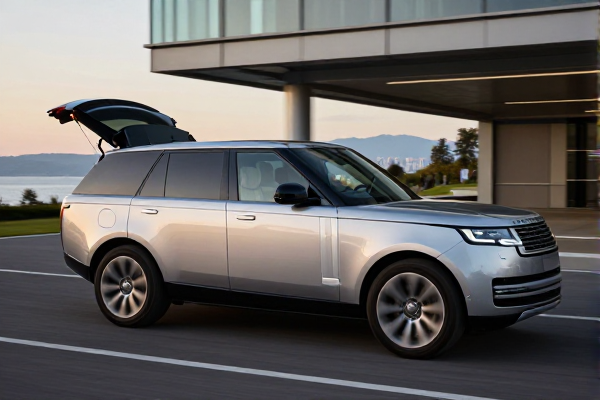
The first-ever production electric Range Rover has officially broken cover, and it’s setting a new benchmark for the luxury SUV segment. Land Rover’s parent company JLR unveiled the vehicle on March 26, 2025, from its historic Solihull plant in the UK—the same facility that has hand-built Range Rovers since 1970. The electric flagship slots into the brand’s flexible manufacturing line alongside mild-hybrid, plug-in hybrid, and traditional combustion models, signaling a carefully measured transition toward full electrification.
“Range Rover Electric is the result of a decade of considered engineering and technological development, setting a new benchmark for The Original Luxury SUV,” said Martin Limpert, Managing Director of Range Rover, in a statement.
The new EV promises to retain the iconic silhouette and all-terrain capability that made the Range Rover name synonymous with opulence and off-road prowess. With a dual-motor all-wheel-drive system, an 800-volt architecture, and a slew of patented innovations, this is not just a Range Rover with a battery swapped in—it’s a ground-up reimagining of the luxury SUV for the electric age.
At the heart of the electric Range Rover is a pair of permanent magnet electric motors, each rated at 260 kW. Together they produce 550 PS (542 hp) and 850 Nm of torque. That’s enough to propel the near-3-ton SUV from 0 to 60 mph in an estimated 4.5 seconds—a figure that rivals many performance sedans.
More importantly, the vehicle targets an estimated driving range of up to 372 miles on the WLTP cycle. In real-world conditions, JLR projects around 333 miles (535 km). That places it squarely in the top tier of large luxury EVs, ahead of the Mercedes EQS SUV (about 305 miles EPA) and the BMW iX (about 324 miles WLTP). The range is achieved thanks to a massive 118.5 kWh double-stacked battery pack and a highly efficient thermal management system.
The 800-volt electrical architecture enables rapid DC fast charging. When connected to a 350 kW CCS charger, the battery can go from 10% to 80% in 22 minutes. That’s competitive with the Hyundai Ioniq 5 and Kia EV6, but in a much larger, heavier vehicle. For home charging, an 11 kW AC onboard charger is standard, with a 22 kW unit optional.
JLR also introduced a new thermal management technology called ThermAssist, which preconditions the battery to optimize charging speed in cold weather. The system is one of over 300 patent applications filed by British engineers during the development of the electric Range Rover, underscoring the depth of R&D invested.
Range Rover has built its reputation on off-road capability, and the electric version doesn’t disappoint. The vehicle retains a wading depth of 900 mm (35.4 inches), thanks to a sealed battery enclosure and waterproofed electric motors. That’s the same as the top-spec diesel Range Rover, and better than the Mercedes G-Class EV (which manages 850 mm).
The traction management system is a standout: it responds to wheel slip in just 50 milliseconds—100 times faster than a traditional internal combustion engine setup. This near-instantaneous torque vectoring allows the electric Range Rover to maintain grip on loose gravel, mud, snow, and even steep rock climbs.
The electric powertrain also enables a one-pedal driving mode that can handle gradients of up to 45 degrees. This means the driver can ascend or descend extreme slopes using only the accelerator pedal, with regenerative braking doing the stopping. Combined with twin-chamber air suspension and a lower center of gravity from the floor-mounted battery, the electric Range Rover remains a true off-road machine.
To maximize range, the engineers refined the exterior extensively. The signature grille is now aerodynamically shaped, with active shutters that close at highway speeds. New bespoke wheels reduce drag, and the underbody has been completely redesigned to smooth airflow. JLR claims these changes reduce the coefficient of drag by 10% compared to the combustion-powered Range Rover.
The First Edition launch model offers three exclusive paint colors: Belgravia Green, Santorini Black, and Varesine Blue. Inside, customers can choose Light Cloud Ultrafabrics PU—a vegan leather alternative—and Kvadrat interior upholstery, which is a premium textile made from recycled materials. The cabin retains the same opulent feel as the standard Range Rover, with a 13.1-inch curved Pivi Pro infotainment screen and a 23-speaker Meridian Signature sound system.
JLR subjected the electric Range Rover to one of the most extensive testing programs in the company’s history. Physical test vehicles covered a combined distance equal to 38 trips around the globe. In addition, engineers completed more than 250,000 hours of virtual testing, simulating everything from Arctic cold to desert heat. The battery pack underwent over 100,000 hours of thermal cycling and abuse testing to ensure safety and longevity.
All electric motors and battery packs are assembled at JLR’s Electric Propulsion Manufacturing Centre in Wolverhampton, UK. The dual-motor system is a new in-house design, and the battery pack uses a structural housing that doubles as a chassis stiffener. This approach not only improves rigidity but also reduces weight, contributing to the vehicle’s handling and range.
The company has filed 300 patent applications specifically for the electric Range Rover, covering areas like thermal management, battery safety, and electric drive unit integration. This intellectual property gives JLR a competitive edge as it scales up its electric vehicle lineup.
The electric Range Rover will go on sale in the US later this year, with deliveries expected to begin in early 2026. Pricing has not been officially announced, but industry analysts expect a starting price around $120,000, placing it in direct competition with the Mercedes EQS SUV ($105,000) and the upcoming GMC Hummer EV SUV ($80,000–$110,000). However, the Range Rover’s brand cachet and off-road heritage could justify a premium.
“Range Rover is the original luxury SUV, and now it’s redefining what a luxury electric SUV can be,” said Limpert. “We’ve focused on preserving the everything, anywhere character that owners love, while adding the benefits of electrification.”