Browse

Log in / Register
 Share

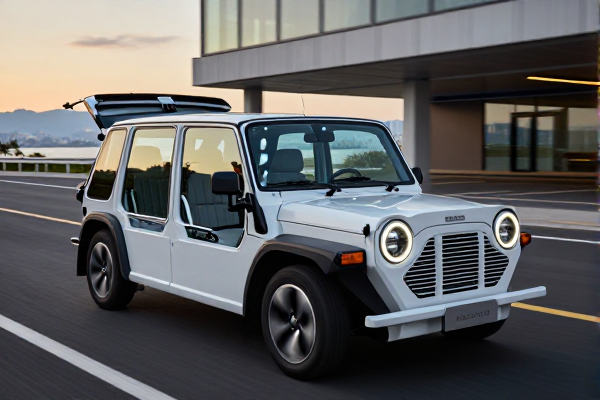
Today, March 14, 2025, MOKE took the wraps off the MK2, the second generation of its battery-powered retro buggy. The headline number is a 170 km (about 105-mile) range — a significant jump from the original electric Moke's roughly 100 km rating. The refreshed runabout gains a new interior, updated styling, and more practical touches, while keeping the open-air charm that turned the classic Mini Moke into a 1960s beach icon.
The MK2's key mechanical change sits under the floor. MOKE has fitted a larger-capacity battery pack, which the company says lifts a single charge to 170 km. That still places the car firmly in local-driving territory, but it's a meaningful step up for buyers who want to run errands, shuttle around a resort, or make short trips without hunting for an outlet every other day. MOKE adds that that 170 km figure comes from its own in-house testing, so real-world numbers will shift with temperature, load, and terrain.
Charging details were kept loose at the reveal. The company indicated that a standard household outlet remains a workable option for overnight top-ups, which fits the car's weekend-and-sunshine lifestyle. The flip side is that dedicated fast charging is not part of the pitch; this isn't a vehicle designed for long-distance touring. That's fine, because the MOKE has never been about covering miles — it's about doing fewer miles with more smiles.
Visually, the MK2 stays true to the MOKE formula: flat panels, slim pillars, a shoulder-height steering wheel, and seating that leaves you exposed to the breeze. What's different is the finishing. The front end carries a cleaner lighting signature, there are fresh wheel designs, and the new paint palette leans on muted Mediterranean tones. The result is still unmistakably a MOKE, just one that looks a bit more grown-up than its predecessor.
The cabin was the first-gen car's weakest point, and MOKE has clearly put work into fixing it. The MK2 gets a redesigned dashboard, a more comfortable driving position, and better soft-touch materials. A compact digital display handles driver information, and there's a proper slot for a phone or keys — small things the earlier version simply lacked. The rear bench folds away for cargo, and the side screens and optional canvas roof remain, so owners can adapt the car to the weather or their mood in a few minutes.
Performance specs weren't fully detailed at launch, but MOKE is framing the MK2 as a back-road cruiser, not a speed demon. Top speed stays modest, which makes sense given the car's intended habitat: beach towns, planned communities, golf-cart lanes, and slow tourist roads. Think of it as a four-wheel alternative to a golf cart, only with enough character to show up on Instagram.
MOKE continues to position the vehicle as a lifestyle purchase. The company describes the MK2 as built for joy, emphasizing open-air driving, easy maneuverability, and the sense of freedom the original Moke delivered. That positioning matters because the MK2 isn't trying to compete with a Chevy Bolt or a Tesla Model 3. Its range and top speed simply don't put it in that conversation, and MOKE isn't pretending otherwise.
On the US side, MOKE America has been selling the electric Moke in small numbers for years through a direct-to-customer model, and the MK2 is expected to follow the same route. Official US pricing has not been announced, and the company is keeping delivery timing vague, saying only that initial units should reach American customers later this year. Shipping logistics and vehicle homologation could push that window around, so interested buyers will likely be told to stay patient.
Where the MK2 sits in the American market is genuinely interesting. There isn't much direct competition for a road-legal, retro-styled micro EV in the United States. On one end you have LSVs like the GEM family — practical but anonymous. On the other, you have imports such as the Citroën Ami, which appeals to urban minimalists in Europe but isn't sold stateside. The MOKE lands somewhere between them: a vehicle you buy not because it's the rational choice, but because it's the fun one.
That emotional appeal is probably the MK2's strongest card. Industry observers point out that boutique electrics like this live or die on their ability to turn heads and create a brand following. MOKE's marketing has always leaned heavily on lifestyle imagery, and the redesign hands the brand a fresh set of visuals plus a more credible spec sheet for cold-climate buyers who previously found the old range too limiting.
There's also a rental-fleet angle that's easy to overlook. Hotels, beach clubs, and vacation hosts buy a lot of Mokes, often just to park one out front and draw attention. The MK2's longer range, smarter cabin, and cleaner looks make it a stronger fleet purchase than the original. Even if the price per unit is higher, the car's distinctiveness on a property's driveway is far harder for a competitor to copy than a spreadsheet of specs.
Value, of course, remains the open question. Without pricing, it's hard to say whether the MK2 justifies its likely premium over a well-equipped golf cart. The earlier electric Moke was never cheap, and the upgrades here won't come free. But MOKE buyers have never been bargain shoppers. The brand sells a mindset as much as a machine, and the MK2 keeps that spirit intact — arguably more so, now that the interior no longer feels like an afterthought.
Deliveries will be the real test. MOKE has a history of slow, small-batch rollouts, and it hasn't committed to a precise month for the MK2's arrival. Still, the debut itself signals that the brand is serious about evolving rather than resting on nostalgia. If the car shows up on time and delivers close to its promised range in real-world use, it should have no trouble finding its niche. The MOKE was never about necessity. It's about making a Saturday drive feel like a holiday — and with the MK2, the drive just got longer.