Browse

Log in / Register
 Share

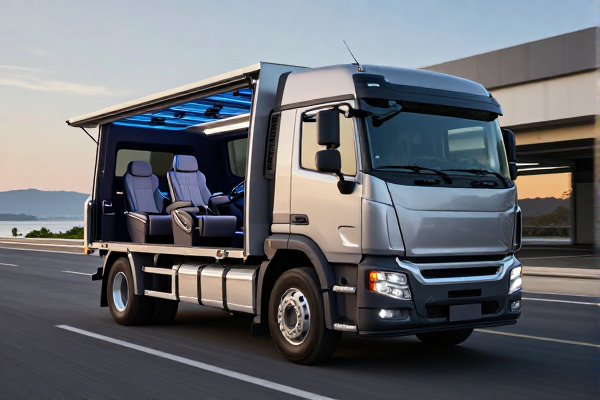
March 27, 2024 — The US transport sector is accelerating toward an electric future, with heavy-duty trucks at the forefront of decarbonization efforts. However, industry leaders caution that challenges such as extended charging times, infrastructure gaps, and economic viability must be addressed to make this transition feasible for long-haul operations. As federal and state-level trials unfold, stakeholders are weighing the practical implications of shifting from diesel to electric power.
The inevitable electrification of heavy freight vehicles is widely acknowledged as the ultimate goal for reducing carbon emissions in logistics. Yet, the path forward remains complex, particularly for regional and cross-country carriers. According to transport executives, while urban deliveries are increasingly adopting electric trucks, the long-haul segment faces unique obstacles due to range limitations and the sparse availability of high-power charging stations along major highways like I-80 or I-95.
In response, the US Department of Transportation has initiated a two-year pilot program to test electric heavy vehicles in partnership with private transport firms. This trial aims to gather data on supply chain integration, freight profiles, and customer expectations—areas where existing studies fall short. Peter Anderson, a consultant for the American Transport Association, emphasizes that electrification must not compromise profitability. "A business must maintain its margins; otherwise, environmental goals become secondary," he notes, highlighting the industry's reliance on over a century of diesel efficiency.
Charging logistics pose a significant hurdle. For instance, refueling a diesel truck takes about 15 minutes, whereas charging an electric equivalent can require 45 minutes to two hours. This disparity raises concerns about driver downtime, fatigue management, and operational costs. Laurie Brothers, a fleet management veteran with decades of experience, points out that service centers must develop new pricing models for charging, potentially impacting bottom lines. "Time is money in transport, and extended stops could disrupt tight schedules," he adds.
To mitigate these issues, technological innovations like battery exchange systems are gaining traction. Inspired by trials in China and the UK, US companies are exploring swap stations that could reduce downtime to minutes. Collaborations with European manufacturers are underway, supported by customer demand for greener logistics. Additionally, the National Highway Traffic Safety Administration is considering exemptions for zero-emission heavy vehicles under performance-based standards, similar to a NSW trial that expires in 2031, to encourage adoption without compromising safety.
Safety remains a critical focus as electric trucks become more common. Fire and Rescue teams across states are enhancing training to handle battery-related incidents, which differ from traditional fuel fires. Superintendent Stewart Alexander of a major metropolitan fire department explains that lithium-ion batteries can cause thermal runaway—intense heat and flame—due to high energy density in compact spaces. "Firefighters are adapting protocols to manage these risks, ensuring regulations for manufacturing and handling evolve in tandem," he states.
Exclusive insight from a recent American Transportation Research Institute report reveals that investment in charging corridors along key routes is accelerating, with over $200 million allocated for infrastructure in 2024 alone. This data underscores the rapid pace of development, though challenges persist in aligning it with freight demands. The report also highlights that electric trucks may initially suit specific sectors, such as short-haul or port logistics, before expanding to broader applications.
Industry efficiency, historically tied to diesel networks, faces a reset with electrification. Companies like Ron Finemore Transport, which has conducted its own electric vehicle trials, note that operational advantages from private fueling stations may diminish if public charging costs rise. "We favor our facilities for cost control, but the shift to electric requires rethinking entire supply chains," Brothers remarks.
The transition to electric heavy trucks is not merely an engine swap; it involves re-evaluating over 40 independent sectors within road transport. Anderson stresses that identifying the optimal energy sources for each segment is crucial. "Our program will analyze data to project where electric vehicles fit best, ensuring a tailored approach rather than a one-size-fits-all solution," he says.
Looking ahead, the US transport industry must balance innovation with practicality. As trials yield real-world insights, the potential for electric heavy trucks to reduce emissions and operational costs grows, but success hinges on collaborative efforts between regulators, manufacturers, and carriers. The journey toward electrification may be gradual, but with strategic adaptations, it promises to redefine freight transport for a sustainable future.