Browse

Log in / Register
 Share

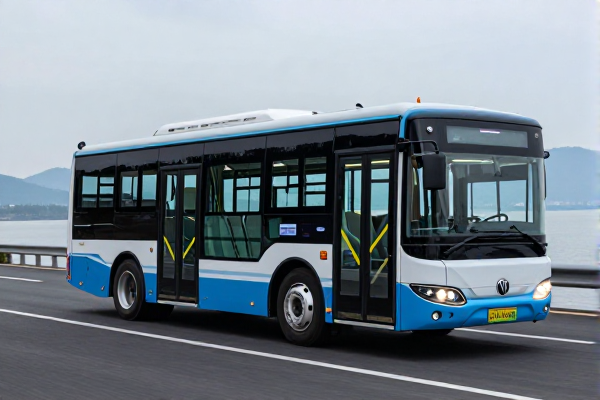
A new strategy focusing on converting existing diesel buses to electric power could significantly speed up the modernization of America's public transit fleets, according to insights from recent research. This approach presents a potentially faster and more resource-efficient alternative to the widespread model of purchasing new electric buses from the ground up. As federal and state governments push for cleaner transportation, retrofitting emerges as a critical, yet underexplored, pathway to meet ambitious climate and air quality goals. May 16, 2024
The core premise is compelling: instead of relegating thousands of currently operational diesel buses to the scrapyard, their chassis and bodies can be repurposed. The retrofit process involves removing the internal combustion engine, transmission, and fuel tank, and installing a new electric motor, battery pack, and power electronics. This method capitalizes on the existing manufacturing energy and materials embedded in the vehicle's frame and body—a principle rooted in circular economy thinking. It addresses one of the major hurdles in fleet turnover: the long lead times and high capital costs associated with ordering brand-new electric buses from manufacturers facing supply chain constraints.
Financially, the retrofit model offers substantial advantages for transit agencies, many of which operate under tight budgets. Preliminary analyses suggest that converting a bus can be 30-50% less expensive than procuring a new electric model. This frees up crucial funding that can be redirected toward expanding charging infrastructure, training maintenance personnel, or even increasing service frequency. The economic case strengthens when considering the total cost of ownership, as electric drivetrains have fewer moving parts, leading to lower long-term maintenance and fueling costs compared to diesel engines. For smaller municipalities or rural transit systems, this cost differential could make the difference between launching an electrification program or delaying it indefinitely.
From an environmental standpoint, retrofitting delivers immediate emissions benefits. Each converted bus eliminates tailpipe emissions of nitrogen oxides, particulate matter, and carbon dioxide for the remainder of its service life. Perhaps more significantly, it reduces the upstream carbon footprint associated with manufacturing a completely new vehicle. Building a new bus, especially one with a large battery, is energy and resource-intensive. Extending the usable life of the existing vehicle shell conserves raw materials and avoids the environmental impact of premature recycling or disposal.
The momentum for this approach is gaining tangible support within the United States. The Federal Transit Administration's (FTA) Low- and No-Emission Vehicle programs, which have disbursed billions in funding, are increasingly open to innovative approaches that accelerate decarbonization. While most grants have traditionally gone to new vehicle purchases, there is a growing dialogue about including retrofit projects as eligible expenditures. Several pilot programs are already underway. For instance, a transit agency in the Midwest is collaborating with a technology startup to retrofit a portion of its aging diesel fleet, serving as a real-world test bed for performance and reliability data in varying climates.
However, the path to widespread retrofitting is not without challenges. Standardization is a key hurdle; buses from different manufacturers and model years have varying designs, making a one-size-fits-all conversion kit impractical. This necessitates skilled engineering labor for customization, which could initially raise costs. Safety certification and regulatory approval from bodies like the National Highway Traffic Safety Administration (NHTSA) for modified vehicles also present a procedural layer that must be navigated. Furthermore, the performance of a retrofitted bus—particularly its range on a single charge—must meet or exceed the daily operational requirements of a transit route to be a viable solution.
Despite these hurdles, the retrofit strategy offers a pragmatic bridge toward a fully zero-emission future. It allows transit agencies to begin their electrification journey today with their existing assets, building internal expertise and public support for cleaner transit without waiting for multi-year delivery cycles of new buses. As battery technology continues to improve in energy density and decline in cost, the range and economics of retrofits will only become more favorable. This approach democratizes the transition, making it accessible not just to major metropolitan agencies with large capital budgets, but to communities across the country.
Looking ahead, the success of bus retrofitting will depend on a concerted effort from multiple stakeholders. Transit agencies must advocate for flexible funding rules. Technology providers need to develop more modular and scalable conversion systems. Policymakers can incentivize retrofits through targeted grants or tax credits. By embracing retrofitting as a complementary strategy alongside new vehicle purchases, the United States can decarbonize its public transit systems more swiftly, efficiently, and equitably, clearing the air while keeping communities connected.