
Browse

Log in / Register
 Share
Share
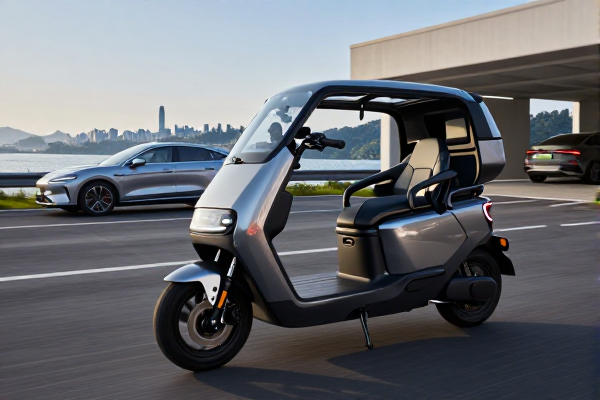
March 2025 – Austria is set to implement a major overhaul of its electric moped regulations on October 1, 2026. The amendment to the Road Traffic Regulation (StVO) and the Motor Vehicles Act (KFG) reclassifies so-called e-mopeds from bicycles to motor vehicles, aiming to curb accidents on cycle paths and clarify rules for all road users. The new law directly affects vehicles in category L1e-B, which include purely electric two-wheelers without pedals, as well as pedal-equipped models with a throttle that can engage the motor without pedaling.
From October 2026, the distinction between “conventional” mopeds and electric mopeds will disappear. Single-track vehicles in category L1e-B will be treated as mopeds under the KFG 1967. The classification hinges on the seat height: if the R-point (Seating Reference Point) is ≤540 mm when the driver is seated, the vehicle does not fall under the EU regulation and remains exempt. But for those that do, the rules are stringent.
The most impactful change for riders: e-mopeds will no longer be allowed on cycle tracks, cycle lanes, or any other cycling infrastructure. They must use the road exclusively, just like conventional mopeds. This is a direct response to growing conflicts between faster e-mopeds and slower cyclists, which have led to a rising number of injuries.
Once reclassified as motor vehicles, e-mopeds will be subject to the same requirements as mopeds. Specifically, riders must:
Failure to comply will result in fines and potential impoundment of the vehicle.
The regulation targets vehicles categorized as L1e-B under EU framework. This includes:
Importantly, multi-track electric vehicles that comply with the speed and power limits of Sec. 1(2a) KFG 1967 – such as “mobility scooters for seniors” – remain unaffected. Likewise, electric bicycles with a pushing or starting aid that only works at walking speed are not reclassified.
While the US does not have a uniform federal rule for e-mopeds, states often follow the three-class system for e-bikes (Class 1, 2, 3). Riders in the US should note that:
“The Austrian reform is a necessary step to address the safety gap between cyclists and increasingly powerful e-mopeds,” says Dr. Marie Schmidt, a traffic safety researcher at the Technical University of Vienna. “By treating them as motor vehicles, authorities can enforce speed limits, require inspections, and ensure riders are properly trained. This is likely to reduce collisions on shared paths.”
The new rules take effect on October 1, 2026. Current owners of L1e-B vehicles should prepare by:
The amendment is part of a broader StVO update responding to the surge in electrically powered vehicles and small vehicles, which have contributed to a 30% increase in related accidents over the past three years.
Austrian authorities are expected to launch a public awareness campaign in 2026 to inform riders about the changes. Meanwhile, e-moped retailers must adjust their sales practices to highlight the new requirements. For US readers, this serves as a reminder to check local e-moped regulations, as more states are considering similar reclassifications.


