Browse

Log in / Register
 Share


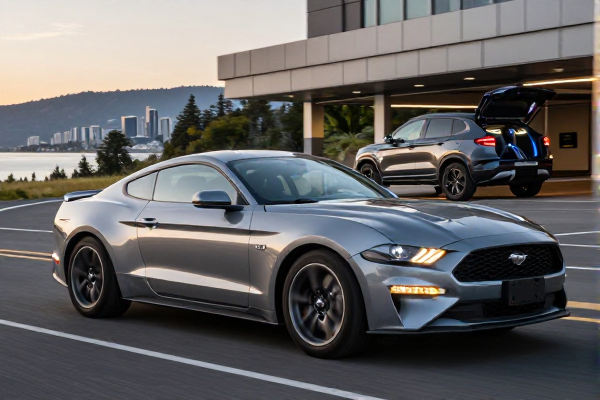
VALLEJO, Calif. — A startling incident on a California highway culminated in the arrest of a motorist for driving under the influence after his Ford Mustang veered off the road and into a body of water, where he was later discovered apparently asleep behind the wheel. The event underscores the severe dangers of impaired driving. (Report updated: October 26, 2023)
According to the California Highway Patrol, the episode unfolded on State Route 37 in Vallejo. Authorities reported that the driver of the Ford Mustang was traveling westbound when his vehicle departed the roadway and entered a pond. Upon arrival, emergency responders from the Vallejo Fire Department executed a rescue, safely extracting the individual from the partially submerged car. Remarkably, no other vehicles were involved, and there were no reports of additional injuries.
A critical detail emerged during the initial investigation: the driver was found fast asleep in the driver's seat after the crash came to a stop. This observation was corroborated by a witness at the scene who told investigators they did not see any animal on the road—contradicting the driver's claim that he swerved to avoid one. The combination of the crash and the driver's unconscious state immediately raised red flags for law enforcement officers.
Subsequent testing revealed a staggering level of alcohol impairment. The driver's blood alcohol concentration was measured at 0.25%, a figure that is more than three times California's legal limit of 0.08%. This extreme BAC level typically indicates significant intoxication, severely hampering reaction time, judgment, and motor skills. The CHP subsequently took the driver into custody and booked him on suspicion of driving under the influence.
Legal experts note that a BAC of 0.25% places this case in a severe category, often leading to enhanced penalties upon conviction. In California, a first-time DUI offender with a BAC below 0.15% may face standard penalties, but levels at or above 0.15%—and certainly at 0.25%—can trigger aggravated sentencing. This can include longer license suspensions, mandatory installation of an ignition interlock device, extended DUI education programs, and significantly higher fines. The driver now faces a complex legal process where these factors will be central.
This incident serves as a grim reminder during a period when traffic safety advocates are highlighting a concerning trend. Preliminary data from the National Highway Traffic Safety Administration (NHTSA) suggests that alcohol-impaired driving fatalities remain a persistent problem, accounting for nearly one-third of all traffic-related deaths in the United States. While overall traffic deaths saw a recent slight decline, the proportion linked to alcohol has not seen a commensurate drop, indicating a stubborn public safety crisis.
Beyond the immediate legal consequences, the crash prompts a discussion on vehicle safety and driver state detection. Modern vehicles, including performance models like the Ford Mustang, are equipped with advanced stability control and collision avoidance systems. However, these technologies are not designed to override a profoundly impaired driver's inputs that lead a vehicle off the road. Some automotive safety researchers point to emerging passive driver monitoring systems as a potential future layer of prevention, using cameras and sensors to detect signs of drowsiness or severe impairment.
The CHP reiterated its standard safety plea following the arrest, urging all motorists to plan for a sober ride before any drinking begins. "The use of rideshare services, taxis, or a designated driver is not a suggestion—it's a necessary plan to save lives," a CHP spokesperson stated. They emphasized that the choice to drive impaired endangers not only the driver but every other person on the road.
As the case proceeds through the Solano County court system, it stands as a stark, real-world example of how quickly a night out can turn into a life-altering legal emergency and a potentially deadly tragedy. The image of a driver asleep in a wrecked car in a pond, fueled by extreme intoxication, is a powerful visual argument for the absolute necessity of responsible decision-making.