Browse

Log in / Register
 Share

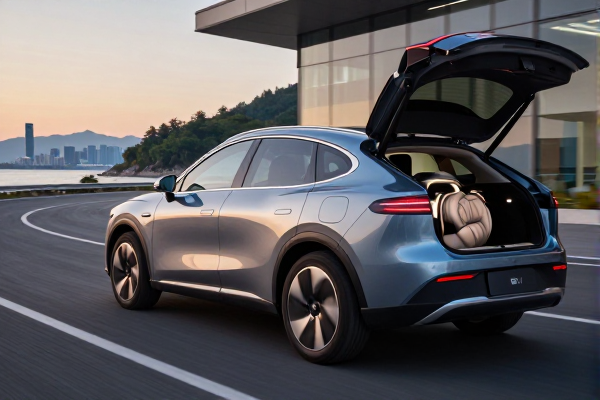
May 7, 2026 — The Department of Trade and Industry (DTI) and Philippine Veterans Bank have formalized a partnership to expand financing for electric vehicles (EVs) and micro, small and medium enterprises (MSMEs), aiming to lift one of the biggest hurdles to the country’s green transport transition. The memorandum of understanding was signed Sept. 28 at DTI’s central office in Makati City.
At the heart of the deal is a simple observation: many transport operators want to switch from diesel or gasoline vehicles to electric models, but the upfront cost is prohibitive. Long-term fuel and maintenance savings may be attractive, but without financing, those savings remain out of reach. The DTI-Veterans Bank agreement seeks to bridge that gap by combining a commercial bank’s lending capacity with the DTI’s policy-driven loan programs.
Under the MOU, DTI can refer prospective borrowers to Philippine Veterans Bank. The two institutions will also design financing products tailored to the needs of transport operators and MSMEs, complementing programs such as the DTI’s e-Transport Loan Program.
Trade Secretary Cristina A. Roque said the demand for EV conversion is evident across the transport sector. “Many transport operators want to make the shift, but they need financing to do it,” she said. “Through this partnership, we can connect more of them—from small operators to larger groups—with a bank that can help fund that transition.”
Specific loan volume targets, interest rates and rollout timelines were not disclosed in the MOU. The agreement mainly establishes a framework for joint product development and borrower referrals.
The scope extends well beyond fleet conversion. Under the same arrangement, MSMEs that are upgrading equipment, expanding into renewable energy, or building capacity for export orders may gain access to a wider range of credit options. Franchise businesses and firms with import-export financing needs are also included.
Roque argued that capital access determines whether a business can modernize, hire, or fulfill large contracts. “Access to capital is the true engine of enterprise growth and modernization,” she added. “We need to ensure that flexible, accessible financing is within reach so our enterprises can take that next step.”
The Philippine Statistics Authority estimates that MSMEs account for 99.5% of all registered business establishments and employ roughly 63% of the workforce. Yet their share of commercial bank lending has historically been limited. Under the Magna Carta for MSMEs, banks are required to allocate a portion of their loan portfolio to small borrowers, but compliance and risk aversion remain challenges.
While the exact proportions vary by period, data from the Bangko Sentral ng Pilipinas consistently show that MSMEs receive a smaller share of commercial bank loans relative to their contribution to the economy. This credit gap has been a frequent subject of policy discussions, and it explains why the DTI is turning to partnership models that lower the barrier to entry.
DTI’s financing arm, Small Business Corp., already operates micro-lending programs such as the Pondo sa Pagbabago at Pag-asenso (P3) scheme. The Veterans Bank partnership is intended to layer commercial financing on top of those public programs, creating a more complete capital stack for growing enterprises.
The partnership also aligns with the Electric Vehicle Industry Development Act, which calls for expanded EV infrastructure and adoption across the country. The e-Transport Loan Program has been one of DTI’s main tools in that effort, helping operators acquire electric tricycles, e-jeepneys, and light trucks.
Veterans Bank, founded by Filipino war veterans and owned by veterans’ organizations, has a notable presence outside Metro Manila. That reach could make it easier for provincial transport cooperatives, food producers, and logistics firms to tap funding that might otherwise require trips to the capital.
For global buyers, including many U.S. companies, the partnership sends a useful signal: Philippine suppliers are being given clearer financial pathways to reduce emissions. Multinational corporations are increasingly asking suppliers to document their environmental performance. Access to financing for EVs and energy-efficient equipment could help small exporters meet those requirements and retain contracts in green supply chains.
The agreement effectively connects the country’s climate commitments with its MSME development strategy. Instead of treating EV adoption and business growth as separate policy areas, the DTI is using bank credit as a common thread.
Whether the deal delivers measurable impact will depend on execution. Interest rates, collateral requirements, and approval times are decisive for small borrowers. Even with a government referral, a private bank must manage risk, and some MSMEs may still struggle to meet lending standards.
The MOU does not create a dedicated credit facility or a guaranteed fund; it is rather an agreement to align operations. The DTI has said that partnerships with commercial banks can widen the range of funding options available to enterprises as they scale. But officials have also recognized that public programs alone cannot meet the scale of demand, making private-sector collaboration essential.
For transport groups, the choice to electrify is ultimately a financial one. Financing that spreads the higher purchase price over several years can make the difference between staying with conventional vehicles and making the leap. For MSMEs, the same logic applies: credit can unlock equipment upgrades, working capital, and entry into emerging industries such as renewable energy and electric mobility.
“Maraming opportunities for our MSMEs, especially as more Philippine products reach both local and global markets,” Roque said. “We want to make sure they have access to the capital they need to grow and expand.”
The partnership, in that sense, has dual leverage. It supports the government’s push for cleaner transport while giving small enterprises a more concrete route to capital—an alignment that could shape the next phase of the Philippine economy.