Browse

Log in / Register
 Share

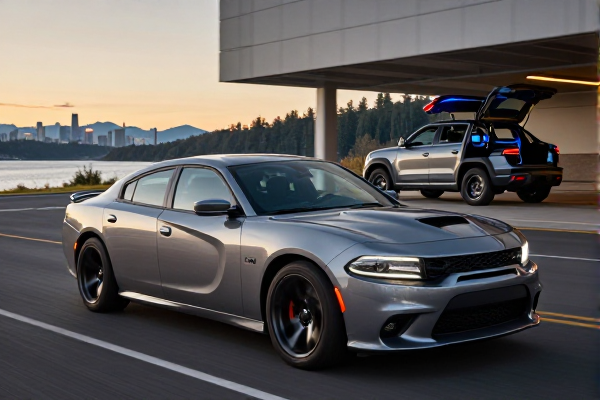
Dodge's V8 muscle car comeback just got a jolt of credibility. Fresh reports claim the Charger Hellcat has been greenlit for development, potentially landing as soon as the 2028 model year — ending a drought that's had Mopar faithful howling since the last V8 Charger rolled off the line. (June 10, 2025)
The rumor mill has been churning for months, but now MoparInsiders is reporting that Dodge has officially signed off on a Hellcat-powered Charger. Sources describe the project as early-stage, but the fact that it's real — not just fan fiction — marks a significant shift. The last V8 Charger left us two years ago, and ever since, enthusiasts have been vocal about wanting the noise back.
If the timeline holds, the Hellcat Charger would arrive for the 2028 model year, which puts the on-sale window somewhere in the second half of 2027. That's not soon, but it tracks with the typical development-to-production cycle. Dodge needed time to launch the current-generation Charger with its Hurricane six-cylinder engines before layering in the big-displacement option.
Tim Kuniskis, who's now running Ram and the re-formed SRT division, said earlier that a V8 in the current Charger would likely bypass the old 5.7-liter Hemi. That aging workhorse was a fleet favorite but wouldn't make sense in a performance flagship. The 6.4-liter V8 is also off the table — it produces less power than the 550-hp twin-turbo Hurricane inline-six. So, by process of elimination, anything with eight cylinders has to go straight Hellcat.
That's not necessarily a bad thing. The Hellcat brand — born with the 2015 Challenger and since expanded into Ram trucks, Jeep SUVs, and the Charger — carries significant weight. It's not just an engine option; it's a badge with cultural resonance. Dodge knows that selling a V8 Charger without the Hellcat nameplate (or something equally aggressive) would be like serving a steak without the sizzle.
The bigger question is packaging and price. A Hellcat-trimmed Charger won't be cheap. With the outgoing Widebody models hovering around $90,000 and the current-generation Durango SRT Hellcat approaching six figures, a new Charger Hellcat could easily land near the $100,000 mark. Enthusiasts may grumble, but the Hemi faithful have already shown they'll pay up for the privilege of eight cylinders. Dodge reportedly sold out every V8 Charger allocation well before production ended.
Another key detail: the adaptive RWD/AWD system currently offered on the straight-six Charger. If the Hellcat version retains it, Dodge has a legitimate four-seasons muscle machine — something the old 707-hp Charger never truly was. The current car's torque-vectoring and stability electronics could make a 700-plus-horsepower sedan usable in inclement weather, which expands its appeal far beyond sun-belt drag strips.
On the road, the current Sixpack Charger is a better handler and more composed daily driver than the previous-generation car. But it's missing the sensory experience. The Hurricane engine is quick and efficient, yet it lacks the character of a big-displacement V8 — no rumble at idle, no crackle on the overrun, no wide-open pulls that pin you to the seat with a soundtrack that rattles windows blocks away.
That's why the Hellcat return matters beyond the spec sheet. The direct-injection supercharged 6.2-liter Hemi, in whatever revised form it takes, is expected to clear 700 hp again. With the straight-six cars already pushing 550 hp, Dodge can't show up with anything less and claim an upgrade.
There's also the EV elephant in the room. The all-electric Charger Daytona hasn't quite captured the same audience, even with its faux exhaust note and simulated shifts. Dodge's marketing has been trying hard — the "Cooper" and "Banshee" trims, the Fratzonic chamber — but a large segment of the buying public simply wants the old playbook back: eight cylinders, supercharger whine, and tire smoke.
From a business perspective, the timing makes sense. Despite the industry's EV push, Dodge can leverage the halo effect of a Hellcat variant to drive showroom traffic for the entire lineup, including the higher-margin six-cylinder cars. Fewer V8s at big prices equals lower total CO2 compliance burden and healthier per-unit margins than cranking out hundreds of thousands of 5.7-liter Hemis.
One more angle: the announcement strategy. Dodge has historically weaponized hype — remember the "Last Call" series with its seven special editions. The company understands the loud minority is also its core customer base. Teasing a Hellcat Charger for 2028, even as a whisper, buys years of free marketing and keeps the brand conversation alive in the comments sections of every muscle-car forum.
Finally, reliability of the source: MoparInsiders has a decent track record on Dodge product plans, and the logic here is compelling. The V8 architecture is an evolution of the current supercharged Hemi. Much of the tooling and supplier chain remains warm from the previous-generation production run. Fitting it into the new Charger's chassis is an engineering challenge, but not a moonshot.
Word is that Dodge greenlit the project shortly after announcing the Hurricane-powered Sixpack. That means a lot of the groundwork — packaging, heat rejection, drivetrain integration — could already be done. By the time we see the production reveal, this car may be closer to showrooms than anyone lets on.
Something tells me the war boys — the eight-cylinder devotees who've stuck through the EV pivot — will find the wait worth it. The Charger Hellcat isn't a question of "if" anymore. It's about how hard it launches, what it costs, and whether the lineup gets the V8 it deserves before the industry finishes electrifying everything else.