Browse

Log in / Register
 Share

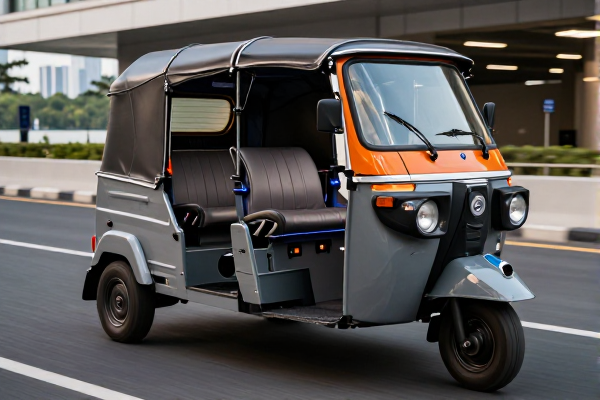
New Delhi, May 7, 2026 — The Delhi government has opened a public consultation on a draft e-rickshaw policy that introduces a four-passenger limit, a 25 kmph speed cap and stricter penalties for unregistered vehicles. The proposed Delhi E-Rickshaw (Registration and Operation) Scheme, 2026 would also require driving licences, public service vehicle badges and digital compliance certificates for every vehicle. Suggestions can be sent by email or post over the next 30 days.
E-rickshaws are compact, battery-powered three-wheelers that have become a common mode of short-distance travel in Delhi. They are cheap to run, easy to manoeuvre through crowded streets, and widely used for trips to markets, metro stations and schools. Their growth, however, has also created enforcement problems. Some operators carry far more passengers than the vehicles were designed for, while others run without valid registration or proper driver permits.
The 2014 e-rickshaw scheme set basic safety norms for the sector. The new draft goes beyond those norms by proposing a wider monitoring system built around digital compliance certificates, vehicle inspections and a citywide numerical ceiling on e-rickshaws.
The most visible change in the draft is the passenger limit. An e-rickshaw would be allowed to carry no more than four passengers at any time, and the driver would not be counted in that number. The rules also stop passengers from sitting next to the driver or travelling while standing.
The restriction is aimed at overcrowding. School runs have become a particular concern, with e-rickshaws sometimes found carrying seven or eight children in a single trip. In several reported cases, some of those children were sitting beside the driver. The draft also bans music or other audio that could cause a disturbance or distract the driver while the vehicle is on the road.
The proposed policy fixes the maximum speed at 25 kmph, which is roughly 15 mph. The motor power of an e-rickshaw cannot exceed 2,000 watts. These are not just technical targets; they are part of the conditions that a vehicle must meet to be registered and allowed to operate.
Drivers would also need to meet new credential requirements. A valid driving licence would be compulsory, and drivers would need a public service vehicle badge, commonly referred to as a PSV badge. That badge is the same type of authorisation used for other commercial passenger transport in India.
Under the draft, every e-rickshaw would require a digital e-rickshaw compliance certificate. This certificate would remain valid for two years and would be linked to one specific vehicle and one authorised driver. That means the certificate cannot simply be transferred from one vehicle to another or moved from one driver to another under the same vehicle.
The compliance certificate sits at the centre of the proposed oversight system. It is intended to give enforcement authorities a clear way to check whether a vehicle has passed the required safety and technical checks.
One of the most closely watched proposals is the citywide cap of 2.5 lakh, or 250,000, e-rickshaws. The cap would take effect after the compliance window ends, once existing vehicles have gone through the new registration process.
The draft also sets ownership limits. An individual can own up to five e-rickshaws. An eligible entity, such as a company or partnership, can own up to 100 vehicles. If an entity crosses 25 registered e-rickshaws, it must obtain an aggregator licence within one month of reaching that threshold. That part of the draft pushes medium-sized fleet operators into a more structured form of regulation.
Registered e-rickshaws would have to meet visible identification standards. Each vehicle must display a high-security registration plate and a yellow reflective strip at the rear. Owners are also required to paint their name, address and telephone number on the left side of the vehicle.
The scheme places limits on where and how e-rickshaws can be driven. Drivers cannot operate on notified restricted roads. They also cannot park in a way that blocks traffic or creates a hazard for pedestrians.
The draft takes a hard line on unregistered e-rickshaws. If a vehicle is found without valid registration, authorities can impound it immediately. The proposed rules state that such vehicles will not be released. They also allow for the vehicle to be crushed or auctioned.
Leased batteries fitted in an impounded vehicle will not be returned. That provision is significant because battery leasing is common in the e-rickshaw trade. It sends a clear signal to drivers and suppliers that operating outside the registration system carries serious financial consequences.
The Delhi government has invited public suggestions on the draft for a period of 30 days. According to a Times of India report, a senior transport department official confirmed that comments can be submitted by email or post.
Email: schemeconsultation2026@gmail.com
Postal address: DTO (operations), transport department, Delhi govt, Room No. 104, First Floor, 5/9 Underhill Road, Delhi.
Two issues are likely to dominate the consultation. The first is enforcement of the passenger limit. The draft sets the rule clearly, but its impact will depend on how often transport officers check e-rickshaws and how quickly action is taken against violations.
The second is the 250,000 fleet cap. The draft does not provide a clear public figure for the number of e-rickshaws currently operating in Delhi, which makes it difficult to judge whether the cap would shrink or accommodate the existing fleet. That missing baseline is likely to be raised by drivers and owners during the comment period.
The final scheme will be prepared only after the responses are reviewed. For drivers, fleet owners and ordinary commuters, the consultation is a direct chance to shape how one of Delhi’s most visible transport modes is regulated.