Browse

Log in / Register
 Share

The second-generation Dacia Spring, unveiled in early 2025, proves that you don’t need a premium budget to achieve premium-looking lighting. The A-segment electric hatchback employs a deceptively simple optical trick: each headlamp unit features an LED strip at the top, while the lower section is a reflective surface angled at 45 degrees. This mirror catches the light from above, creating the illusion of a second lit strip — effectively doubling the signature without adding a single extra diode or wiring harness.
“We wanted a distinctive light signature that wouldn’t drive up the bill,” a Dacia design engineer told Auto Express during the launch. “Using reflection instead of a second light source saved us about €12 per car, and on a model targeting under €20,000, every euro counts.”
The result is a front end that looks more substantial than the price tag suggests. The upper bar is the only active light source; the shape below it is a surface cut and polished to reflect the glow. In bright daylight, the two elements blend into a continuous D-shaped signature; at night, the reflection adds depth and a floating effect.
The new Spring is the first of four all-electric models planned by Dacia (a Renault Group brand) and marks a significant departure from the previous generation. The wheelbase has grown by 15 cm in length and 18 cm in width, pushing the car from a city runabout into something closer to a compact crossover. Production has shifted from China to the Novo Mesto plant in Slovenia, a move that Dacia says improves quality control and reduces logistics emissions.
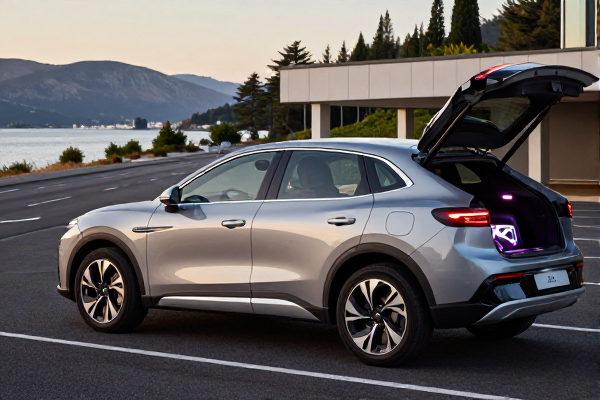
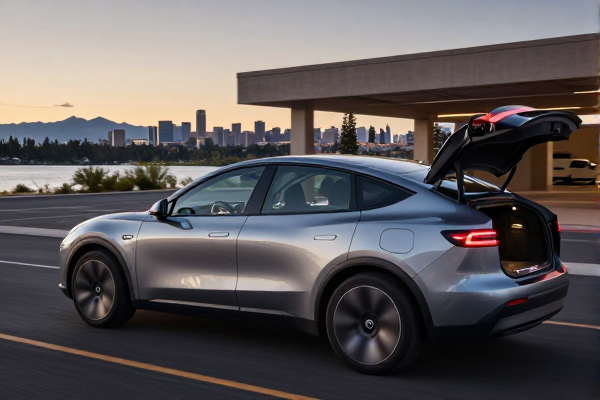
Since the first Spring launched in 2021, over 210,000 units have been sold worldwide. The 2025 model aims to build on that success by offering more space, better efficiency, and a more mature design language. The 3.85-metre-long body now houses a 337-litre boot (expandable to 1,283 litres with the rear seats folded), and it’s the only A-segment EV available with a front trunk — an optional 18-litre compartment perfect for storing the charging cable.
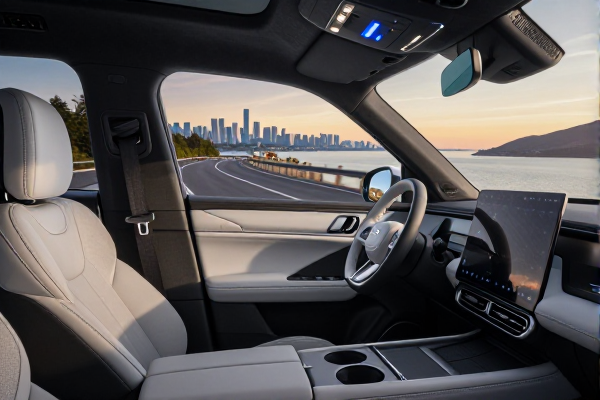
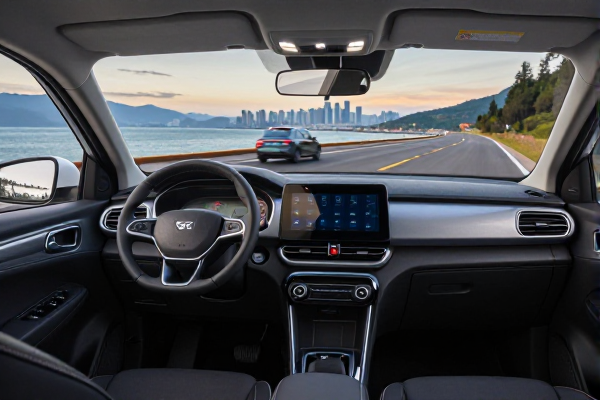
Inside, the dashboard runs flat from door to door, using the full width of the cabin as a visual device rather than sculpting volume into it. The climate controls remain physical knobs and buttons, while everything else — navigation, media, vehicle settings — migrates to a central touchscreen. Dacia says this division of labour keeps the interface intuitive and avoids the safety penalty of full touch-only designs.
The steering wheel carries the Dacia Link emblem, a simple Y-shaped motif that also inspired the light signature. The brand’s name on the tailgate is formed directly from the existing trim strip, with angled faces that catch light and shadow to separate the name from its background. No additional badges, screws, or adhesive pads are needed — a textbook example of what Dacia calls “frugal engineering.”
The Spring tips the scales at just 1,212 kg, making it one of the lightest A-segment EVs on the market. Its 27.5 kWh LFP (lithium iron phosphate) battery uses iron and phosphate instead of nickel and cobalt, which reduces cost and improves longevity. WLTP range is estimated at up to 250 km, and the official consumption figure is 12.7 kWh per 100 km.
“We’re not chasing the longest range or the fastest charging,” said a Dacia product manager. “We’re chasing the lowest total cost of ownership for drivers who mainly do city and suburban trips.”
The speckled finish on the interior plastics comes from the material itself rather than a printed layer, so scuffs never reveal a different colour underneath. The same philosophy extends to the exterior: robust, textured plastic panels hide wear and tear better than conventional paint.
Some compromises are obvious. The rear windows are pop-out units rather than electric roll-downs, a decision that saves weight and complexity. Dacia argues that in a car this size, rear passengers are usually children or occasional occupants, and the manual operation is perfectly adequate. The same logic applies to the rear drum brakes, which are cheaper and lighter than discs, and perfectly capable for a car that rarely exceeds 110 km/h.
Critics might call these cost-cutting measures; Dacia calls them intelligent trade-offs. The brand’s approach, formalised under the “Frugal Engineering” label coined at Renault in 2006, is to build up from a cost base rather than strip down from a luxury one. The result is a vehicle that feels honest, functional, and surprisingly modern.
The 2025 Spring arrives in a market segment that’s heating up. The Citroën ë-C3 starts at roughly €23,000, while the MG4 is priced above €25,000. The Spring undercuts them both by a significant margin, and its unique design elements — like the reflective light signature — help it stand out visually.
According to a recent analysis by automotive consultancy JATO Dynamics, Dacia’s “more with less” strategy has been a key driver of its growth in Europe. The Spring, in particular, is expected to attract buyers who might otherwise choose a used petrol car, offering a low entry point to electric mobility without the stigma of cheapness.
“The clever double-lighting trick is a perfect metaphor for the entire car,” said JATO analyst Felipe Munoz. “It looks like it has more than you’d expect at this price because Dacia spent brainpower instead of money.”
The 27.5 kWh battery supports AC charging at up to 7.4 kW, taking about four hours for a full charge. DC fast charging is available at up to 30 kW, which can bring the battery from 20% to 80% in about 40 minutes. The warranty covers the battery for eight years or 100,000 km, with a guarantee of 70% capacity retention.
Owners can also use the optional My Dacia app to monitor charging status, precondition the cabin, and locate public chargers. The app is free for the first year, then €19.99 per year.
The Dacia Spring’s ingenious use of reflection to double its light signature is more than a gimmick — it’s a statement of intent. This is a car designed by engineers who understand that budget constraints can be a source of creativity, not a limitation. With a starting price under €20,000, a 250 km range, and a cleverly efficient layout, the 2025 Spring is a compelling option for anyone looking to go electric without breaking the bank.
Source: