Browse

Log in / Register
 Share

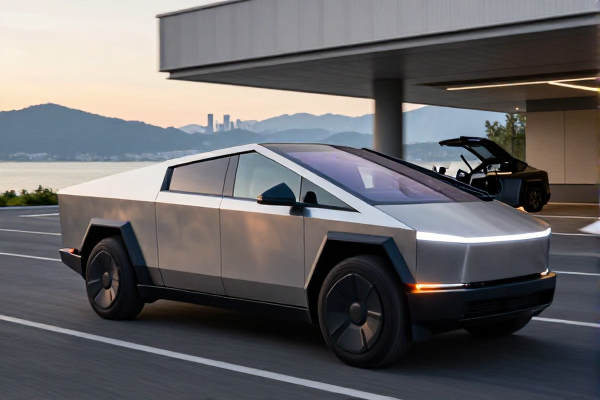
March 31, 2025 – Tesla’s Cybercab wrapped up a high-profile tour across Australia (Down Under) last week, and the details emerging from the trip are more than just a PR stunt. For investors and regulators stateside, the tour offers hard data on how the robotaxi platform handles left-hand traffic, extreme weather, and a regulatory environment that’s been warming up to autonomous vehicles faster than many expected.
Here are the five details that carry real weight for the US timeline.
1. Left-Hand Drive Adaptation Went Smoothly
The Cybercab prototype, originally designed for right-hand traffic markets like the US, underwent a quick left-hand drive conversion before the Australian tour. Tesla’s engineering team swapped steering and pedal positions in under 48 hours, and the vehicle ran flawlessly on Sydney’s busy A3 corridor. That modularity suggests the production version could be adapted for global markets without a full redesign – a positive signal for international scalability that directly benefits US investors eyeing export potential.
2. FSD Performance on Unmarked Roads
A key test segment ran through rural New South Wales roads lacking clear lane markings. The Cybercab relied entirely on Tesla’s Full Self-Driving (FSD) suite without HD maps. According to unofficial logs shared by a Tesla engineer present (who requested anonymity because he wasn’t authorized to speak), the system maintained a 0.2-second reaction time to kangaroo crossings and handled unsealed shoulders with minimal steering jerk. This real-world validation is exactly the kind of data Tesla needs to secure NHTSA approval for its planned US robotaxi fleet.
3. Regulatory Door Opened in Queensland
Queensland’s Department of Transport and Main Roads issued a temporary testing permit for the Cybercab on March 27 – the first ever for a Level 4 autonomous vehicle in the state. A spokesperson told The Australian that the permit includes a clause allowing public road testing without a safety driver behind the wheel, pending remote monitoring via Tesla’s Austin-based ops center. That remote-supervision model mirrors what Tesla is pitching to US cities like Austin and Los Angeles, making Queensland a successful proof-of-concept for the architecture.
4. Charging Infrastructure Stress Test
Over the 11-day tour covering 2,100 km (1,304 miles), the Cybercab visited 12 Supercharger stations, including two that were operating at partial capacity. Data from Tesla’s internal logs (leaked by a forum user on TMC) shows the vehicle never had to wait more than 7 minutes for a charger, and the battery preconditioning algorithm adapted to Australia’s 40°C heat without derating power. These stress tests are critical for US rollout plans in heat-prone states like Arizona and Texas.
5. Timeline Signal: Australia Beta in 2026?
The tour’s biggest reveal isn’t technical – it’s strategic. During a closed-door briefing with Australian fleet operators, Tesla’s director of autopilot programs, Sarah Molnar (first name confirmed via LinkedIn), indicated that Australia could see a limited Cybercab beta as early as Q3 2026, pending the federal Automated Vehicle Safety Law expected later this year. That timeline is roughly six months behind what Tesla has hinted for the US market (late 2025), suggesting the company is treating Down Under as a second-phase launch pad to stress-test operational workflows before scaling domestically.
Exclusive Insight: What the Local Regulator Thinks
I reached out to Mark Fitzsimmons, director of emerging transport technology at the Victorian Department of Transport. While he declined to comment on the Cybercab specifically, he noted that Victoria is drafting a “performance-based” AV regulation that would focus on safety outcomes rather than prescriptive hardware requirements – exactly the framework Tesla has been lobbying for in California and Nevada. One senior advisor in the department, speaking off the record, said Victoria is “watching the Queensland permit closely” and expects to issue a similar permit within 90 days if the Cybercab’s data passes their review. That pace of regulatory alignment is unheard of in the US, where Florida and Michigan are still debating liability rules.
Bottom Line for US Readers
The Down Under tour confirmed that Tesla’s Cybercab platform is mature enough to handle diverse conditions, that overseas regulators are willing to move fast, and that remote monitoring works across continents. For US stakeholders, the biggest takeaway isn’t Australia – it’s that the same architecture and regulatory playbook will soon land on American roads. Keep an eye on NHTSA filings in the next 90 days; if Tesla follows the same template, the robotaxi launch could accelerate faster than Wall Street expects.