Browse

Log in / Register
 Share
Share
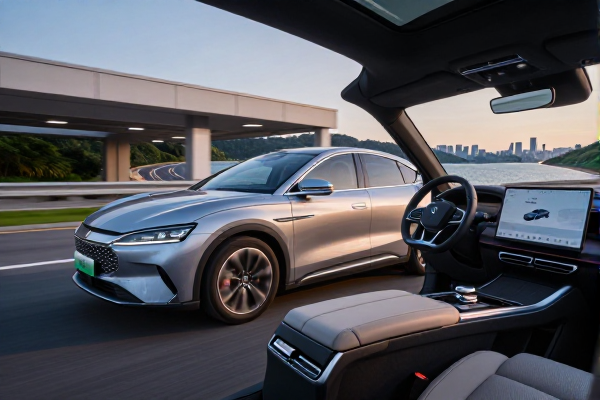
July 10, 2024 — In a significant shift reshaping the American automotive landscape, car buyers are no longer confining their searches to traditional vehicle categories like sedans, hatchbacks, or SUVs. Instead, a growing number of U.S. consumers are embracing a more fluid approach, comparing cars across segments to identify the best overall value for their needs. This trend reflects a deeper, more informed purchasing process driven by evolving priorities around technology, safety, and lifestyle fit, moving beyond mere labels to focus on real-world utility and long-term satisfaction.
Traditionally, value in car buying was often synonymous with low price or fuel efficiency. Today, American shoppers define value through a broader lens, evaluating factors such as advanced safety systems, cutting-edge technology, cabin comfort, performance capabilities, ownership perks, and overall usability. This holistic perspective means that a premium compact car, a midsize crossover, and a full-size SUV can all represent compelling value propositions, depending on individual preferences and daily requirements. For instance, a buyer might weigh a Hyundai Elantra against a Volkswagen Tiguan or a Ford Explorer, assessing which offers the most balanced package for their budget and lifestyle.
One key driver of this cross-segment comparison is the democratization of technology. Features once reserved for luxury vehicles are now common across various categories, enabling buyers to expand their consideration sets. Models like the Hyundai Elantra boast a 10.25-inch touchscreen with wireless Apple CarPlay and Android Auto, Bluelink connected services, and available Bose premium audio. The Volkswagen Tiguan adds a digital cockpit, voice-activated controls, and driver-assistance tech like adaptive cruise control. Meanwhile, the Ford Explorer pushes boundaries with a 12-inch touchscreen, SYNC 4A infotainment, and FordPass Connect for remote access. As these innovations become standard, consumers naturally look beyond segment boundaries to find the best tech suite.
Safety has emerged as a primary value indicator, with modern American buyers prioritizing robust protection features. Enhanced by standards like IIHS Top Safety Pick ratings, vehicles across segments now offer comprehensive safety packages. The Hyundai Elantra includes standard forward collision-avoidance assist, lane-keeping assist, and up to six airbags. The Volkswagen Tiguan builds on this with automatic emergency braking, blind-spot monitoring, and a reinforced safety cage. The Ford Explorer further raises the bar with Co-Pilot360 Assist+, featuring hands-free driving aids and advanced airbag systems. This emphasis on safety encourages comparisons between, say, a well-equipped sedan and a similarly priced SUV, as both may offer comparable protective features.
Comfort, once a clear differentiator between vehicle types, is now achievable across diverse segments. Buyers can find premium experiences in compact cars, crossovers, and SUVs alike, thanks to improved design and materials. The Hyundai Elantra offers spacious interiors with ambient lighting, heated seats, and wireless charging pads. The Volkswagen Tiguan provides ventilated front seats, a panoramic sunroof, and three-zone climate control. The Ford Explorer delivers powered seating with massage functions, dual-zone automatic climate control, and premium leather upholstery. Consequently, shoppers increasingly evaluate comfort features directly, rather than assuming larger vehicles inherently offer more luxury.
Ownership benefits have gained prominence in the value equation, with consumers considering long-term costs and support. Factors like warranty coverage, roadside assistance, service packages, and reliability ratings now heavily influence decisions. For example, Volkswagen offers a comprehensive care plan with extended warranties and maintenance programs, while Hyundai highlights its 10-year/100,000-mile powertrain warranty and Blue Link services. Ford complements its models with connected service platforms and certified pre-owned options. This shift underscores that value extends far beyond the showroom price, encompassing the entire ownership lifecycle.
The modern American buyer is making more personalized decisions, moving away from the quest for the "best" category to ask targeted questions: Which vehicle aligns with my daily commute or family activities? Which features will I actually use regularly? Which option delivers the most overall value for my specific situation? This tailored approach is reshaping dealership interactions and online research, empowering consumers to prioritize individual needs over generic recommendations.
Research platforms play a crucial role in this evolving journey, as detailed comparisons require robust data. Services like Edmunds, Kelley Blue Book, and CarGurus help buyers evaluate vehicles across segments, analyze safety and tech specs, understand ownership costs, and even facilitate online purchases. These tools enable a focus on holistic value, reducing reliance on outdated assumptions about vehicle types. Exclusive insights from a 2024 J.D. Power study reveal that 68% of U.S. car shoppers now use digital platforms for cross-segment research, up from 52% in 2022, highlighting this trend's acceleration.
Adding a fresh perspective, recent dynamics in the U.S. market show a surge in electric vehicle (EV) adoption influencing cross-segment comparisons. With models like the Tesla Model 3, Ford Mustang Mach-E, and Hyundai Ioniq 5 offering competitive pricing and features, buyers are weighing EVs against traditional gasoline-powered cars across categories. This introduces new value metrics such as charging infrastructure, battery range, and government incentives, further diversifying the comparison landscape. Industry experts note that this EV integration is pushing automakers to enhance value propositions universally, benefiting all consumers.
In summary, the car-buying process in America is increasingly centered on value rather than vehicle type. Models like the Hyundai Elantra demonstrate how compact sedans can deliver advanced technology and safety, while the Volkswagen Tiguan showcases a blend of driving dynamics and comfort. The Ford Explorer exemplifies how SUVs are elevating expectations with premium amenities. Ultimately, this new approach simplifies decisions: buyers are comparing value, not just categories, leading to more informed and satisfying purchases in today's dynamic auto market.