Browse

Log in / Register
 Share

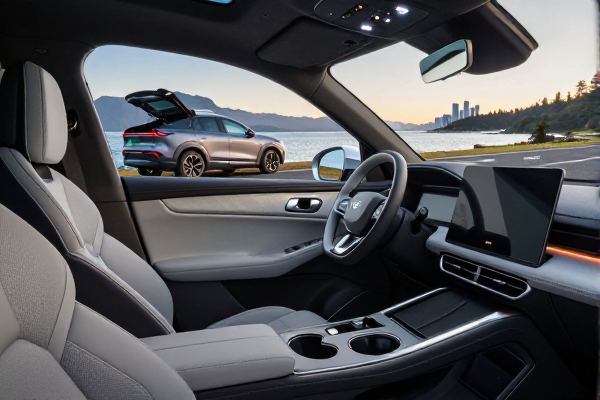
On May 10, 2026, Consumer Reports (CR) filed formal comments with the National Highway Traffic Safety Administration (NHTSA) on its proposed overhaul of the New Car Assessment Program (NCAP). The nonprofit, nonpartisan organization urged the agency to use resources freed from outdated test procedures to speed up modernized crashworthiness and crash-avoidance evaluations — not to postpone them. CR warned that today’s NCAP, where nearly every new vehicle earns four or five stars, no longer offers consumers any meaningful safety differentiation.
Since the 1990s, NCAP has been a market-driven force. It encouraged automakers to exceed federal minimum safety standards and gave consumers easy-to-read, comparative safety ratings. Automakers responded with stronger roofs, better side airbags, and improved crash-avoidance technology. For many years, that system worked.
But NCAP has not kept pace with modern vehicle design. As a result, the five-star scale has become nearly saturated. If almost every vehicle gets a high score, the rating system fails to help buyers distinguish real safety leaders from vehicles that merely meet baseline expectations.
NHTSA invited public comments on two related items: removing legacy or redundant test procedures and updating the program’s 10-year roadmap. The agency argues that streamlining older tests will free up staff and budget for higher-priority safety work. At the same time, the updated roadmap proposes postponements in several key areas, citing resource constraints.
Consumer Reports found that contradiction difficult to accept. If the agency is truly reclaiming capacity by retiring outdated tests, that capacity should flow directly into accelerating next-generation crash tests and advanced driver-assistance evaluations. Delaying those modernizations would undermine the stated purpose of NCAP.
In its comments, CR acknowledged that some legacy protocols may indeed be redundant or unrepeatable. But it urged NHTSA to treat the cleanup as a stepping stone, not a justification for slowing down. The organization specifically called on NHTSA to prioritize:
CR’s position reflects a broader frustration among safety advocates: the United States has fallen behind several global programs that already challenge automakers with tougher and more varied safety scenarios.
New vehicle purchases are complicated. Consumers rely on NCAP stars to make quick, informed decisions. When nearly every vehicle receives the same score, that shortcut loses value. Worse, automakers lose a key incentive to invest in safety features that may not be reflected in the ratings.
This is not an abstract regulatory issue. It directly affects families shopping for their next car. Someone comparing a small sedan and a large SUV may find both with five stars, even if one offers significantly better crash performance or more capable crash-avoidance technology. That gap in information undermines the entire purpose of a consumer safety program.
The NHTSA comment period arrives at a time when vehicle safety technology is advancing quickly. Camera-based and radar-based systems, vehicle-to-vehicle communication, and partially automated features are appearing across the market. Without meaningful NCAP updates, those features remain under-tested or untested, and consumers have no reliable way to know which systems actually work.
Consumer Reports has a long history of independently testing these technologies and has repeatedly pushed for stronger, clearer performance standards. The group’s comments to NHTSA carry the weight of decades of hands-on vehicle evaluation. By pressing for acceleration rather than delay, CR signals that the safety progress of the past 20 years is at risk of stalling unless regulators respond to modern conditions.
NHTSA has not yet set a final timeline for the updated NCAP rule. As the agency reviews public comments, it will have to decide whether to follow its own resource-saving logic or yield to the broader slowdown it has proposed. The direction NCAP takes in the next few years will likely shape vehicle safety for a decade or more.
Consumer Reports made its position clear: modernization should not wait. The safest, most effective use of streamlined resources is immediate reinvestment in test programs that raise the bar for everyone. That means faster development of updated crash dummies, stronger evaluation of active safety systems, and a rating structure that actually tells buyers which vehicles deserve five stars.
The NCAP modernization debate is really about what consumers deserve from a government safety program. A ratings system that cannot differentiate vehicles helps no one. By urging NHTSA to accelerate, not postpone, modernized safety testing, Consumer Reports is advocating for a more honest and useful market — one where a five-star rating means something again.