Browse

Log in / Register
 Share

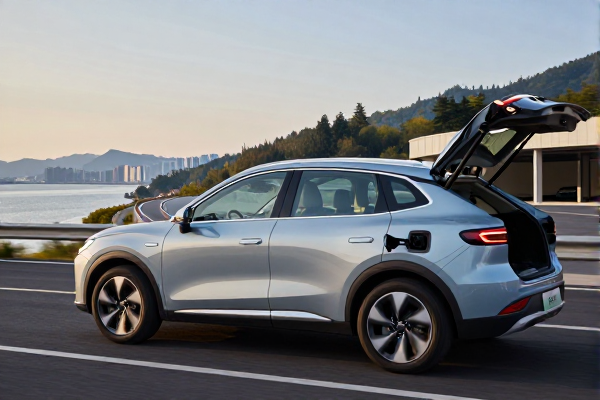
May 9, 2026 — A life-cycle assessment prepared by The Energy and Resources Institute (TERI) with the Petroleum and Natural Gas Regulatory Board (PNGRB) concludes that compressed natural gas (CNG) currently carries the lowest overall environmental burden across most vehicle categories in India. The report, set to be formally released in New Delhi on September 30, 2026, does not look only at what comes out of a tailpipe. It counts electricity and fuel production, vehicle manufacturing, operation, and end-of-life disposal.
For U.S. audiences, that conclusion sounds counterintuitive. EV advocates point to zero tailpipe emissions. But the Indian research quantifies what many clean-transport analysts call the full system: the energy used to extract, refine, and deliver a fuel, plus the emissions embedded in vehicle materials, batteries, and assembly plants.
Today's EV policy debates in the United States usually focus on charging infrastructure, range, and battery supply chains. The TERI-PNGRB work shifts the conversation to total environmental burden. That phrase covers carbon dioxide, methane slip, air pollutants, resource depletion, and waste. The study's conclusion is that for most vehicle classes, a CNG vehicle can produce a lower system-level impact than an equivalent battery-electric vehicle, particularly when the electricity mix still depends heavily on coal and gas.
The central finding is nuanced. “Most categories” does not mean all. In some cases, EVs may still hold the edge: a lightweight two-wheeler charged on a renewables-heavy grid, for example, or a high-mileage bus running on clean electricity. But for typical passenger and commercial vehicles operating on a mixed grid, CNG came out ahead in total burden.
The assessment covers four broad phases:
That framework is not novel. U.S. federal researchers have used similar well-to-wheels methods for decades, notably through Argonne National Laboratory’s GREET model. What makes the India study noteworthy is the breadth of the comparison and the explicit focus on a single national market's whole vehicle fleet.
CNG vehicles rely on a mature gas supply chain. Modern engines are also better at controlling methane slip than older natural-gas designs. The fuel can be extracted, compressed, and delivered with fewer upstream emissions than many grid electricity systems, especially when coal supplies a large share of generation.
The manufacturing side matters even more. A battery-electric passenger car needs a lithium-ion pack containing critical minerals such as lithium, cobalt, nickel, manganese, and graphite. Extracting those minerals has measurable environmental costs and energy requirements. A CNG vehicle’s fuel system, including high-pressure cylinders and valves, also has a manufacturing footprint, but it avoids the mining-intensive battery.
Over a vehicle’s lifetime, the cumulative gap can be significant. The TERI-PNGRB assessment uses lifecycle impact categories rather than CO2 alone, so it also captures fine-particle pollution, water use, and other pressures. That broader lens is exactly why the result is not “EVs win everywhere.”
India’s findings are not a direct blueprint for the United States, but they arrive at a sensitive moment. California and the EPA have pushed hard for electrification, while natural-gas fleets still carry many U.S. buses, refuse trucks, and delivery vans. If CNG can outperform EVs on some lifecycle dimensions in India, then “zero-emission” should not be treated automatically as “least environmental burden.”
The U.S. grid is cleaner than India’s, on average. California’s grid is cleaner still. Battery manufacturing in North America is also becoming less carbon-intensive as supply chains mature. Those differences may close or eliminate any CNG advantage in many U.S. scenarios.
But methane leakage is a serious complication. In the United States, methane emissions from well sites, pipelines, and storage facilities vary widely from basin to basin. The TERI-PNGRB framework counts methane, but any CNG-advantage claim in the U.S. market has to be tested against real leakage measurements, not global averages. Leaky gas infrastructure can erase a large share of CNG’s lifecycle benefit.
The full TERI-PNGRB dataset has not yet been made public. The executive summary and methodological notes have been circulated ahead of the September 30 release, but key assumptions still need scrutiny.
Important questions include:
Each of those variables can move the final result. A slight change in grid mix or methane intensity could flip the order in some categories.
The policy lesson for the United States is not “drop EVs.” It is: use lifecycle metrics when designing incentives. Fuel-neutral programs that reward an environmental outcome rather than a fixed technology fit the evidence better than tailpipe-only mandates.
Federal agencies already have tools to estimate lifecycle emissions, including GREET and EPA’s AVERT. But many state incentive programs still treat tailpipe emissions as the only scorecard. If CNG is to be encouraged, support should be tied to measured methane controls and upstream emissions reductions, not simply to the fuel’s lower retail price.
This study also strengthens the case for cleaning the electric grid. Much of CNG’s current advantage is really a penalty on fossil-heavy electricity. If renewable generation displaces coal, the EV comparison is likely to swing decisively toward electric.
In India, city gas distribution is expanding, and the study may be used to justify more CNG vehicles. That expansion should come with strict methane-leak controls. “Lowest burden today” is not the same as “zero-carbon tomorrow,” and a single report should not be used to freeze technology choices in either direction.
The most useful takeaway from the TERI-PNGRB analysis is simple: the cleanest vehicle is not always the one with no tailpipe. It is the one that runs on a clean fuel, built with clean materials, and disposed of cleanly at the end of life.