Browse

Log in / Register
 Share
Share
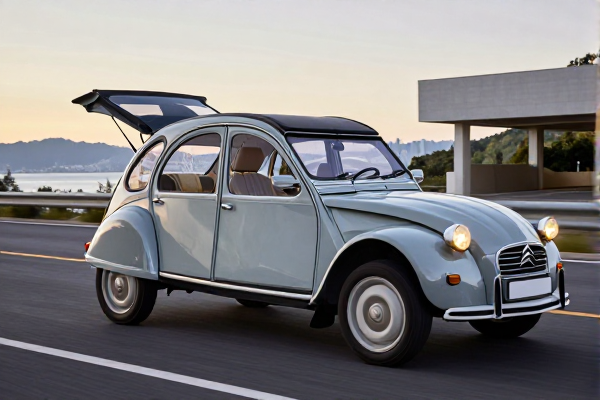
Citroen has pulled the wraps off a new 2CV Fourgonnette concept at the Paris Motor Show, and it may be the most charming vehicle the brand has shown in years. This compact, retro-style van is the latest companion to the modern 2CV revival that is expected to reach production in 2028. This report is current as of April 17, 2025.
According to TopGear.com, which first covered the unveiling, the Fourgonnette concept was a surprise second act. Much of the attention had already gone to the reborn 2CV passenger car, but this little delivery van quickly stole some of the spotlight. It combines the friendly, functional spirit of the original 2CV with a design language that feels ready for modern city streets.
The concept has a noticeably boxy rear section, split rear doors and flip-up side windows. It looks like a small working vehicle, not a flashy show car. The proportions are practical without being clumsy. In fact, the styling feels more convincing than some of the previous 2CV-inspired commercial conversions that Citroen has licensed in recent years.
Citroen brand boss Xavier Chardon explained the thinking behind the concept with a line that has already resonated with fans:
“The 2CV Fourgonnette was more than just a workhorse. It was part of everyday life. Simple, ingenious, and accessible, it above all possessed something few commercial vehicles have: a soul. That is the spirit we are bringing back to life today. Because being useful should never mean being ordinary.”
That is exactly why the original Fourgonnette still has such a strong following. It was the vehicle French bakeries, farms, postal services and small shops used for decades. It was basic, cheap and tough. It also had personality. The new concept seems designed to recreate that combination for the electric age.
Here is the key caveat. Citroen has been careful to describe the concept as exactly that: a concept. The company says it “does not preview a future production model in the short term.” In other words, don’t expect to see one at a local dealership in the next few years.
That is frustrating. The concept is already attracting the kind of social media attention that automakers normally pay millions of euros to generate. Comments are full of small business owners, van-life enthusiasts and vintage Citroen collectors asking where they can place an order.
But this is also a familiar pattern in the industry. Automakers often use show cars to test public reaction before making a final production decision. If the response is strong enough, the chances of a green light improve. The fact that Citroen is showing the Fourgonnette now suggests the company is at least considering it seriously.
Citroen has not released official specifications for the Fourgonnette concept. There is no confirmed battery size, range, payload or motor output. The company also has not said whether a production version would be fully electric, although the existing 2CV revival project is widely expected to use an electric powertrain.
The lack of specs may frustrate some readers, but it also leaves room for optimism. A short-term production denial is not the same as a permanent refusal. If the concept moves forward, technical details could be shared closer to launch.
The bigger argument in favor of production is financial. The new 2CV passenger concept is targeting an entry price of around €15,000, which is roughly $17,000 at current exchange rates. Small cars with that kind of price tag are difficult to make profitably. Development costs are high, and margins are thin.
Adding a practical urban van on the same platform would help spread those costs across more vehicles. That is an old automotive trick that still works. Automakers frequently use multiple body styles from the same architecture to make entry-level models financially viable. The original 2CV did exactly that with its van derivatives.
If Citroen could produce a Fourgonnette close to the passenger model’s price, it would become an attractive option for small businesses. In many European markets, commercial buyers can reclaim value-added tax on work vehicles, which lowers the effective purchase price. Even without that benefit, a simple, stylish and affordable urban van would have a clear market.
One reason the concept feels so promising is that the design is far more successful than the awkward 2CV-themed Berlingo conversions that Citroen officially licensed a couple of years ago. Those had a certain novelty, but they also had strange proportions. The new concept looks like it was designed for the Fourgonnette name from the beginning.
The square back gives the cargo area a genuinely useful shape. The split rear doors make loading easier in tight parking spots. The flip-up side windows echo the original model’s practical, no-frills approach. It is the kind of van that could be customized easily by florists, caterers, couriers and mobile coffee shops, which is precisely what makes it so marketable.
Citroen is not the only automaker leaning into retro design, but it has a particularly strong history to draw from. The 2CV remains one of the most recognizable cars ever made. A modern version carries a great deal of emotional goodwill, and a Fourgonnette model would extend that appeal into the commercial market.
The passenger 2CV concept was always going to be the headline act. The Fourgonnette is the supporting player with the potential to become the cult favorite. It may not preview a short-term production model, but it clearly speaks to a real demand for affordable, characterful and useful small vehicles.
At present, Citroen’s messaging is cautious. That is understandable. Announcing a commercial vehicle at a show is a bigger commitment than displaying a design study. Still, the company would be unwise to ignore the enthusiasm this concept has generated.
If Citroen follows the normal pattern, the next step would be an internal feasibility study based on public reaction and business cases. The 2028 launch window for the passenger 2CV gives the company time to develop a platform and decide whether the Fourgonnette deserves a place in the lineup.
The brand may also be waiting to see how the wider market for small commercial vehicles evolves. Many cities are introducing stricter emissions rules for delivery vehicles. An affordable compact van with a modern powertrain could be a very timely product.
A production version would not need to be complicated. It could use the same underpinnings as the 2CV passenger car, a simple body, and just enough equipment to keep the price low. That is what made the original Fourgonnette so successful, and it is a formula that can work again.
The Citroen 2CV Fourgonnette concept is the kind of vehicle that makes people smile. It looks friendly, useful and affordable. It honors the original without being a lazy copy. It also fills a gap in the market for small, stylish and practical urban vans.
The only real problem is that Citroen has not committed to building it. The company’s “not in the short term” statement leaves a window open, and public demand could be the nudge it needs. For now, fans will have to wait and hope.
Come on, Citroen. Give us a proper Fourgonnette to complete the set.
This article is based on a report first published by TopGear.com and has been edited for clarity and additional analysis.